
One Battle After Another
The Street Fills Again

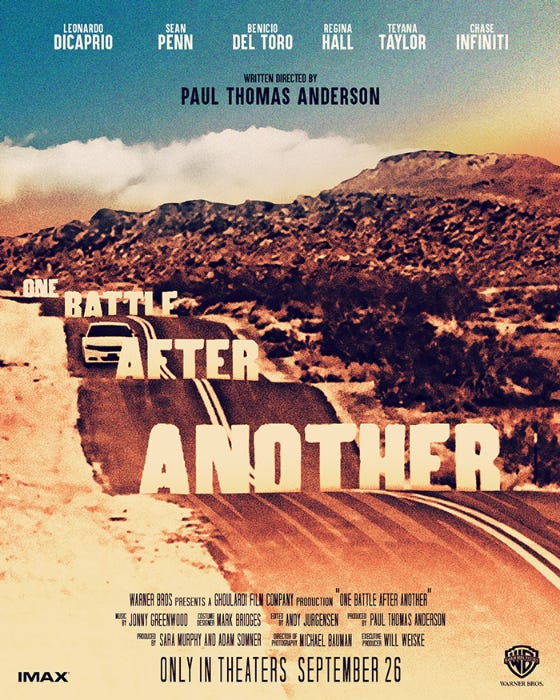
After the Coordinates Blur
In The Battle of Algiers, power has coordinates.
Soldiers occupy streets. Checkpoints interrupt movement. Bombs pass through markets. Doors are kicked in. Interrogations happen in rooms with walls.
Territory can be walked across.
Insurgency studies patrol routes. It assumes that if the streets are mapped correctly, power can be disrupted.
Rupture is visible.
In One Battle After Another, gates precede streets.
Verification precedes entry.
The frame remains wide. The ground does not.
Purity as Stasis
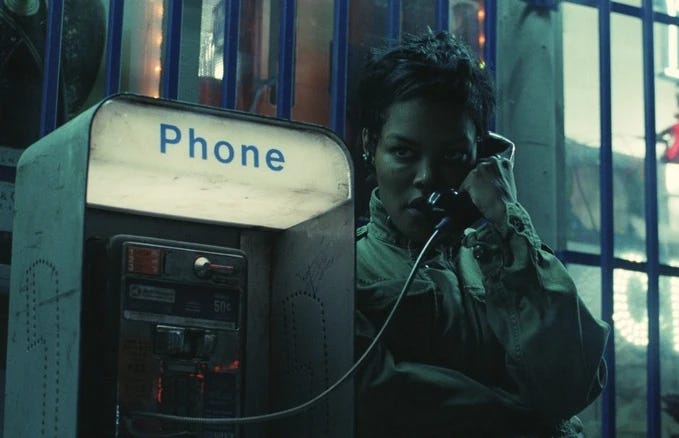
Perfidia does not return to age into consequence.
We do not see her revise. We see the fallout of her betrayal accumulate in her absence.
When she appears, she is framed in stillness against Bob’s disorder. The camera preserves her.
Continuity holds.
The letter interrupts.
“We failed.”
The admission arrives on paper. She does not.
Time moves. She does not.
Loyalty as Maintenance
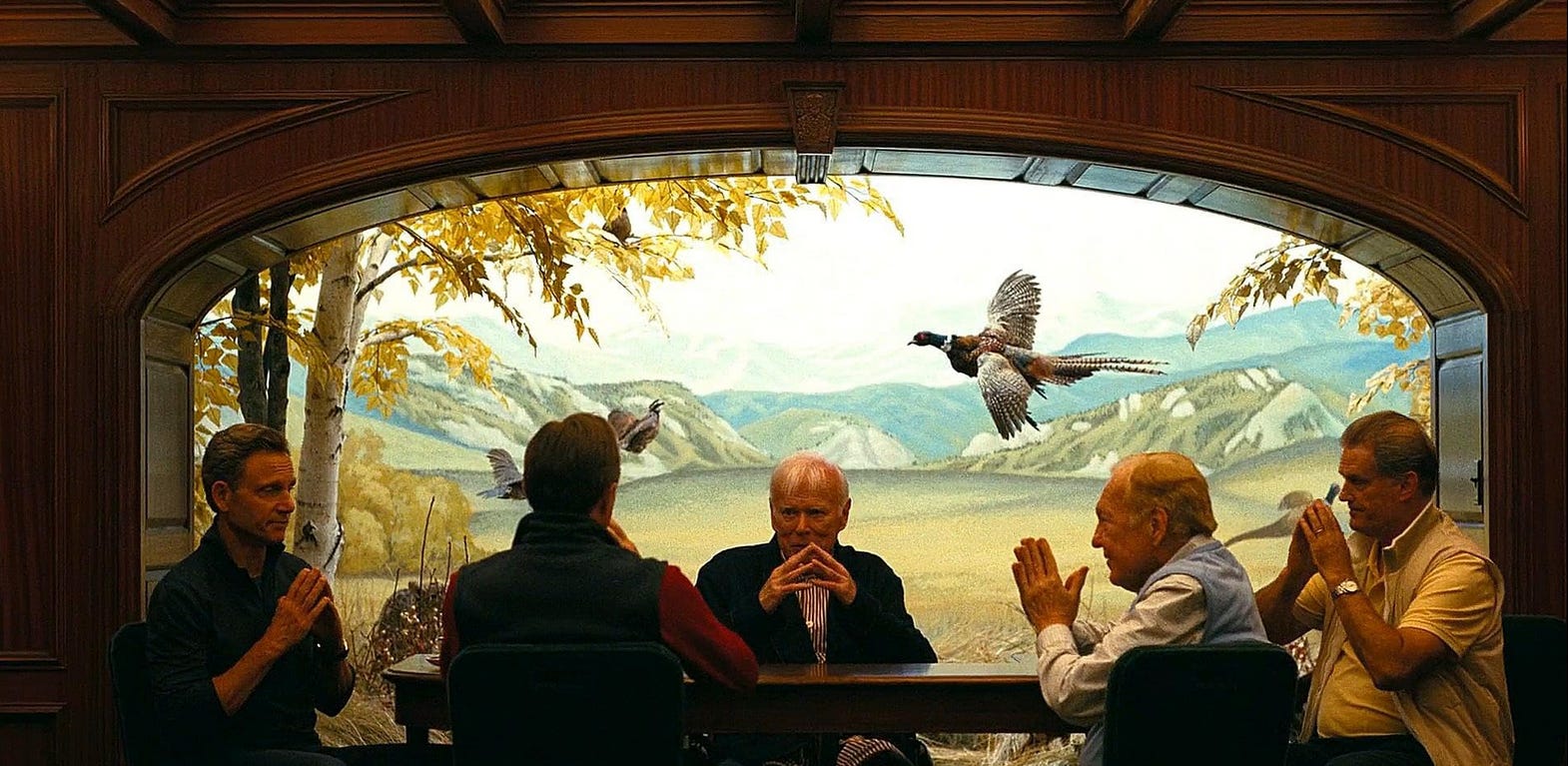
The Christmas Adventurers Club does not shout.
A long table. Fluorescent light. Calm discussion about “handling” Lockjaw. No raised voices.
After the failed assassination leaves his face ruined, he is given an office. A desk. Closed door.
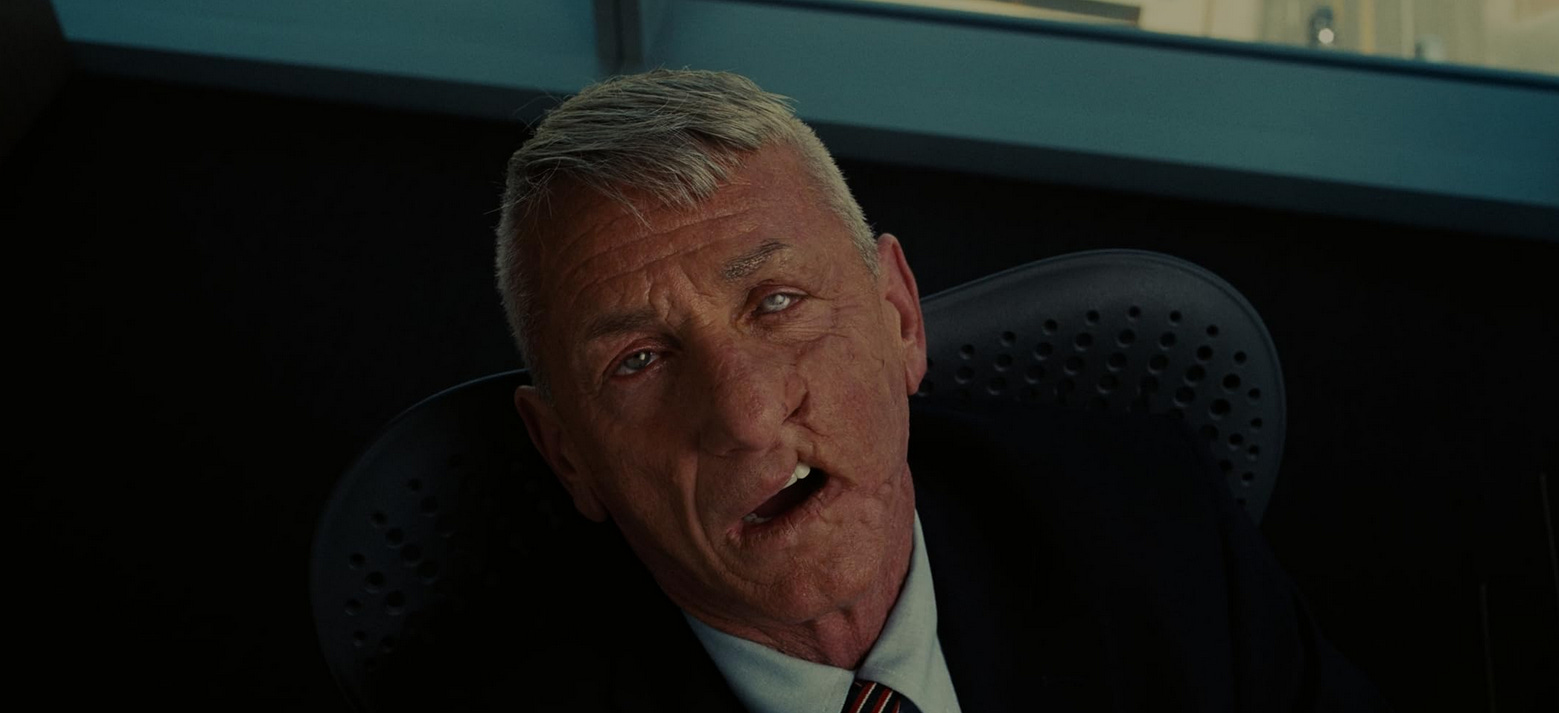
Gas fills the room.
He is dragged out.
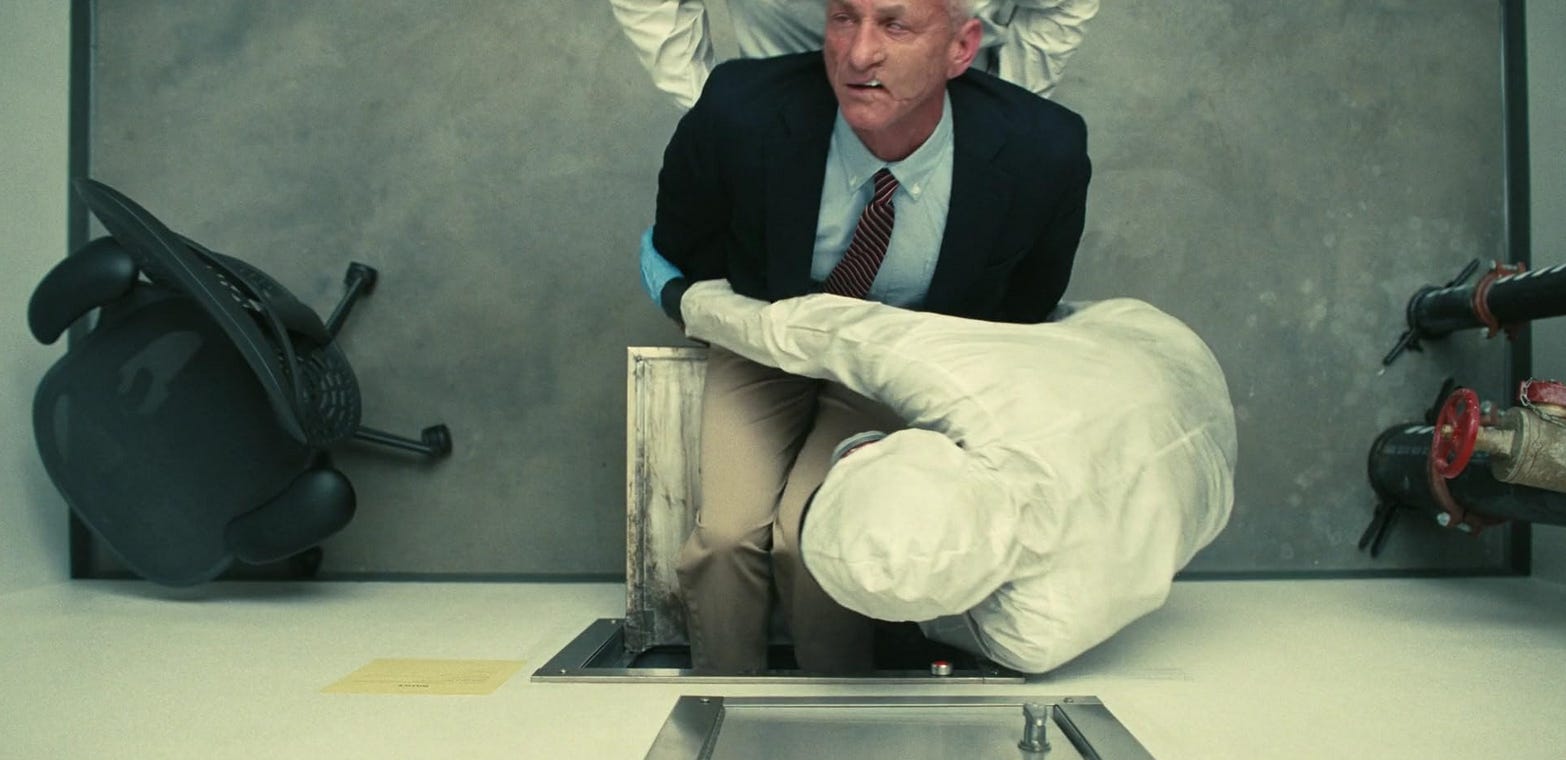
The final assassin arrives without speech.
The cars move.
Displacement Without Access
Bob watches The Battle of Algiers high.
The war flickers across the television. Streets with names. Patrols that can be tracked. Targets that can be touched.
In that world, recognition moved relationally.
Here, recognition requires codes.
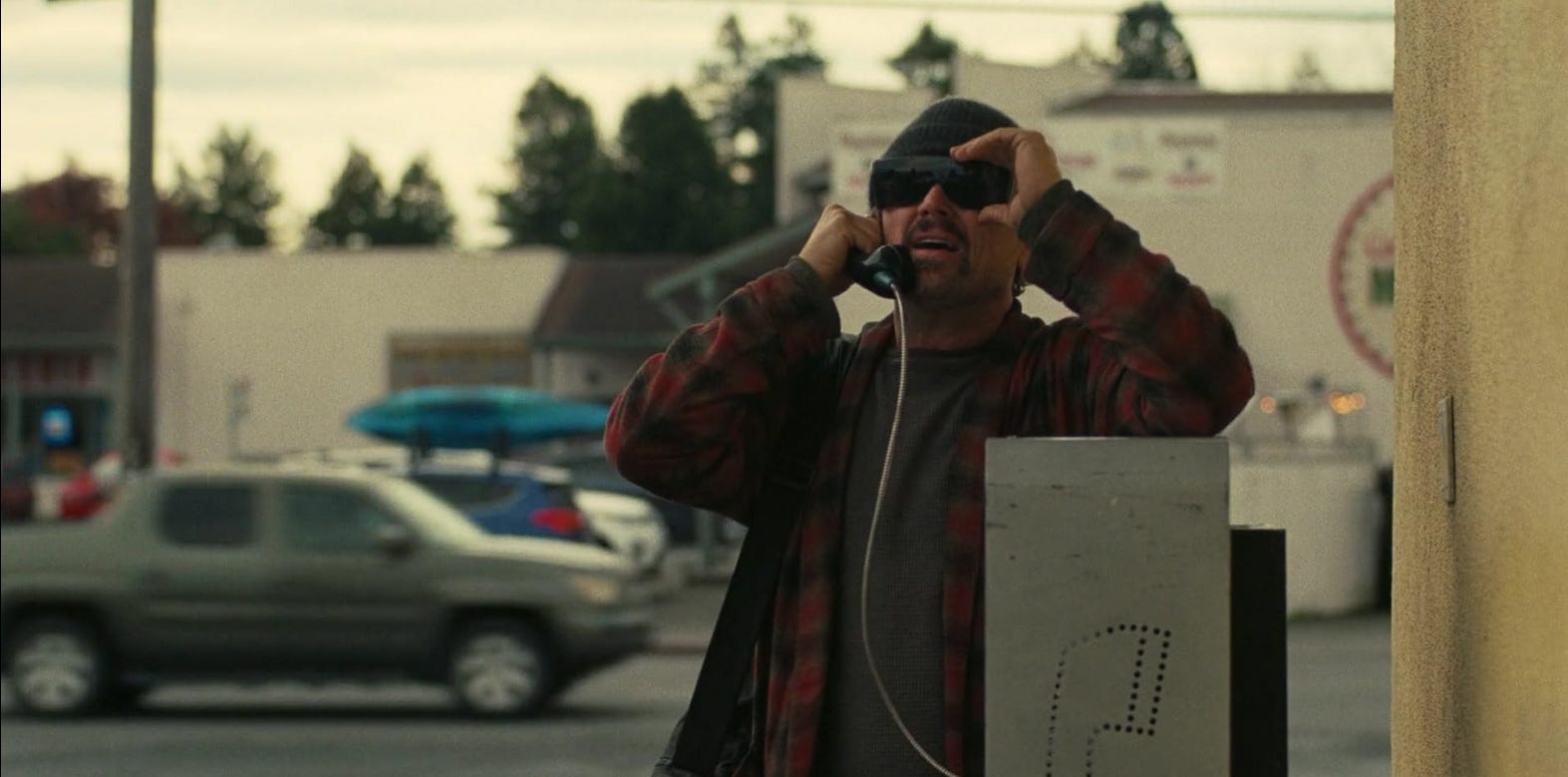
He needs the location of a safe house. He cannot produce the passcode. The voice on the other end repeats the requirement.
Verification first.
Bob invokes French 75. History. Urgency.
The system asks for the code.
He cannot provide it.
He asks to speak to a manager.
Silence.
With Sergio, Bob asks for explanation. Sergio moves people.
Bob confronts.
Sergio diverts.
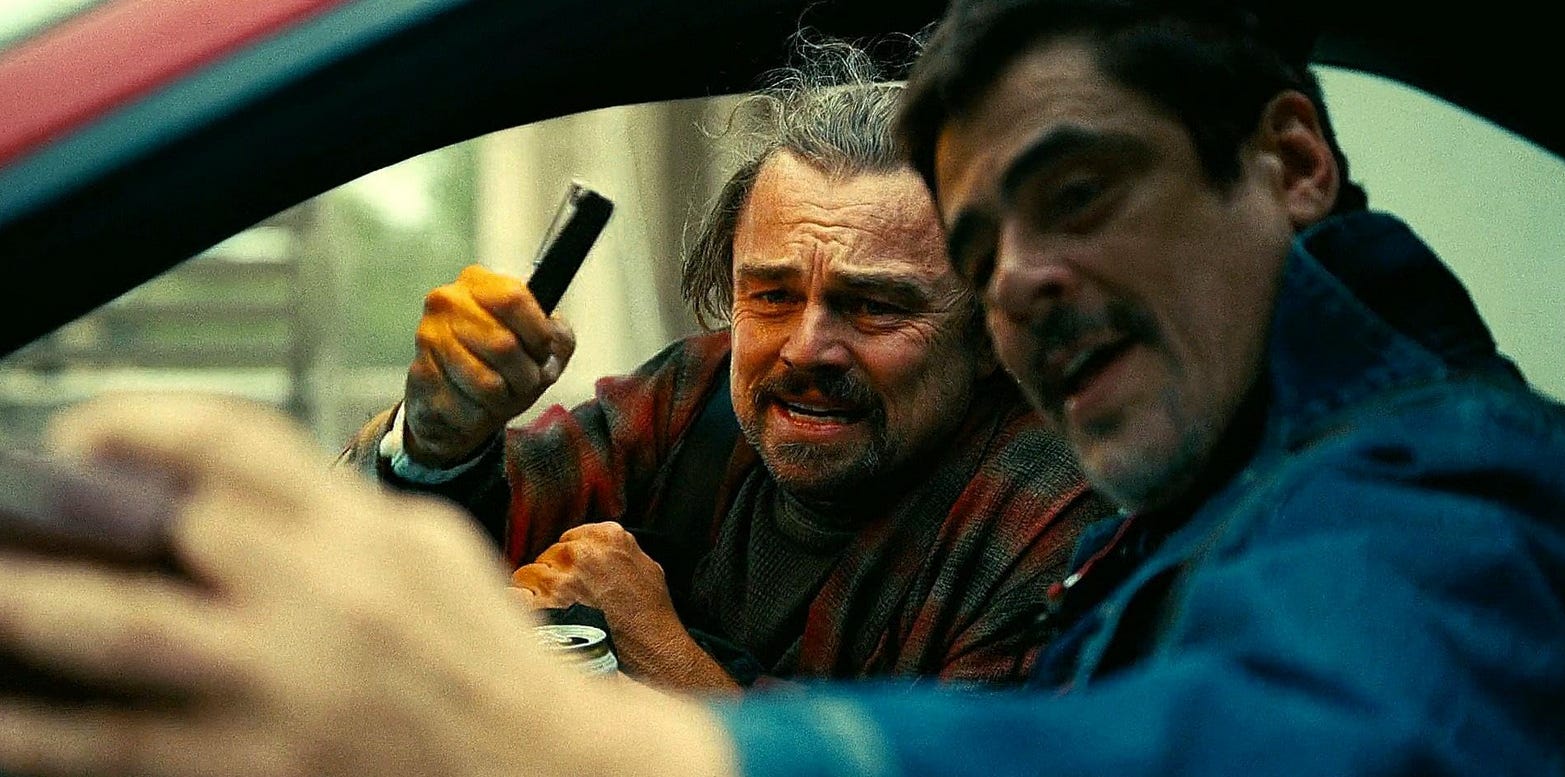
The chase erupts into engines and rifles and open road. Willa parks at the crest of a hill. Another car cannot avoid her.
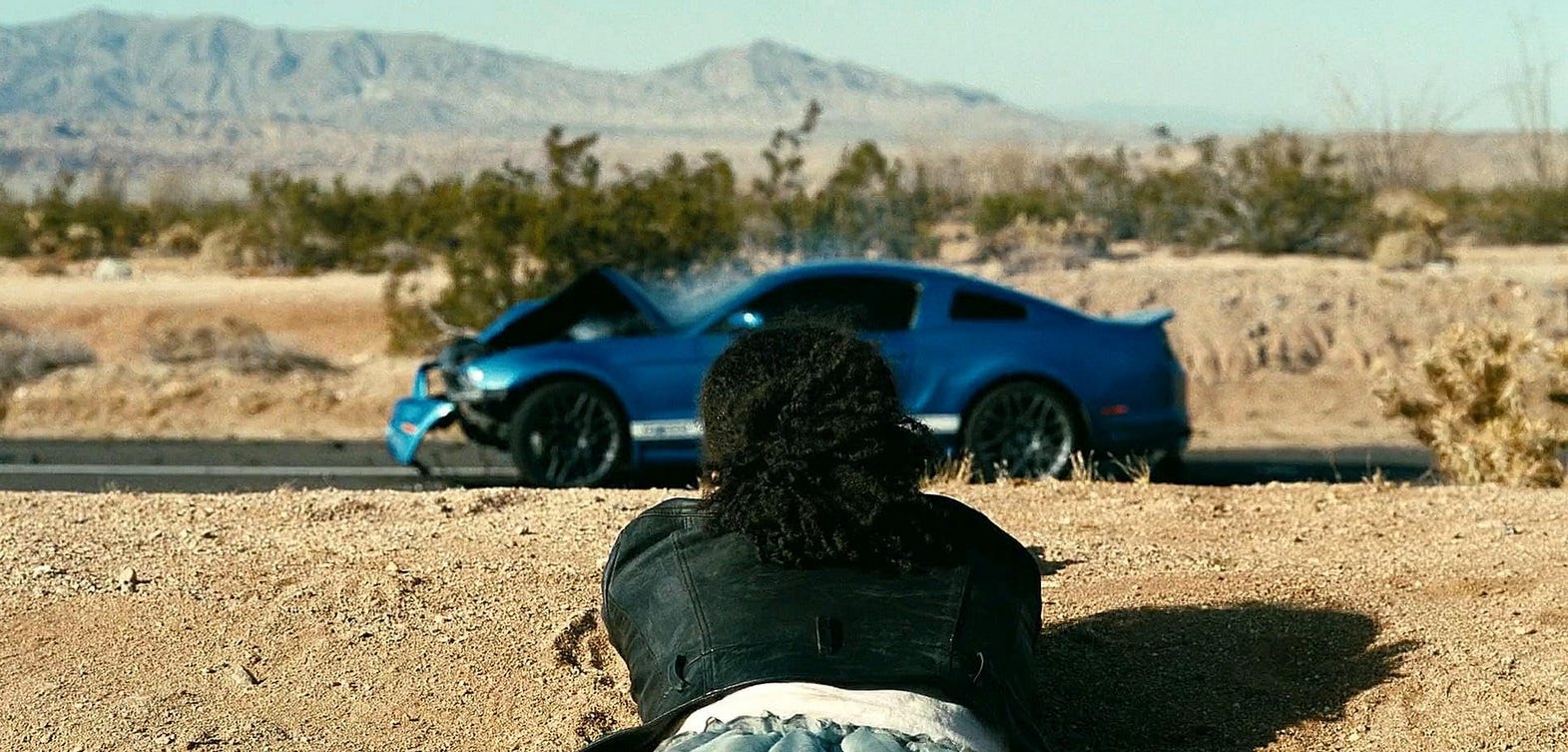
Gunfire.
Smoke drifts. Engines idle.
Bob arrives after.
He stays.
Asymmetry as Practice
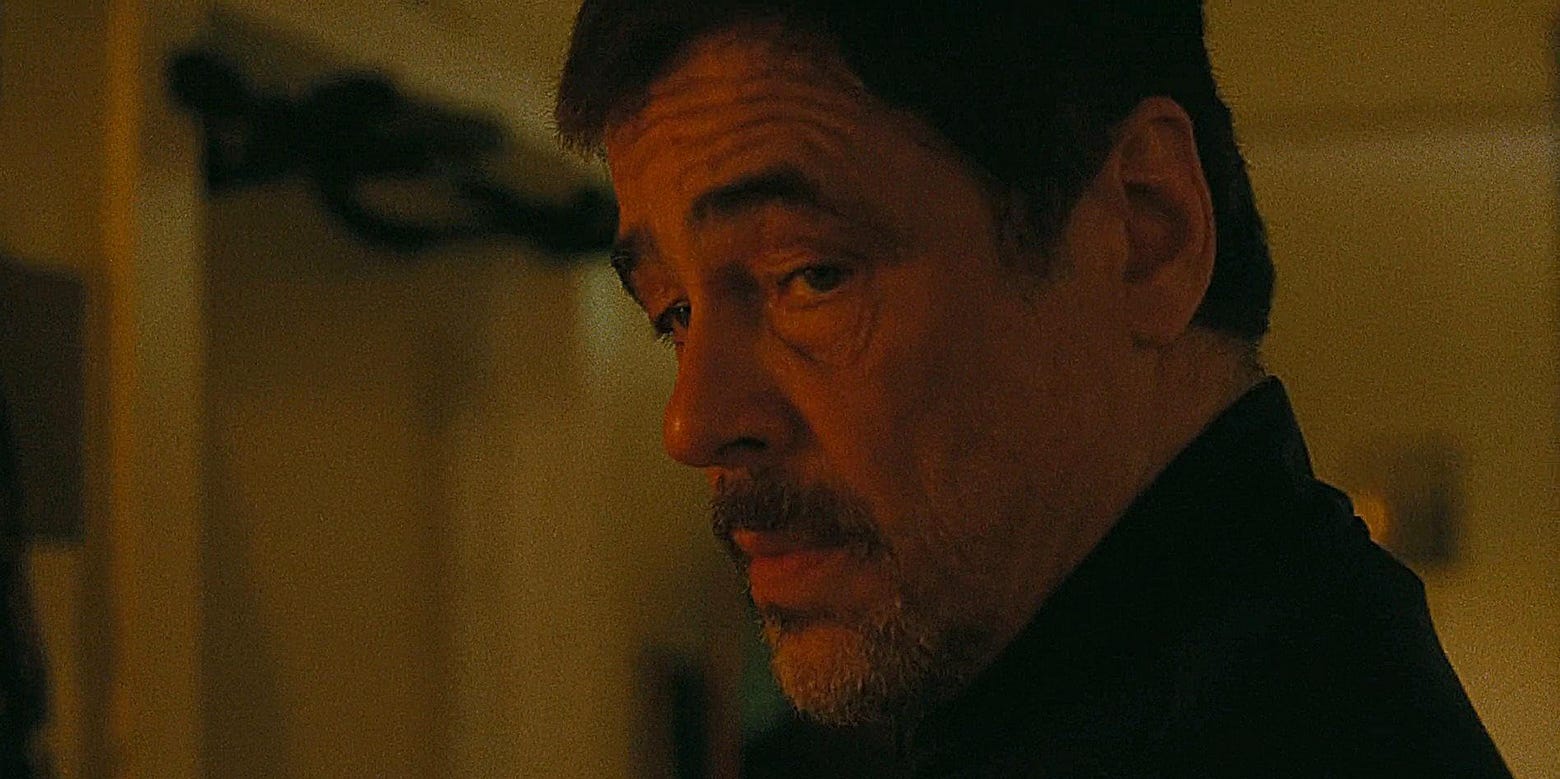
Sergio moves migrants across space.
Routes memorized. Doors that open. Cars that arrive without announcement.
If a drone appears, he shifts direction.
If a checkpoint forms, he reroutes.
His phone does not stop.
One house closes. Another opens.
He does not debate.
He does not narrate.
He moves.
The Child as Terrain
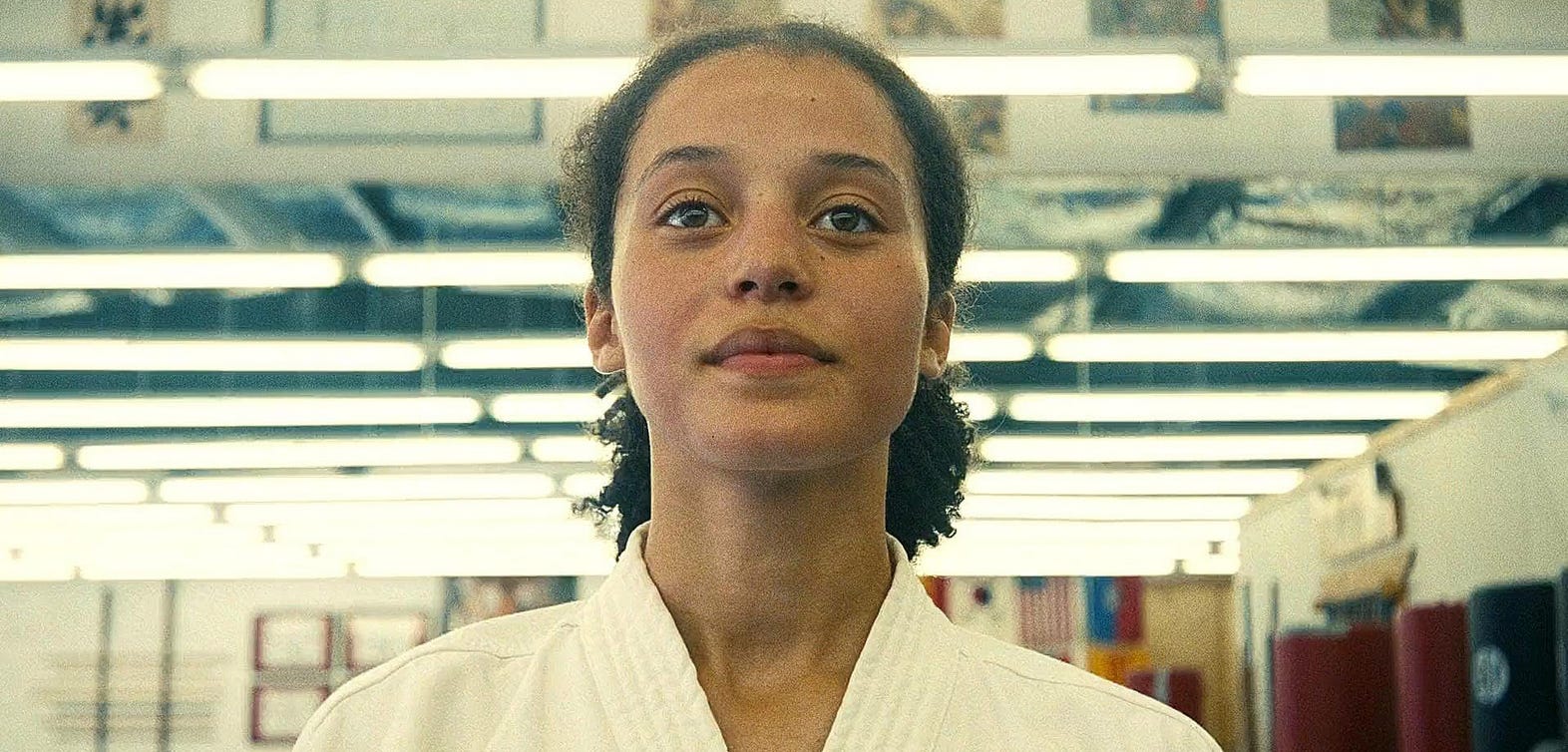
Born Charlene. Renamed Willa.
She adjusts the flash without asking. She reads the letter alone.
Perfidia writes: “Will you try to change the world like I did?”
Bob hands her the envelope. He does not read it aloud.
She leaves for a protest in Oakland. Rain falls. A squad is already moving in.
“You know that’s far, right?”
“Yeah.”
“Be careful.”
“I won’t.”
He watches her go.
One Battle After Another
Bob confronts.
Sergio diverts.
Willa steps into the street.
The frame does not decide.
Rain falls.
The squad is already in position.
Works Cited
The Battle of Algiers. Directed by Gillo Pontecorvo, 1966.
One Battle After Another. Directed by Paul Thomas Anderson, 2026.
(If you’re including theoretical ballast in footnotes but not foregrounding it:)
Selected revolutionary theory and insurgency studies consulted for contextual understanding of terrain, adaptation, and rootedness in population.
Historical materials on paramilitary cycles and state enforcement structures.
Disclaimer
This essay analyzes the formal and thematic architecture of a film. It does not endorse, advocate, or provide instruction regarding violence, insurgency, or extremist ideology. Any references to historical or theoretical materials are used solely for interpretive context.
The Anarchist Cookbook is discussed as a cinematic artifact, not as a practical manual. No instructional content is reproduced or implied.
That’s enough. Calm. Professional. Not defensive.
Acknowledgements
This film deserves respect for its craft.
Paul Thomas Anderson’s decision to shoot in VistaVision is not cosmetic. The format shapes the essay’s core argument about time and obsolescence.
The cast carries the structural weight without overstatement:
Leonardo DiCaprio renders Bob as misaligned rather than heroic, aging without theatrics.
Benicio Del Toro makes Sergio’s restraint the film’s quiet axis; his stillness does more work than any speech.
Teyana Taylor gives Perfidia presence without melodrama; her restraint makes absence feel deliberate.
Sean Penn’s performance as Lockjaw refuses caricature. The banality is the point.
The ensemble never tips into myth.
The production design and cinematography preserve space instead of compressing it. The image allows absence to remain visible.
That restraint is the film’s discipline.
This looks intense! I hadn't heard of this one. I read the essay twice because I really liked the character breakdowns.
This might be your best work yet Shaman. Great job.