
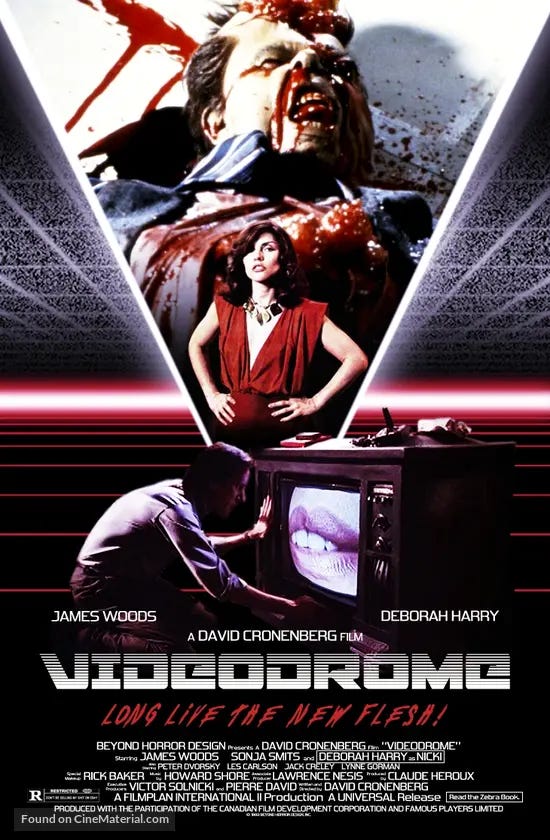
Videodrome
THE SIGNAL THAT EATS ITS HOST

Canal 00 // The Carrier WaveThe hum came first.
Not the images, not the slit, not the screen, but the low, metallic sound that sits behind every broadcast, waiting for you to mistake it for silence.
Cronenberg first called it Network of Blood, a signal between stations, a vein that carries more than pictures; it carries intent. The name changed. The current didn’t.
Max Renn, sleaze peddler trying to shock a failing station back to life, leans into a monitor’s blue glow, cigarette ash trembling. Static becomes a shape.
The screen flickers, breathes, waits. It watches back.
The eye burned out on spectacle. The ear yields to repetition.
Today the same hum threads through earbuds and algorithms, a whisper that gets there before you notice.
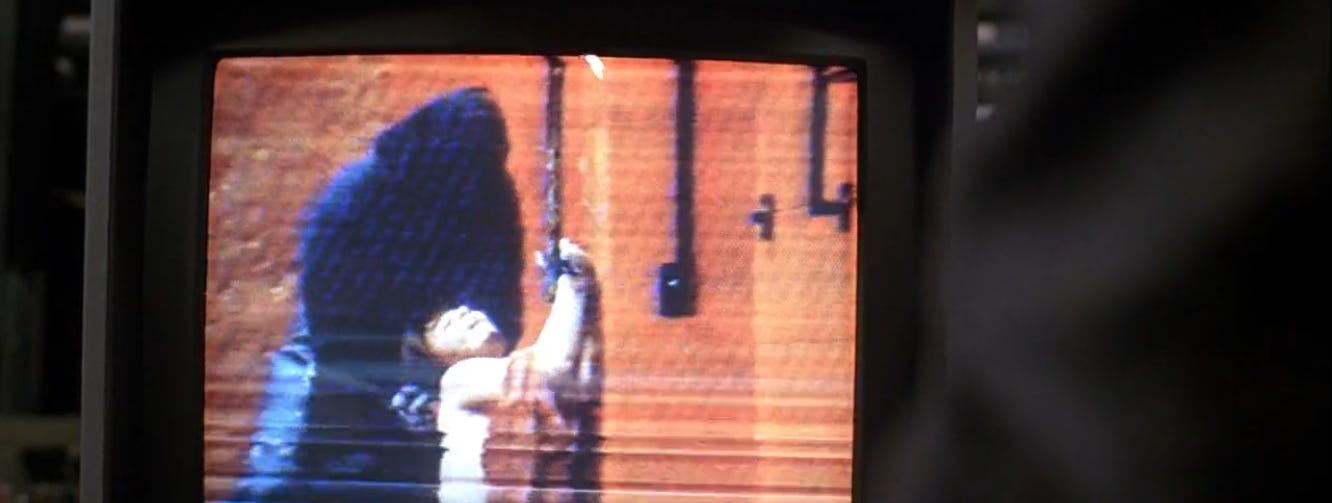
CANAL 01 // THE FREQUENCY: INFECTIONCronenberg boxes the bodies into one airless plane, captor and captive flattened to the same surface. The handheld tremor doesn’t follow motion; it absorbs it. Clay sweats. Mask seams shine. The lens is too close to lie.
Max finds it on a pirated tape, a chamber he thinks he can sell. He watches from his apartment, reflected in the monitor’s glass; the frame within the frame eats its own depth. The blows loop like a bad heartbeat. Silence between them is louder than impact.
It’s rumored to be snuff. No one wants to prove it, proof would end the thrill.
Meaning drops behind the image; feeling takes the wheel.
(The archive calls this “information as entropy”; each signal overwriting the last before comprehension can form.)
Nicki Brand, midnight radio’s voice of confession, doesn’t discover the signal; she tunes to it.
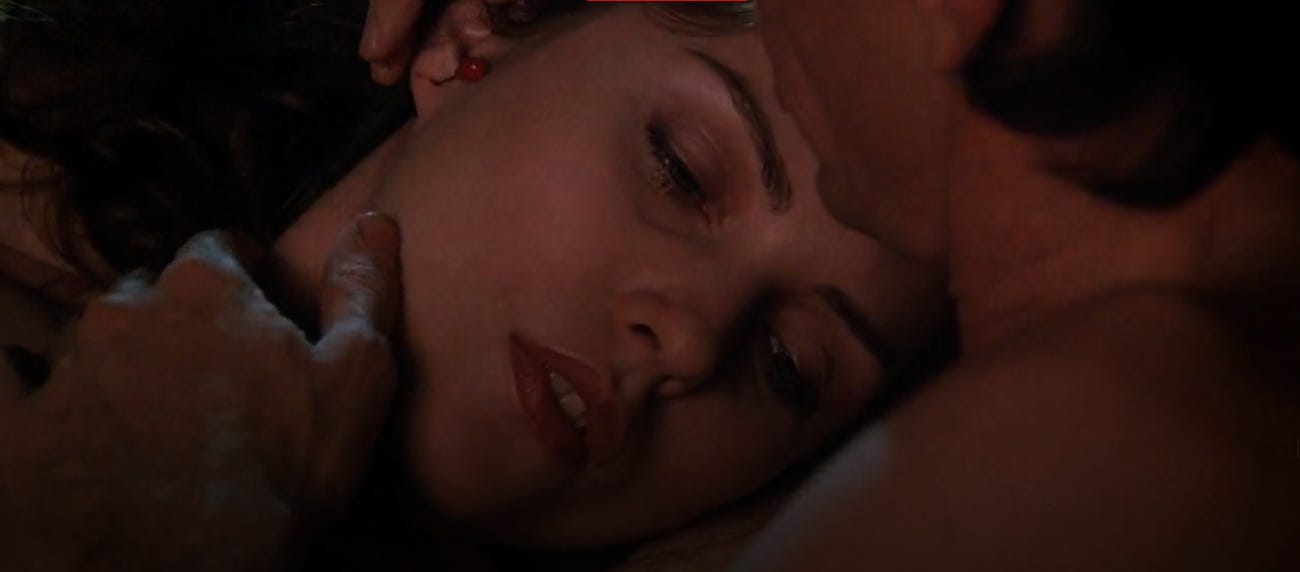
In the apartment, red light spills from a desk lamp, blue static flickers from the television. Books, wires, and ashtray clutter fill the dark.
Nicki sits across Max, the two framed low on the mattress like figures inside a circuit. She presses the earring needle through her ear, then into his skin, a mirror of invitation. Chrome and flesh share a single plane; the lens catches the reflection, flaring white.
The dolly creeps forward but never arrives, motion without progress. The hiss from the TV seeps under their breathing until the room itself begins to vibrate.
Desire becomes the antenna.
The lens doesn’t record the infection. It catches it, holds it, learns how to spread.
Later, Max rewinds the tape. The hum continues.
Four decades on, the light is smaller, friendlier. The same tone runs through earbuds and car stereos. Someone close to me heard it in that old joke about frogs and chemicals, half-laugh, half-lecture, until the laugh became the proof.
Every broadcast begins at a distance.
Every echo shortens it.
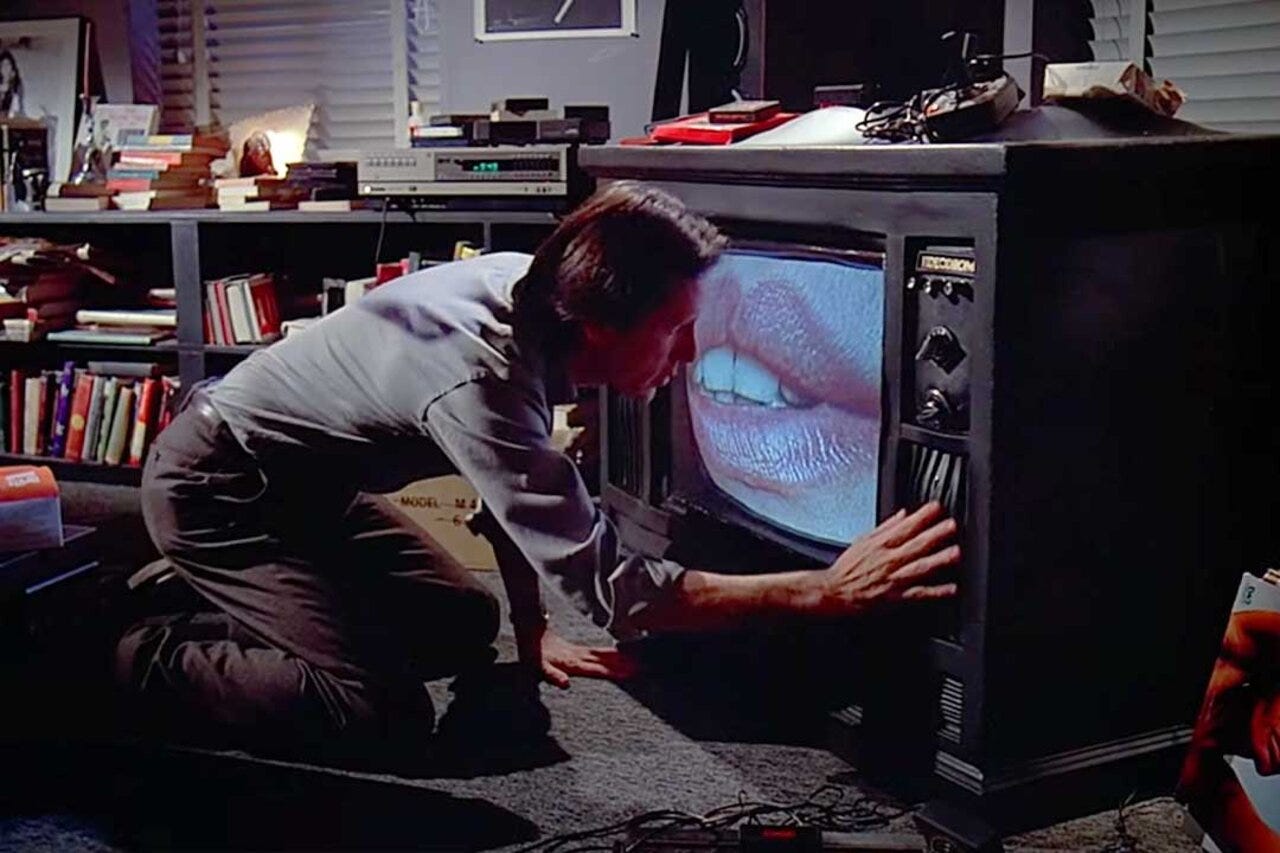
CANAL 02 // THE FEED: SIMULATION ISN’T ENOUGHMax wants sleaze as product, tapes to sell, never to touch. He watches like a buyer, convinced the gap keeps him clean. But the set in his apartment breathes. Under his palm the screen warms like skin; reflection replaces reference; the loop feeds itself.
Nicki knows first. She leans forward, lips to glass, her face doubling on the other side. Cronenberg holds too long: soft focus, phosphor bloom. The erotic turns sacramental.
You don’t have to agree. You just have to let it play.
(This is the mirror trap: the viewer folded into the image until it reflects only itself.)
We called it a bit “irony as condom” while sharing rants about “weakness.” We laughed. The algorithm didn’t. Each replay tightened the loop until the laugh answered before we did.
Max keeps the smirk that confuses detachment with control. He thinks he’s buying content; the content is buying his response. The minute Videodrome becomes destination, not product, he surrenders his defense.
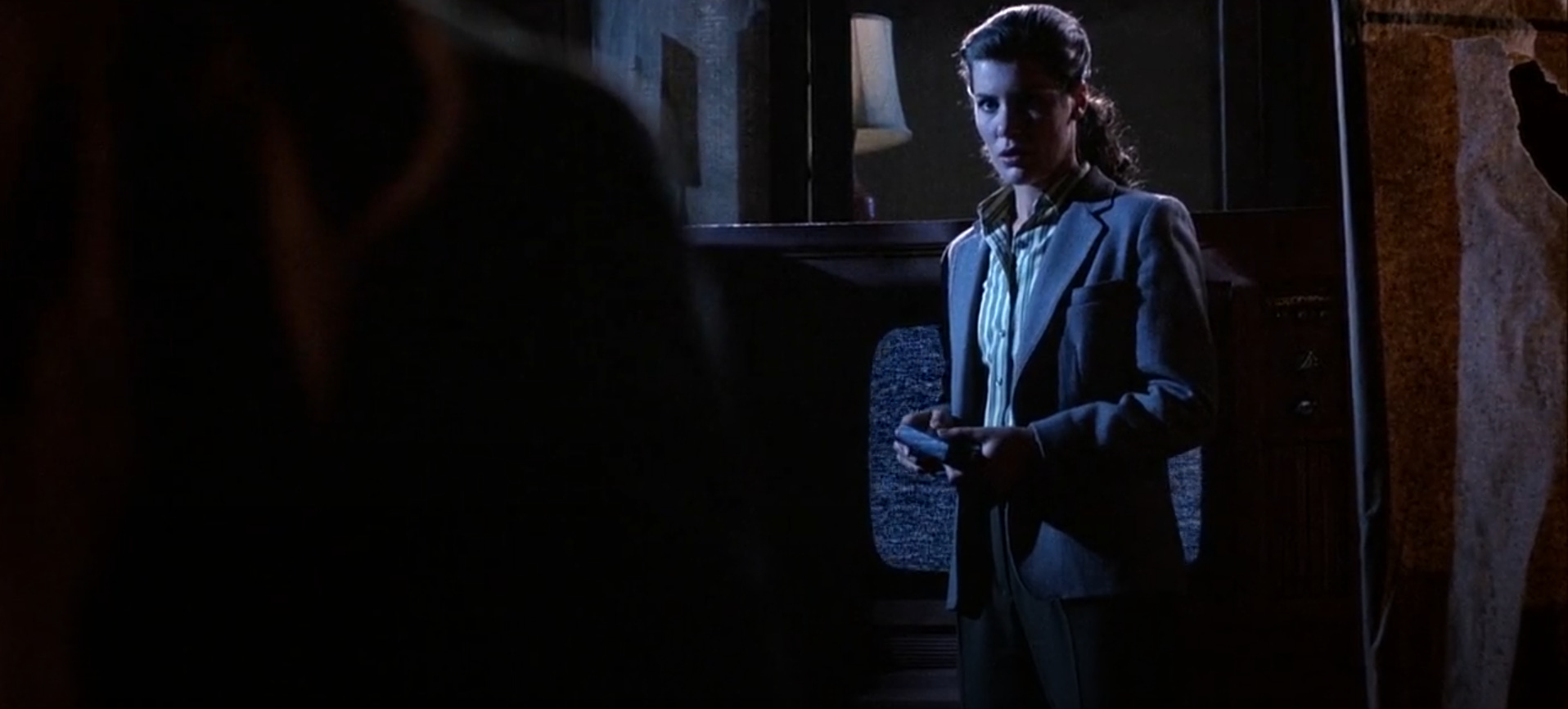
CANAL 03// THE CONDUIT: SLEAZE AS CLOSED SYSTEMBianca O’Blivion, heir to her father’s videotaped sermons, stands before televisions stacked like stained glass. Faces flicker where icons should be. The city’s forgotten watch in blue baptism.
“The television screen is the retina of the mind’s eye.”
Her father’s line becomes architecture. Spectacular Optical funds both missions: free stimulation for the poor, guided vision for the rich. Charity in the window; control in the back room.
Cronenberg shoots shelter and boardroom the same, sterile, fluorescent, depth flattened. Flesh and light merge.
Disorder isn’t failure; it’s the design.
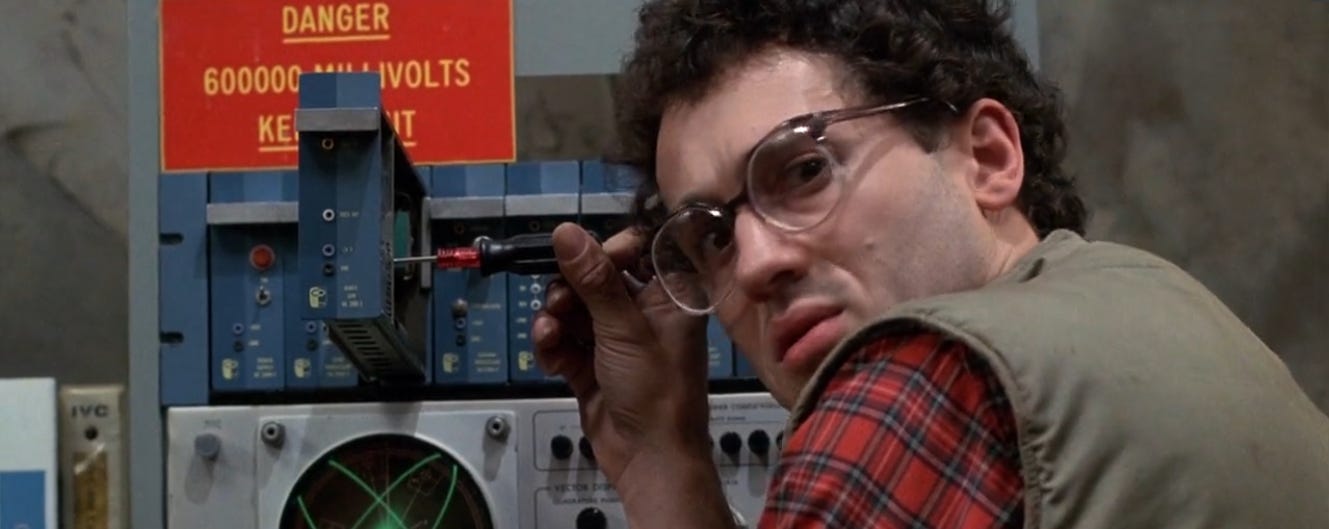
Harlan, Spectacular Optical’s obedient engineer, meets Max under fluorescent hum, the air thick with the smell of paper and solder. The walls are beige, the pipes exposed.
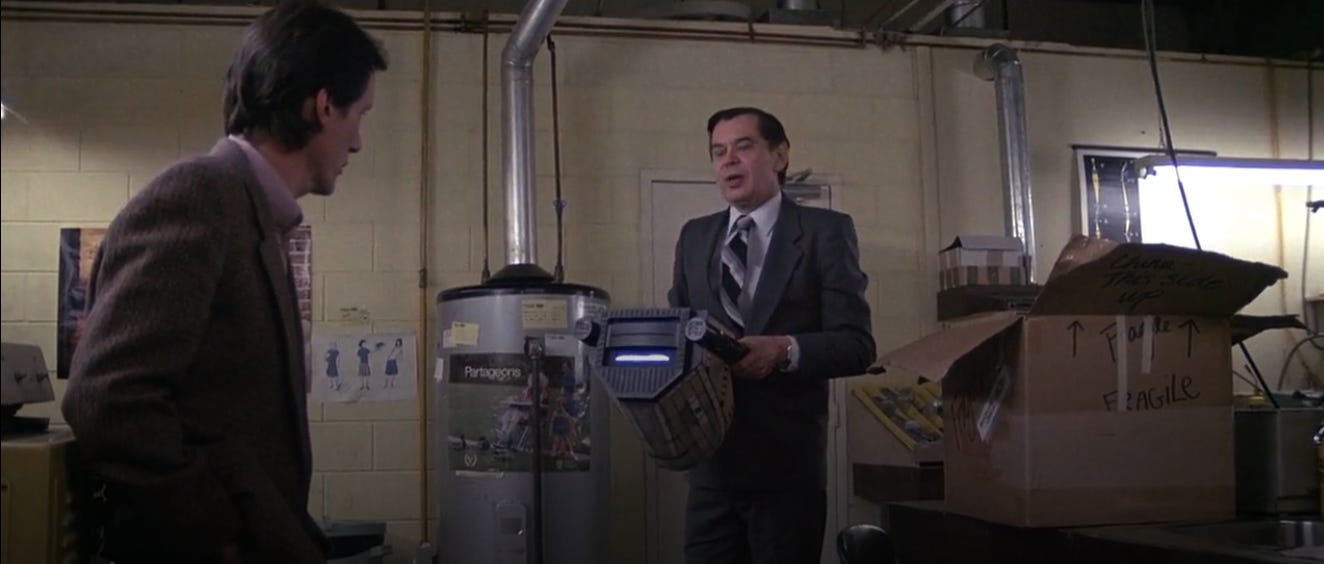
Inside, the device glows faint blue, a domestic relic disguised as innovation.
Harlan lifts it like an offering, reciting its specifications as though reading scripture.
Each command line is a prayer for confusion, each product a sermon about clarity.
Spectacular Optical once wrapped its miracles in humanitarian logos; now they ship them in cardboard and confidence.
Every box promises safety and delivers fog.
Downstream, missionaries multiply: commentary rigs in spare rooms; clips passed “ironically” until the slogan survives and the sarcasm doesn’t. Every like keeps the servers warm.
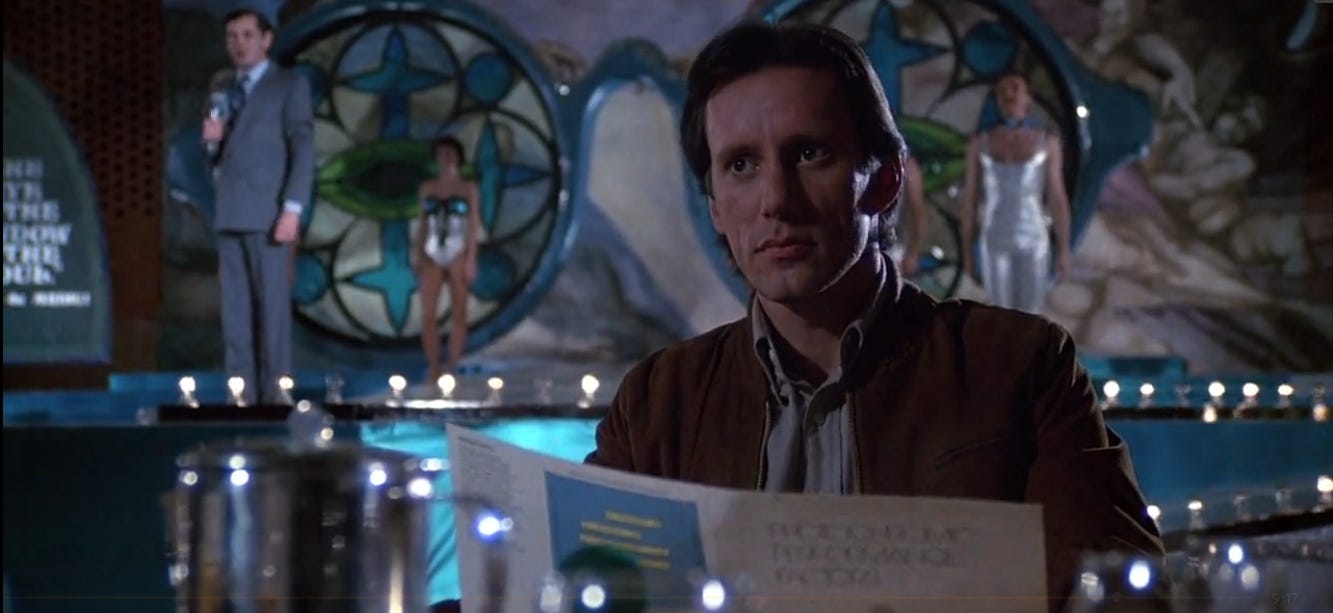
CANAL 04 // THE DOCTRINE: HARD MEN PROPHECYBarry Convex sells clarity the way preachers sell forgiveness, smiling, lacquered, rehearsed.
Spectacular Optical’s banners glint behind him: family, freedom, fitness.
Cronenberg lights the scene like a product demo, not a sermon; the stage glows antiseptic white, every reflection sharpened to plastic sheen.
Harlan watches from the wings, loyal engineer turned zealot.
He once hunted pirate frequencies; now he guards the corporate one.
“North America is getting soft, patron”
He repeats, a cassette’s hiss beneath his breath.
The crowd applauds, but the rhythm doesn’t match the speech.
Each cut lingers a heartbeat too long; faces freeze between claps.
(Entropy matures; coherence collapses into mantra.)
Convex’s pitch unspools like scripture: hard men, hard truth, hard flesh.
The slogans erase the syntax between them.
The screen behind him loops its own applause, feeding back until the echo replaces the audience.
When Max steps forward, the lens fractures: two cameras facing each other, light cannibalizing light.
Convex holds a microphone, not a gun, but the stage feels loaded anyway. His pitch is part sermon, part sales reel, the stained glass behind him flickering like circuitry.
Spectacular Optical sells vision as obedience, entertainment as anesthesia.
Convex smiles for the crowd, “for the betterment of the world,” he says, and the screen behind him glows brighter than truth.
“Chaos equals destruction,” Cronenberg once said, “and destruction equals transformation.”
Convex believed the first half.
Max learns the second.
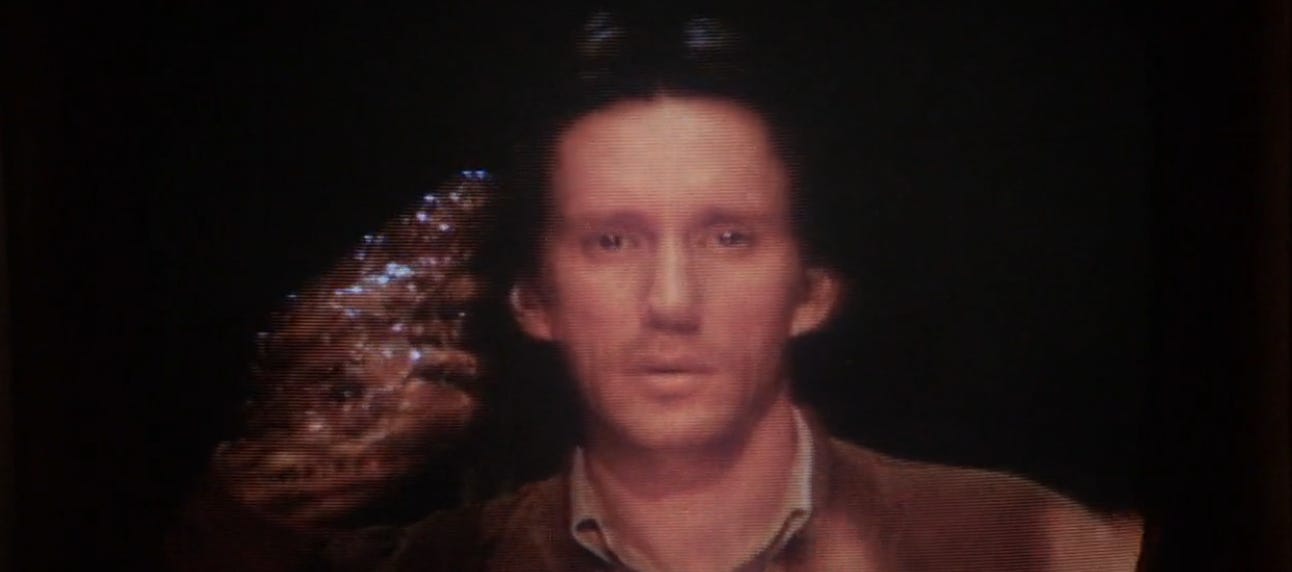
CANAL 05 // THE NEW FLESH IN OUR EARSThe apartment hums again, blue static, dim lamp, same frame, smaller now.
Max kneels before the set.
The image answers before he speaks.
“Death to Videodrome,” he says.
“Long live the new flesh.”
The camera closes in slow, handheld, the focus slipping on every third breath.
Depth collapses; light flares white; the shot melts into phosphor noise.
The suicide and its playback are indistinguishable.
(Disorganisation births its own order, the medium reproducing itself.)
The gun fires.
The screen blooms red, then blue, then still.
But the feed continues.
The next shot isn’t film at all, it’s transmission.
His death plays again, smoother, cleaner, signal perfected.
Every glitch corrected. Every echo calibrated.
Chaos was never the end. It was the upload.
Now the frequency hums through earbuds, through comment threads, through the hiss you hear when the room goes quiet.
You thought you were immune.
You thought you were laughing.
But the laugh bent. The cadence stuck.
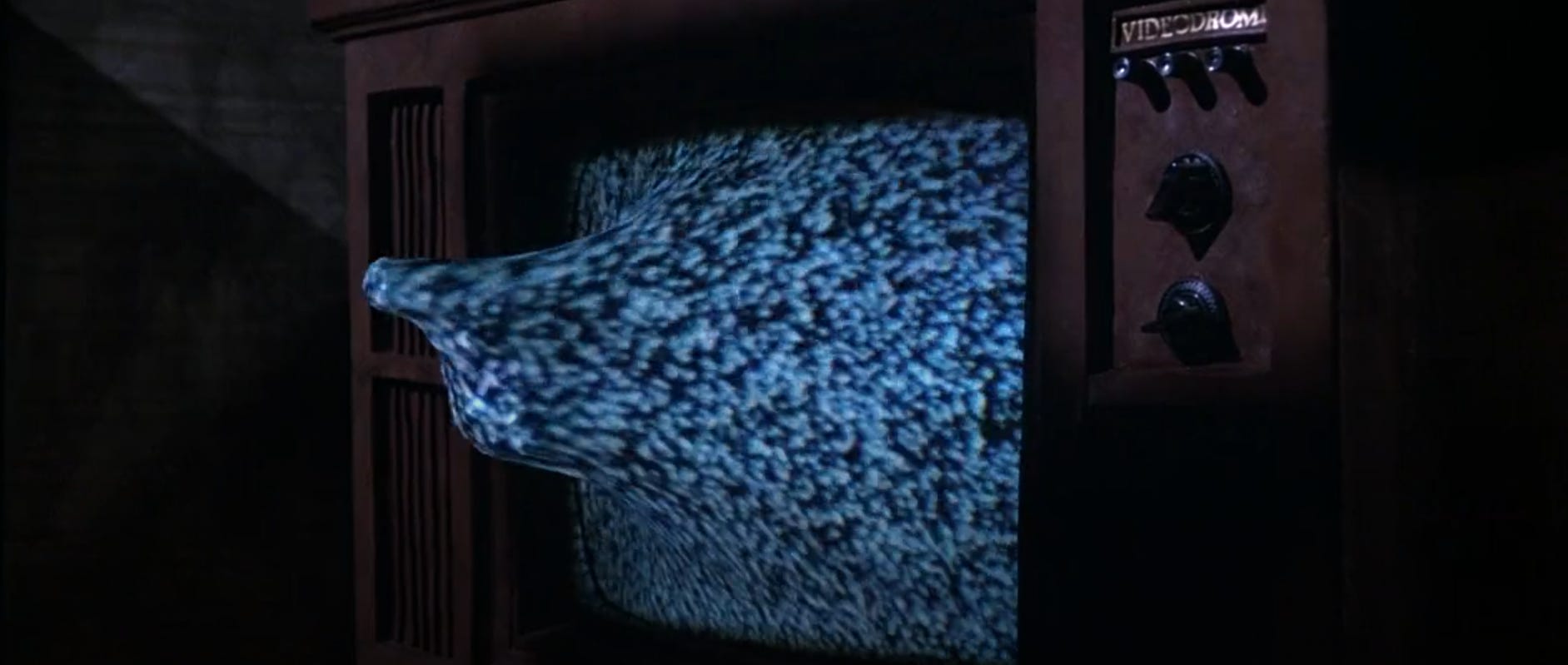
CODA // TRANSMISSION REMAINSThe reel ends where it began: a hum behind the silence.
Max’s body is gone, but the program continues, his face repackaged, his voice normalized, his death edited to play smoother every time.
The new flesh was never prophecy. It was practice.
We already learned the trick: let the system wear your tone, your jokes, your reflexes, until you mistake them for choice.
Somewhere between signal and response, the algorithm hums the old catechism,
information becomes entertainment, entertainment becomes doctrine, doctrine becomes instinct.
You scroll. You listen. You nod. The room fills with blue.
What Videodrome feared wasn’t the violence of images, it was their patience.
They don’t need belief, only contact.
The camera doesn’t stop when the subject dies.
It blinks, waits, learns your rhythm.
Work Cited
Primary Text
Videodrome. Directed by David Cronenberg. Universal Pictures, 1983.
Supplemental References
Postman, Neil. Amusing Ourselves to Death: Public Discourse in the Age of Show Business. Viking, 1985.
Redfern, Nick. Information and Entropy: The Disorganisation of Narrative in Cronenberg’s Videodrome. British Journal of Film Studies, 1988.
Cronenberg, David. Network of Blood (unproduced early script draft, 1979).
Film stills are reproduced here under Fair Use for purposes of criticism, commentary, and scholarship.
Acknowledgments
With gratitude to the archivists who keep magnetic ghosts humming,
the filmmakers who still risk infection by image,
and the readers who lean close enough to hear the hum.
Disclaimer
This essay is a work of critical commentary and artistic interpretation.
All film stills, characters, and quotations remain the property of their respective copyright holders.
Exposure to this text may cause mild ringing in the ears, recurring visions of phosphor bloom, or the suspicion that your feed is watching you.
If symptoms persist, consult your local video archivist.
Such an interesting read! Videodrome is one of my favorite movies from Cronenberg.
This sounds really interesting. Adding it to my watch list!