
The Lodge
Architecture, Ritual, and Inherited Grief

For some, the holidays pull people back into rooms they thought they’d grown out of.
Families gather, old shapes return, and the walls remember more than anyone wants to admit.
The Lodge takes that familiar ritual, arriving, pretending, hoping the space will hold,
and lets it crack under the weight of everything left unsaid.
Day 9 of 25 Days of Slay lands here: a winter retreat where the warmth never arrives,
a family trying to assemble itself inside a house already arranged for someone else.
Enter carefully.
Some rooms echo.
The Vessel
Before the dollhouse ever appears,
the film offers its first ritual.
Laura stands at the mirror, arranging herself in a room that feels steadier than she does.
A brief moment of order before she enters a house whose shape no longer accommodates her.
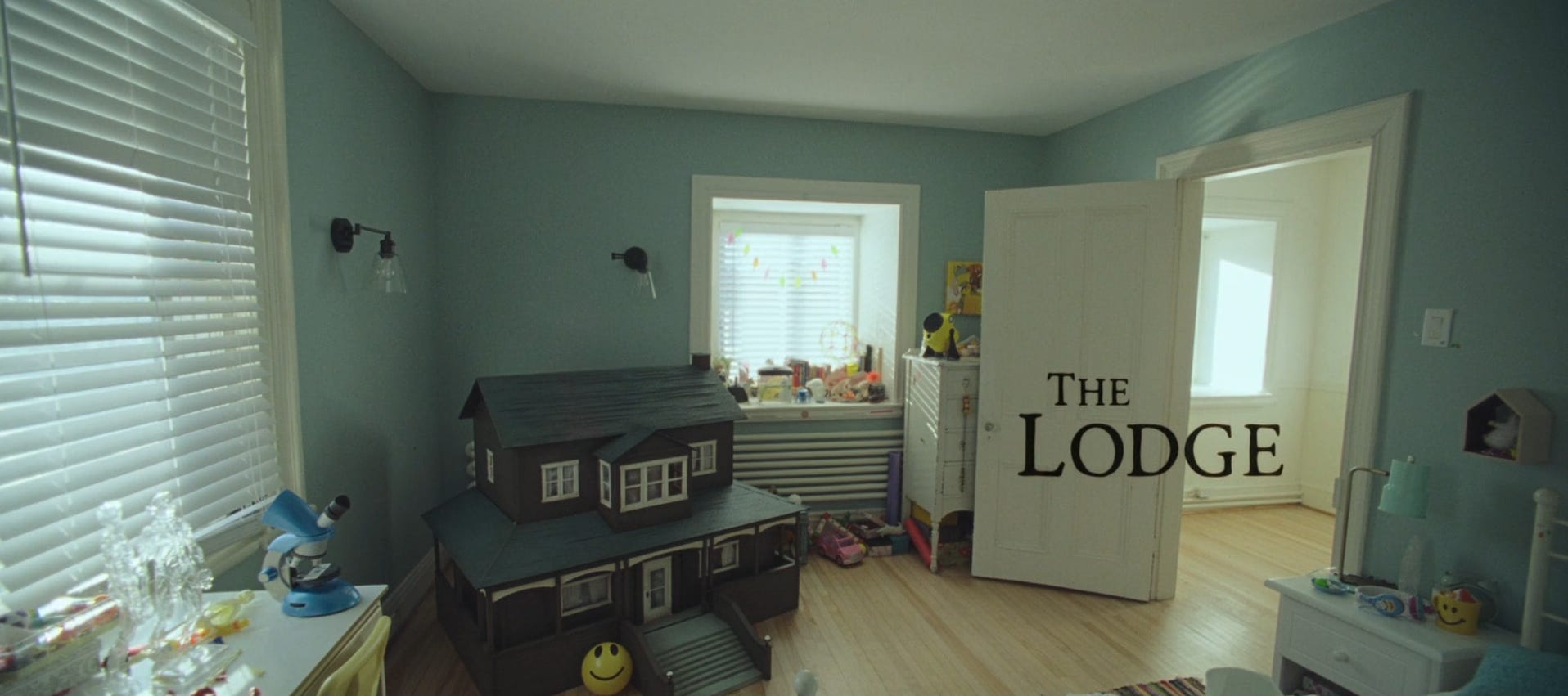
The first house that absorbs this family’s grief is not the lodge.
It is the small replica Laura kept on her floor,
a model of order she could control when the real one slipped beyond reach.
After she dies, the children inherit it.
Not her voice.
Not her intent.
Only her architecture.
They kneel beside it the way others kneel beside graves.
They move the figures.
They rearrange the rooms.
They memorize a spatial logic no one taught them.
By the time they arrive at the real lodge, the atmosphere is familiar.
Scale is the only difference.
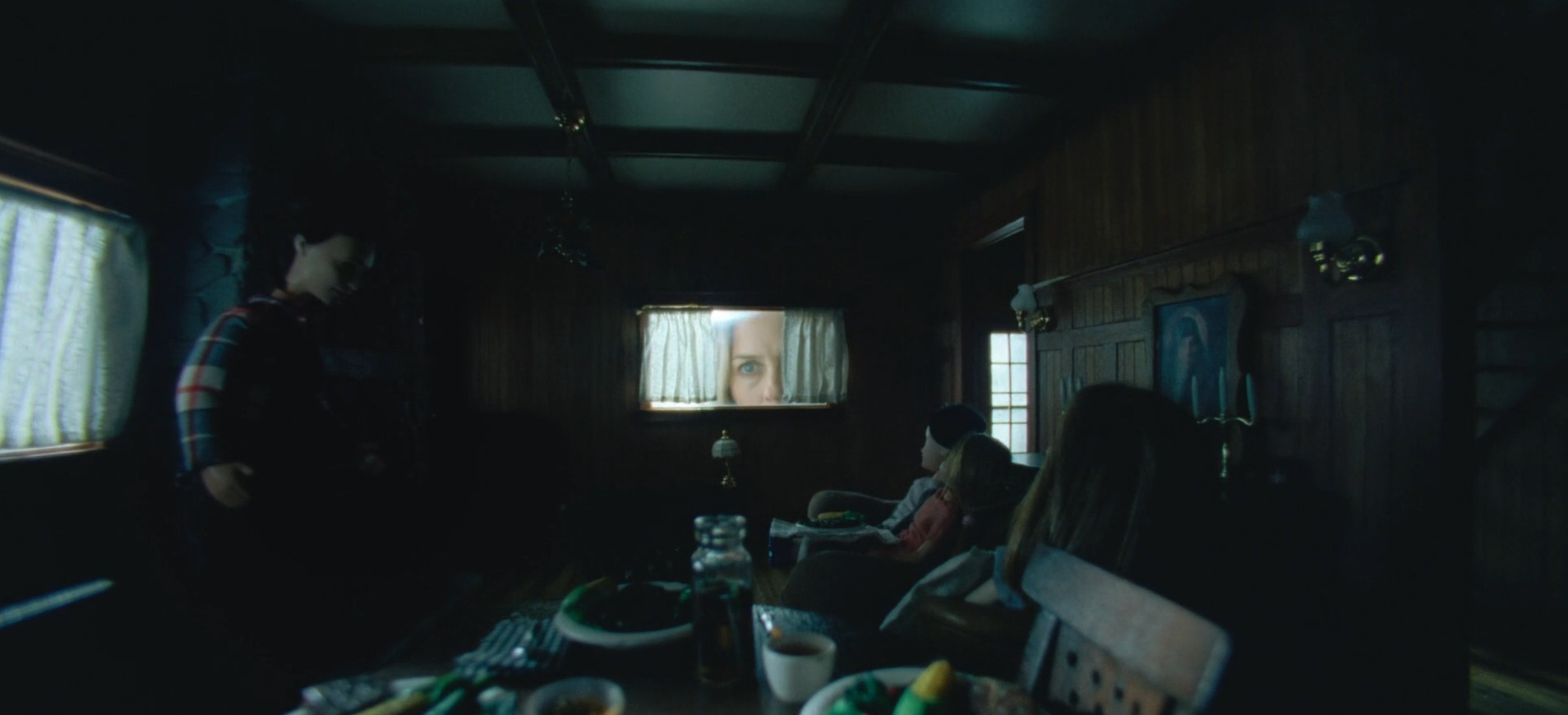
The lodge receives them already shaped.
Its rooms echo the dollhouse rooms,
narrow hallways, watchful windows,
stairs that divide more than they connect.
The camera behaves like another room,
watching from corners people don’t occupy.
Wide angles stretch the hallways
until the bodies inside look placed more than present.
The frame tightens without cutting, as if the image were learning the ritual.
The frame does not comfort.
Nothing is merciful.
Nothing is malevolent.
But rooms do not hold every body the same way.
The lodge is a vessel.
It holds silence, residue,
and the memory of a family that refuses to articulate what has collapsed.
The children do not inherit lessons;
They inherit environments.
A structure cannot mourn,
But it can remember.
Whether memory counts as mourning is left to the room.
Richard locks the door behind him as if the house will keep its promise without him.
The snow takes the sound.
The hallway keeps the shape of his absence.
What little warmth he brought into the frame lingers for a moment, soft and misplaced.
Holiday logic in a room shaped for silence.
The children stand where he left them.
Grace watches the door.
The house does nothing.
It doesn’t need to.
The temperature has already changed.
The lodge does not ask its occupants to change,
only to repeat what the room already knows.
REHEARSAL
The children do not design a ritual
they reproduce one.
Not intentionally.
Not maliciously.
Instinctively.
The dollhouse teaches them that emotion is arranged, not expressed.
That grief is something you stage.
That order is something you place in a room.
So when they hide jackets, move objects, erase belongings, whisper about purgatory, construct shrines, and stage death.
They are not inventing cruelty.
They are performing grief the way they learned it: spatially.
The dollhouse becomes their first altar.
The real lodge completes the scale.
Their actions follow a pattern older than they are:
Deprivation.
Disappearance.
Silence.
Rearrangement.
They think they are frightening Grace.
They are reenacting the architecture they inherited.
Their confusion is real, even when their reenactments follow a pattern they do not recognize.
They move the pieces.
The house holds the shape.
Reversion
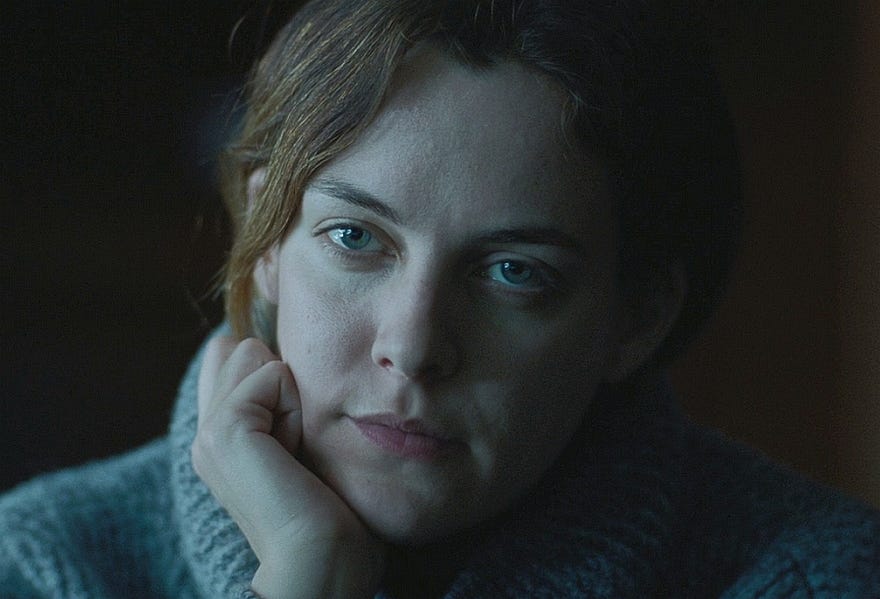
Grace does not break.
She was raised in a structure where rooms enforced belief long before words did.
She returns to the floor plan she was taught to survive.
The compound trained her through rooms, not scripture:
cold bedrooms with no corners to disappear into,
corridors that funneled bodies into obedience,
heat given conditionally,
silence arranged as correction,
punishment framed inside doorways like photographs.
The lodge carries the same grammar.
Wood.
Narrow passages.
A central heat source that decides who suffers.
Light that enters from outside, never from within.
Corners watch her the way they did at the compound, steady, unblinking, architectural.
When the children remove warmth, erase belongings,
and let silence spread across the floorboards,
the space completes a pattern her body already recognizes.
Her mind follows last.
There is a moment when she steps out of sequence, but the room holds its line, and she returns.
What the children stage as a prank,
Grace receives as doctrine,
not because the lodge instructs her,
but because its shape resembles the one that raised her.
Architecture does not repeat history.
Bodies do.
And hers has been trained to answer certain rooms.
Vacuum
Richard does not build safety.
He arranges conditions.
He brings Grace and the children into a structure already carrying someone else’s grief,
then steps outside the frame before the space can show him what it is holding.
His errors are architectural, not emotional.
He leaves the cult research open on his computer vocabulary the children will later use without context.
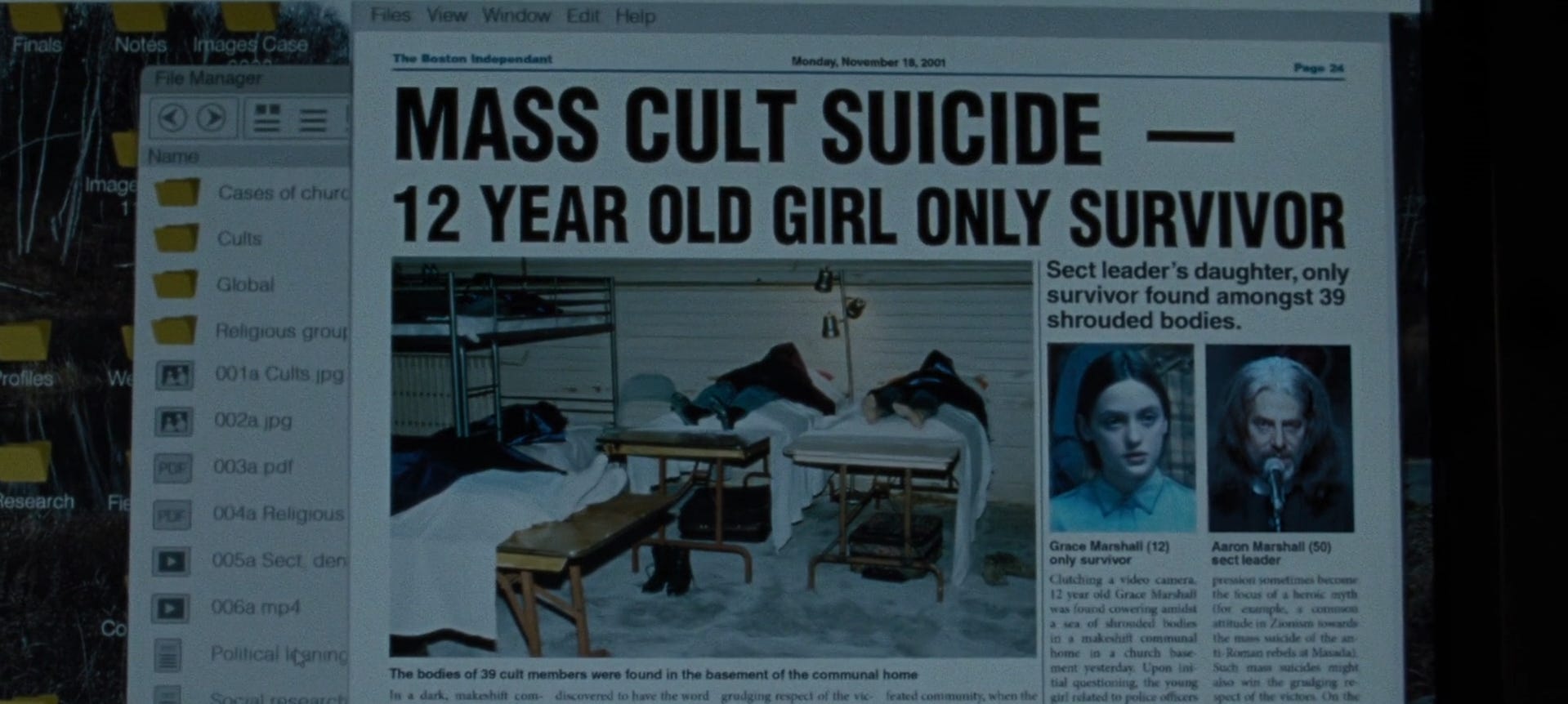
He leaves Laura’s photographs in sightlines Grace cannot avoid.
He leaves the lodge stocked for scarcity, not shelter.
He leaves the rooms in their original arrangement, one woman’s memory pressed onto another’s arrival.
He leaves without a vehicle, without mediation, without warmth.
He leaves the loaded gun.
These are not choices of intention.
They are choices of layout.
A layout is still a choice, even when its consequences are not understood.
The lodge is already a vessel; it only needs participants.
Richard supplies them, then removes himself at the moment the structure requires someone to hold it together.
The result is simple:
The children inherit language without understanding.
Grace inherits a room shaped like her past.
The house inherits all three of them at once.
He doesn’t cause the ritual.
He completes its conditions.
LITURGY
The children escalate their actions as if following a script no one taught them.
Objects vanish.
Heat withdraws.
Belongings slip out of sight.
A doll appears where no one placed it.
They intend discomfort, maybe fear.
The space arranges something else.
The dollhouse provides the pattern:
remove the familiar,
rearrange the pieces,
stage absence,
wait for the room to settle around it.
The lodge accepts these adjustments the way any structure does —
by holding whatever shape is given.
For the children, this is mimicry.
For Grace, it is sequence.
Cold.
Silence.
Erasure.
A corridor lit only by what enters from outside.
Her body answers the pattern before she can refuse it.
What begins as a prank gathers the grammar of a ritual
because the elements align:
Sequence is not destiny, only pattern.
the children’s reenactment,
the house’s arrangement,
Grace’s inherited recognition.
No single actor intends the result.
But the shape is familiar enough to continue.
Some rituals need belief.
This one only needs conditions.
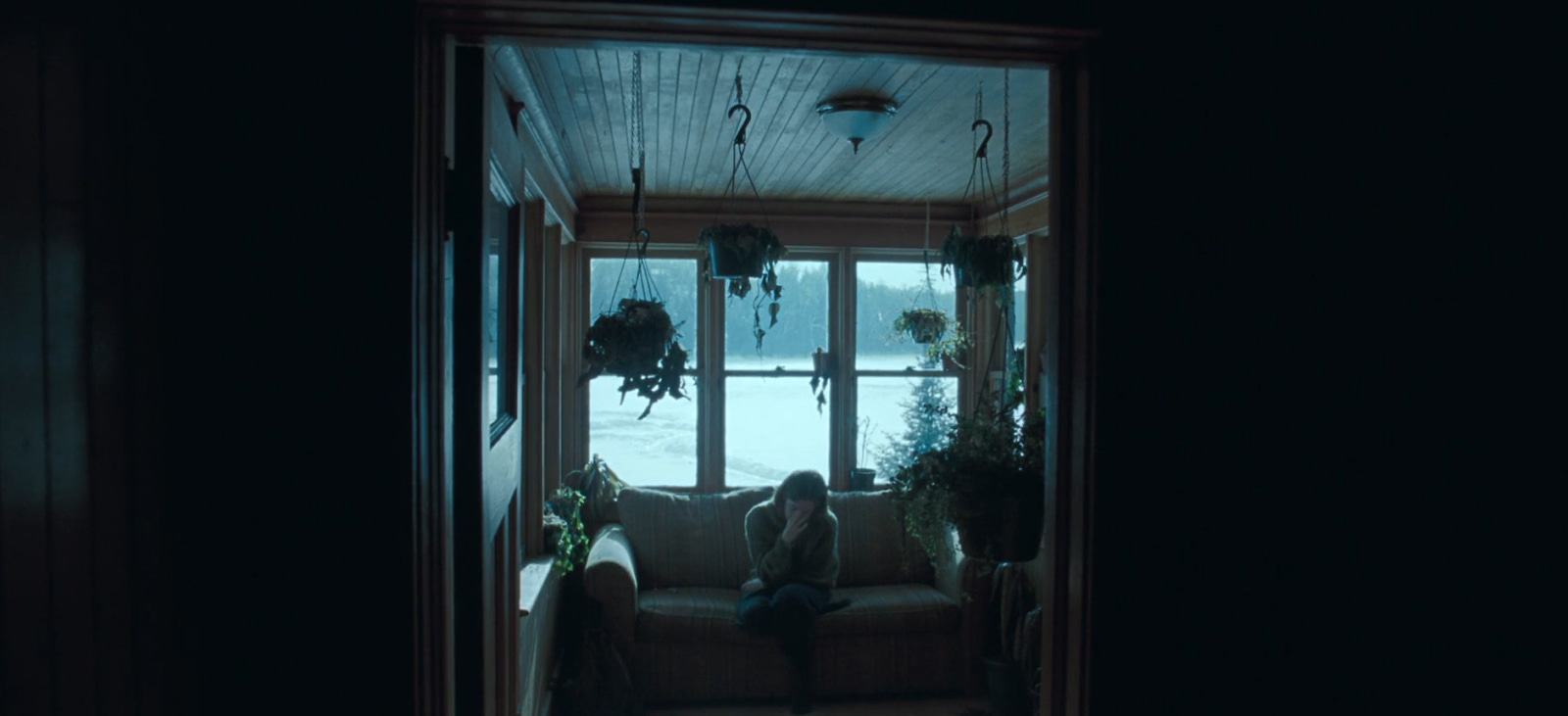
CONVERGENCE
Two deterioration engines move through the lodge at the same time,
each believing it is acting alone.
The children begin in resentment,
drift into mimicry,
push it toward escalation,
and reach panic only when the room answers back.
Each step widens the distance between what they intend
and what the space makes of their intentions.
Grace moves through a narrower spiral,
deprivation first,
then guilt,
then the thin air of penance,
and finally the doctrinal pull her body has been trained to obey.
Each step narrows the distance between memory
and command.
These systems are separate until the architecture joins them.
The lodge mirrors both grammars at once:
the dollhouse’s rearranged order,
the compound’s cold enclosure,
corridors that restrict movement,
rooms that watch more than they shelter,
light entering only from outside.
When the spatial conditions align, the two systems converge.
The frame narrows around them, not by closing, but by refusing escape.
The children lose authorship; the sequence continues without their permission.
Grace loses distinction, symbol and instruction collapse into the same surface.
The house becomes the officiant:
presiding, not directing,
holding the pattern until it resolves.
Nothing supernatural.
Nothing metaphorical.
Just structures meeting where no one is prepared to name them.
Systems converge cleanly in theory.
In bodies, collapse is uneven.
LEGACY
What passes between generations here is not wisdom.
It is layout.
Not intention.
Not story.
Just the shapes that held them.
Not every inheritance weighs the same.
Some bodies enter a room already carrying its shape.
The children inherit Laura’s coping architecture —
the dollhouse with its arranged rooms, its staged disappearances,
a manual for grief written in furniture and walls.
Grace inherits her father’s ritual architecture,
cold as discipline,
silence as order,
rooms arranged to dictate behavior.
Richard inherits something quieter,
a structure of avoidance that teaches him to read rooms only after the harm is assembled.
He recognizes patterns only in retrospect,
which means he never intervenes soon enough to change them.
Each arrives at the lodge carrying an unfinished floor plan.
The house receives these patterns without interpretation.
It does not choose a side.
It holds what is placed inside it.
Trauma travels by shape, not motive.
Grief repeats by arrangement, not memory.
Bodies follow architecture more faithfully than instruction.
By the end, no one is acting alone.
The children follow the dollhouse.
Grace follows the compound.
Richard follows absence.
The lodge follows its own grammar.
They inherit the structures.
The structures finish the ritual.
By morning, the chairs still face the table, arranged for a meal no one will finish.
If something in this breakdown of The Lodge, the dollhouse, the ritual logic, the inherited structure, felt true in a way the film never says aloud, I write these forensic readings every week.
You’re welcome to follow along.
It stays cold here.
Christmas Horror Movie coverage:
12/1 Silent Night Deadly Night 3:
12/2 The Nightmare Before Christmas: Abandoned Places
12/3 Silent Night Deadly Night:
12/4 Anna And The Apocalypse: H. is for Horror
12/5 Terrifier 3:
12/6 The Advent Calendar: Sahar Writes
12/7 Silent Night Deadly Night 4:
12/8 Violent Night: Robo Pulp Media
12/9 The Lodge:
12/10 Mean One:
12/11 Silent Night:
12/12 It’s A Wonderful Knife:
12/13 A Christmas Horror Story: Strange Matters
12/14 Deadly Games/Dial Code Santa Claus:
12/15 Black Christmas (2006): Blood, Guts, and Blush
12/16 Krampus: Pop! Goes My Brain:
12/17 Elves: Creatures of War
12/18 Santa Jaws: Movie Malpractice
12/19 Better Watch Out: Habitual Cinema
12/20 Rare Exports: The Macabre Tavern
12/21 Christmas Bloody Christmas:
12/22 Silent Night Deadly Night 2: Tales From The Tape
12/23 Gremlins:
12/24 Black Christmas (2019):
12/25 Black Christmas: Horror Concierge
WORKS CITED
Film
The Lodge (2019), dir. Veronika Franz & Severin Fiala.
Primary Sources Consulted
Production design and cinematography insights drawn from published interviews and Kodak’s feature on the film’s visual strategy.
Dialogue and scene sequencing referenced from the film’s publicly available transcript.
Architectural and visual comparisons informed by frame studies conducted during drafting.
These sources support spatial analysis only; interpretations remain my own.
ACKNOWLEDGMENTS
This essay is part of 25 Days of Slay, a month-long horror celebration organized by Kyle (Horrorble Writer), whose work stitching this event together has given all of us a strange, generous place to play.
Gratitude to every writer who contributed to this lineup.
The range is wide, the voices distinct, and the season is better for it.
DISCLAIMER
All interpretations in this essay are my own and do not represent the filmmakers, distributors, or any other contributors to The Lodge.
Images used are for commentary and critical analysis under Fair Use.
This work is not affiliated with the production or its rights-holders.
A very detailed and insightful analysis of The Lodge . Well done and well researched. I don’t know why this movie hasn’t gotten the full love it deserves
Really enjoyed this piece. It reads like a forensic essay, but with very poetic criticism.