
The Conversation
The Version That Holds

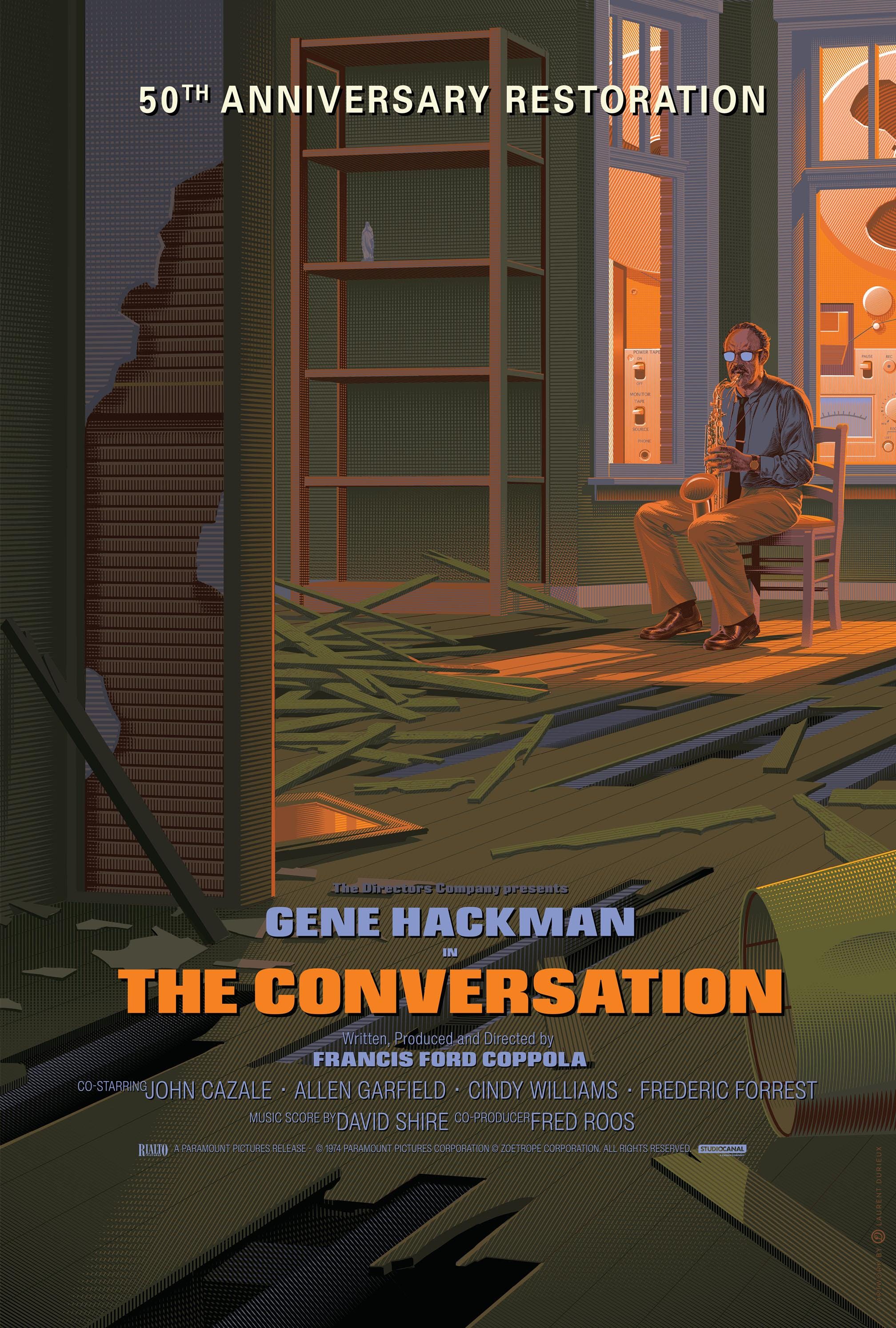
The room hears it before he does.
A voice through the speakers.
Measured.
Familiar.
—
A laugh.
Then another.
—
He doesn’t move.
Listens.
Waiting for it to settle into something he can take hold of.
—
It doesn’t.
—
The line continues.
Not clean.
Not broken.
Just off enough that it won’t stay.
—
A hand turns a pen.
Unscrews it.
—
A transmitter inside.
—
The room has already adjusted.
What was hidden now handled openly.
Passed from hand to hand.
—
His voice.
Clear.
Standing without him.
—
He hears it now.
Fully.
—
Too late to stop it.
—
The room settles around it.
Already treating it as complete.
—
He stays there.
Listening.
As if it might still change.
—
It doesn’t.
The Tape Seduces by Pretending to Hold Meaning
The square is too wide to hold anything.
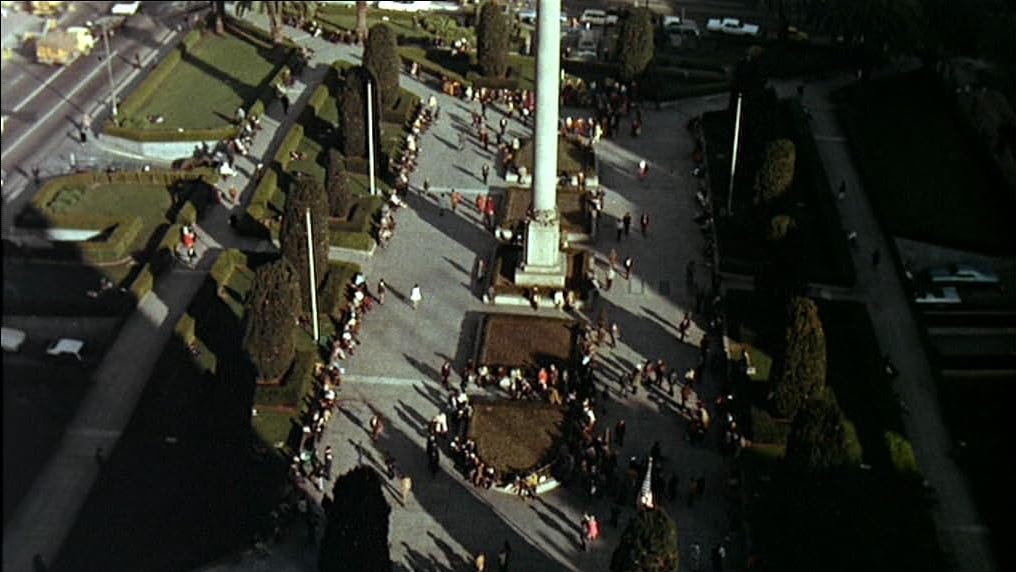
The square is too wide to hold anything.
People crossing. Pausing. Turning back before their movement finishes. A band somewhere off-frame, rhythm drifting in and out. Nothing settles long enough to follow.
Then the lens tightens.
Not closer. Flatter.
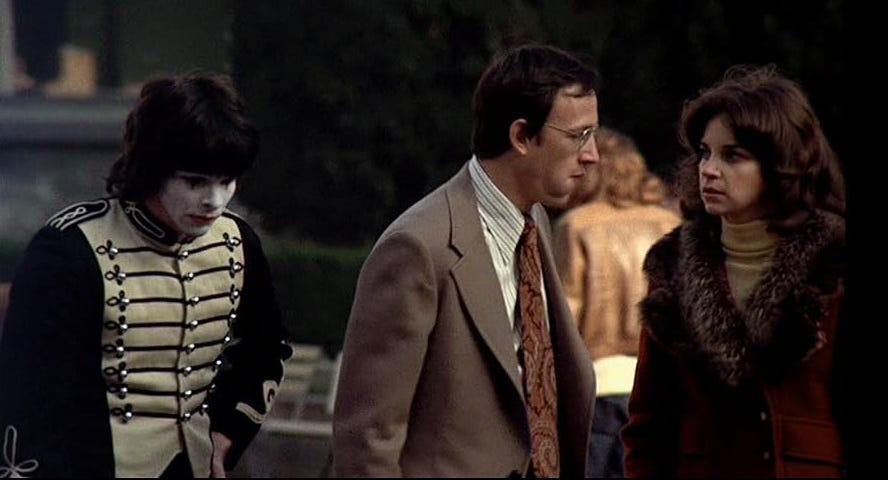
Depth folds in. Bodies stack. The crowd stops behaving like space and starts behaving like interference. The couple is still there, held in the frame but never given clean separation from what surrounds them. Their mouths move, but the words don’t arrive together.
A phrase almost forms.
Lost under the drums.
Returned from another angle.
—
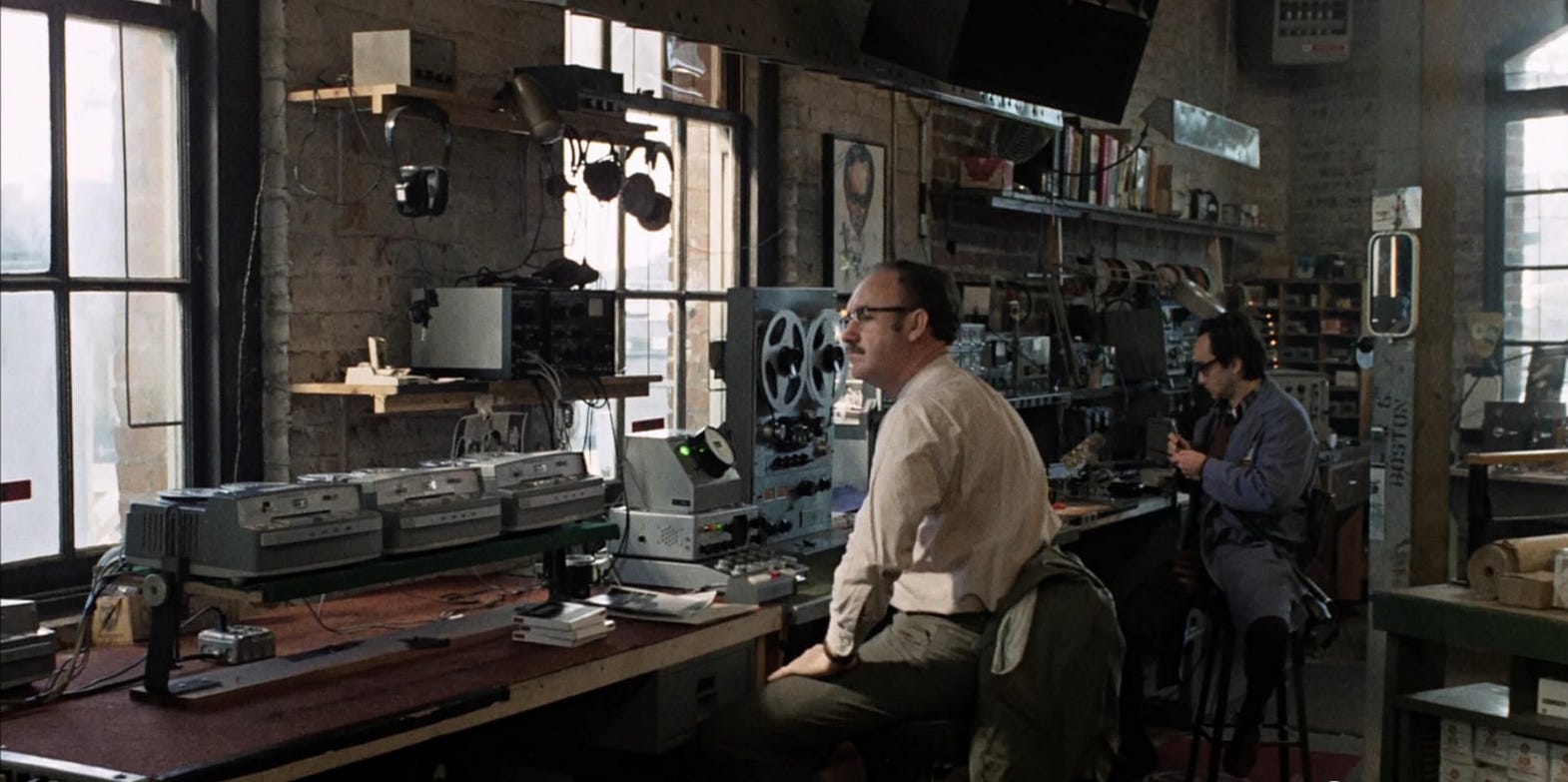
On the bench, the first version doesn’t hold.
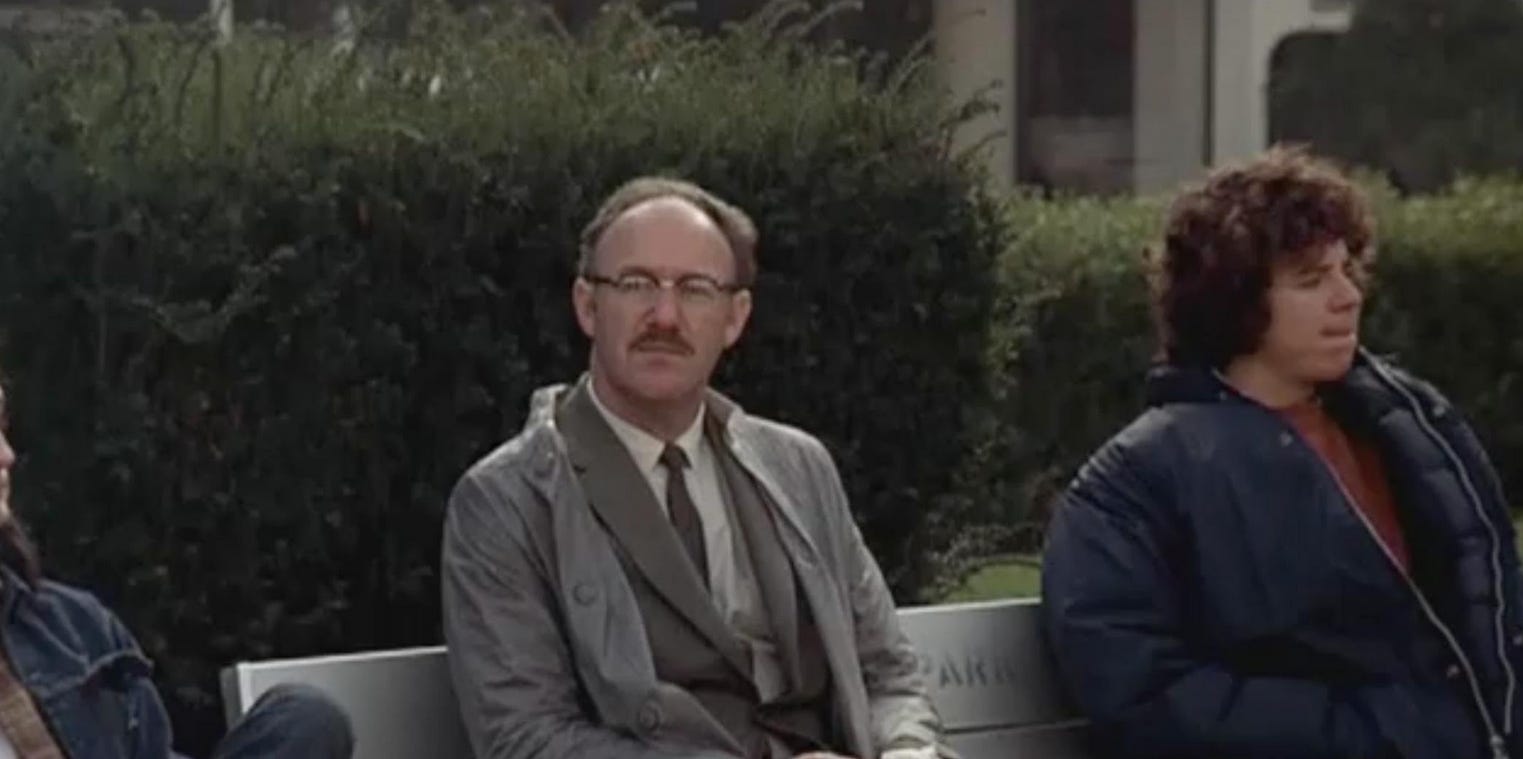
Too much bleed. Words without edges. Fragments that don’t attach. He lets it run. Stops it. Runs it back.
Not the whole thing.
Just the part that almost worked.
The drums are still there. Louder than the voices. He shifts the balance. A channel lifted. Another dropped. The interference thins just enough to let something through.
The sentence comes forward, holds just long enough to feel like it might carry through. He lets it run this time, doesn’t stop it at the first break. Lets the next word try to attach, the phrase stretch forward into something like continuity.
It almost does.
Then it breaks.
—
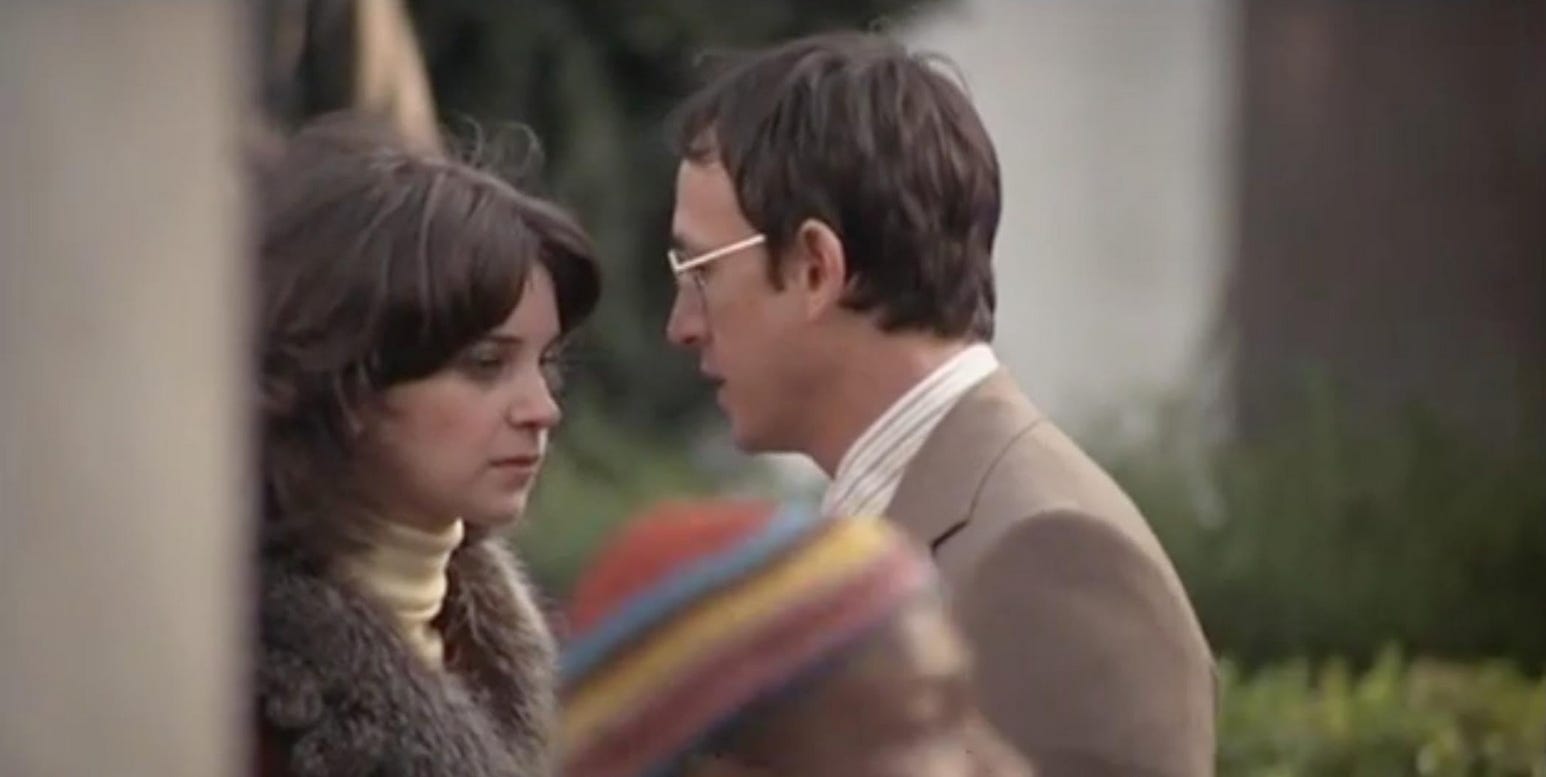
“Kill us…”
The words surface without context.
Then again.
“Kill us…”
Not louder. Not cleaner. Just placed differently against what surrounds them.
He stops the machine.
Looks at the bench.
Does nothing.
Then moves.
The filter comes off. Reconnected. The tape backed up to where it failed. He runs it again.
The drums return.
The phrase slips.
Comes back.
He stays with it.
—
Around it, other pieces begin to settle.
A pause before an answer.
A delay that wasn’t there before.
Fragments that didn’t belong together starting to hold the same shape. What survives one pass survives the next. What holds its place begins to pull other pieces into alignment.
Not because the gaps are gone.
Because the remaining parts begin to agree.
—
The song returns in the wrong room.
The same line, carried clean, without the interference that first shaped it. It doesn’t arrive as recovery. It arrives already formed.
He lets it play.
Listens for the same shape.
It still matches.
—
Back at the bench, the earlier version no longer fits.
He runs it again.
The first pass sounds wrong now.
Not because it changed.
Because everything after it has.
The later version holds longer. The fragments line up in ways they didn’t before. The sentence approaches itself from different angles, each one closing the distance a little more.
He keeps the part that holds.
Lets the rest fall away.
Runs it again.
—
The tape never resolves. It narrows.
Each return removes something. Each adjustment reduces what can be heard without reducing what can be believed. What remains begins to feel deliberate.
—
What survives begins to feel like what was meant.
Harry Turns the Tape into Permission
By now the tape can hold.
Long enough to work on.
That changes the room.
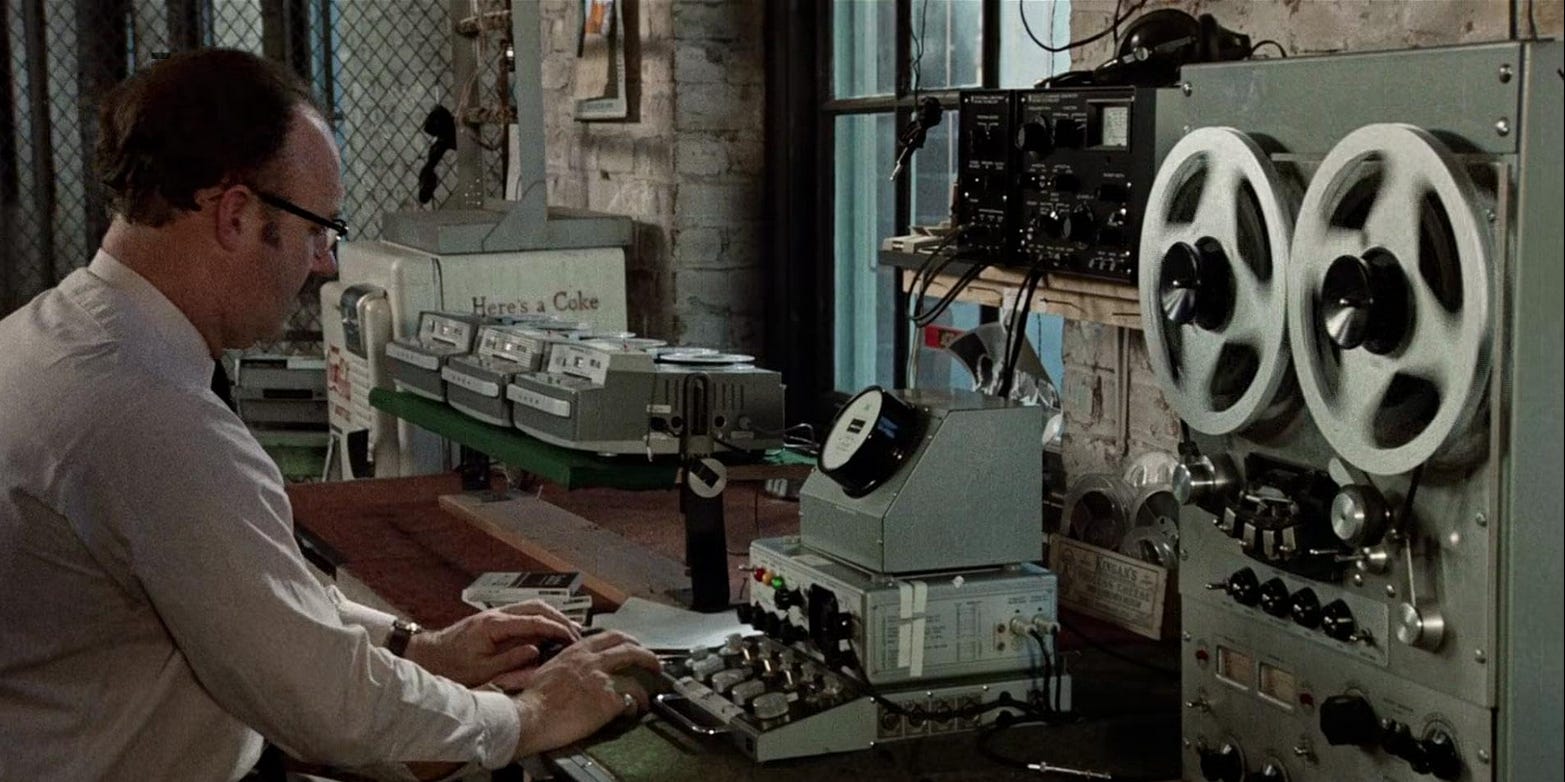
In the first pass, the problem was recovery. Now the problem is narrower. Which part holds. Which version stays. Which fragment gets to count.
He keeps the machines on the same section.
Not because there is nothing else on the tape.
Because this is the part that can be made to stay in place.
—
Stan keeps reaching outward.
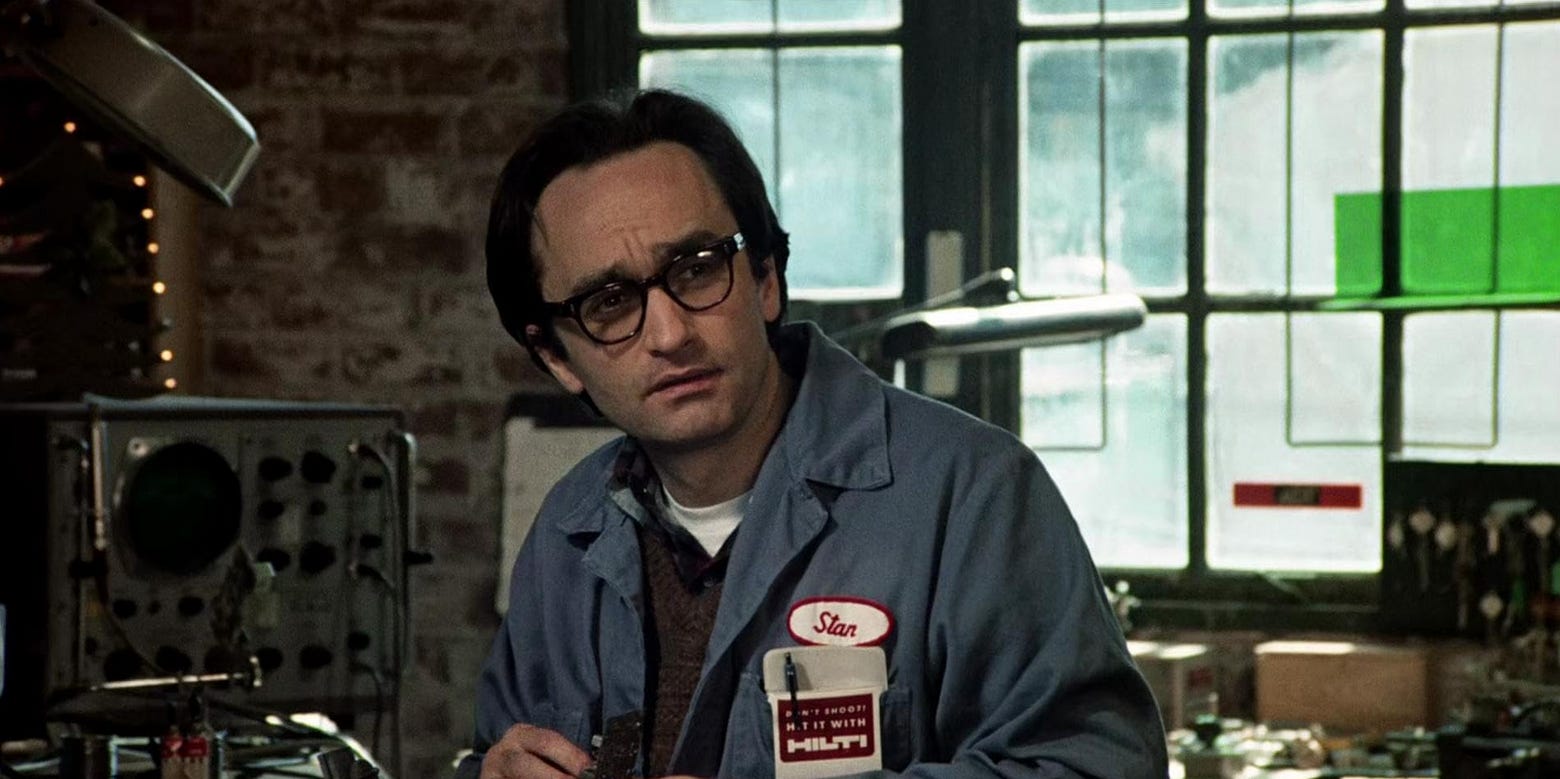
Stan keeps reaching outward.
The derelict on the bench. The talk around him. Why they are saying what they are saying.
Harry cuts him off.
The tape stops mid-phrase.
Starts again.
Stops again.
Each interruption says the same thing. The work is not to widen. The work is to reduce. Context only multiplies what has to be sorted.
So he returns to procedure.
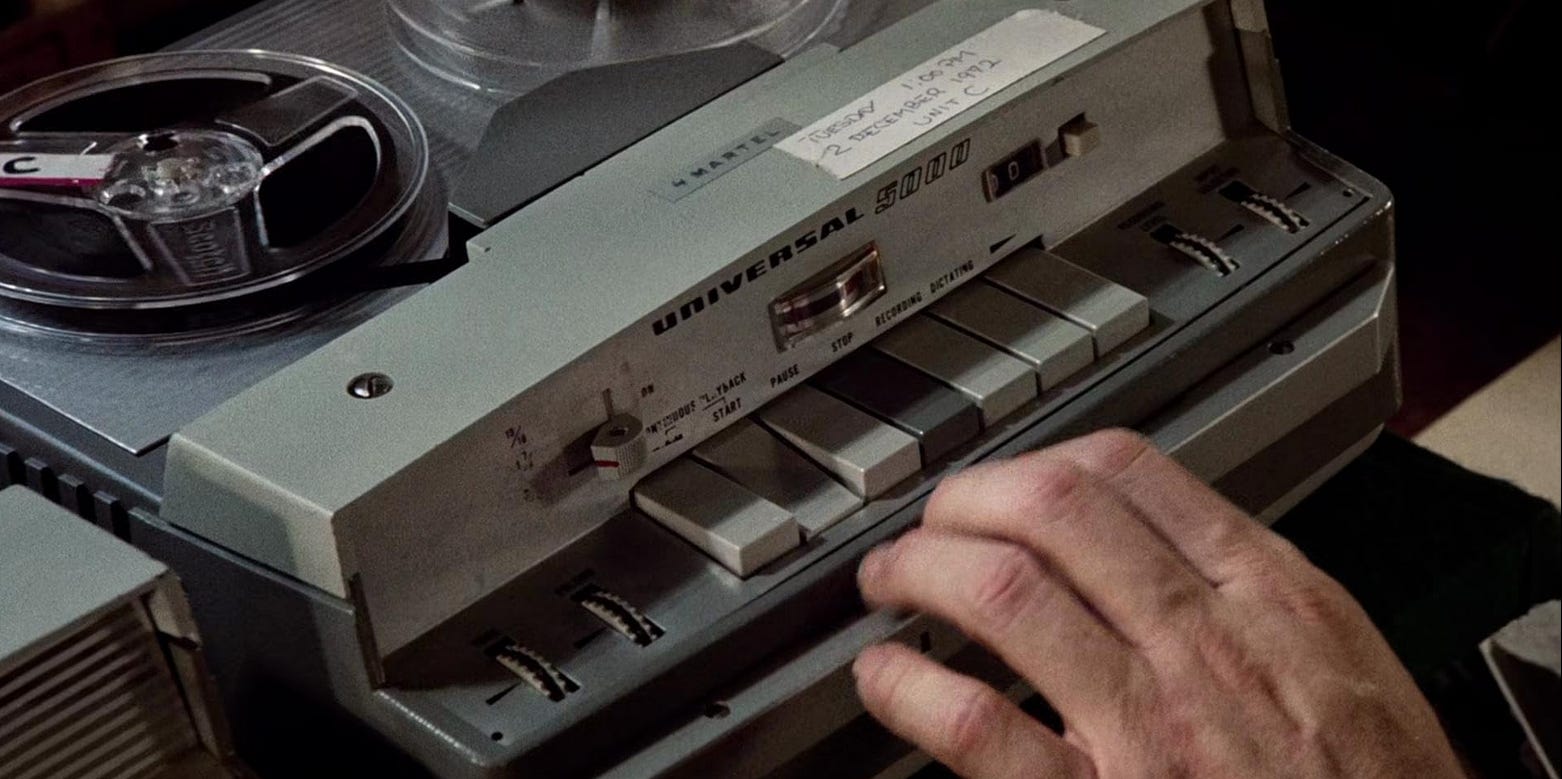
Keeps the tape where it is.
—
The phrase comes back, closer now. It holds long enough to begin organizing what comes before and after it. A pause starts to read as intention. A response begins to feel connected. The fragments stop competing and start aligning into something that can be carried forward without reopening the rest.
It almost holds.
He stays with that one.
The earlier passes are still there, but they begin to lose force. Not because they have been disproved. Because they are no longer useful in the same way.
They ask him to keep listening outward.
The later version asks less.
—
He prefers the one that asks less.
Someone gets endangered every time the version that asks less begins to hold.
The rest would require him to keep listening.
—
A pause before the line.
A response after.
A pattern beginning to form, not because the recording has opened itself, but because he has started choosing what will count as continuation and what will count as interference.
—
The room keeps trying to widen on him.
Lunch. Questions. Another person still treating the tape like speech between human beings.
He won’t do that.
The more Stan talks, the tighter Harry gets. Not louder. More exact. As though every extra question threatens to put the fragments back into motion.
When Stan leaves, Harry sits still for a moment.
Then turns back.
And switches the recording on again.
—
Elsewhere, a different enclosure.
A voice passing through a screen.
Stopped. Corrected. Released again in smaller form.
Not confession as relief.
Confession as reduction.
—
It doesn’t have to be right.
It has to be usable.
—
He runs it again.
Not to find out what happened.
To make sure it doesn’t change.
Distance Was Always a Fantasy
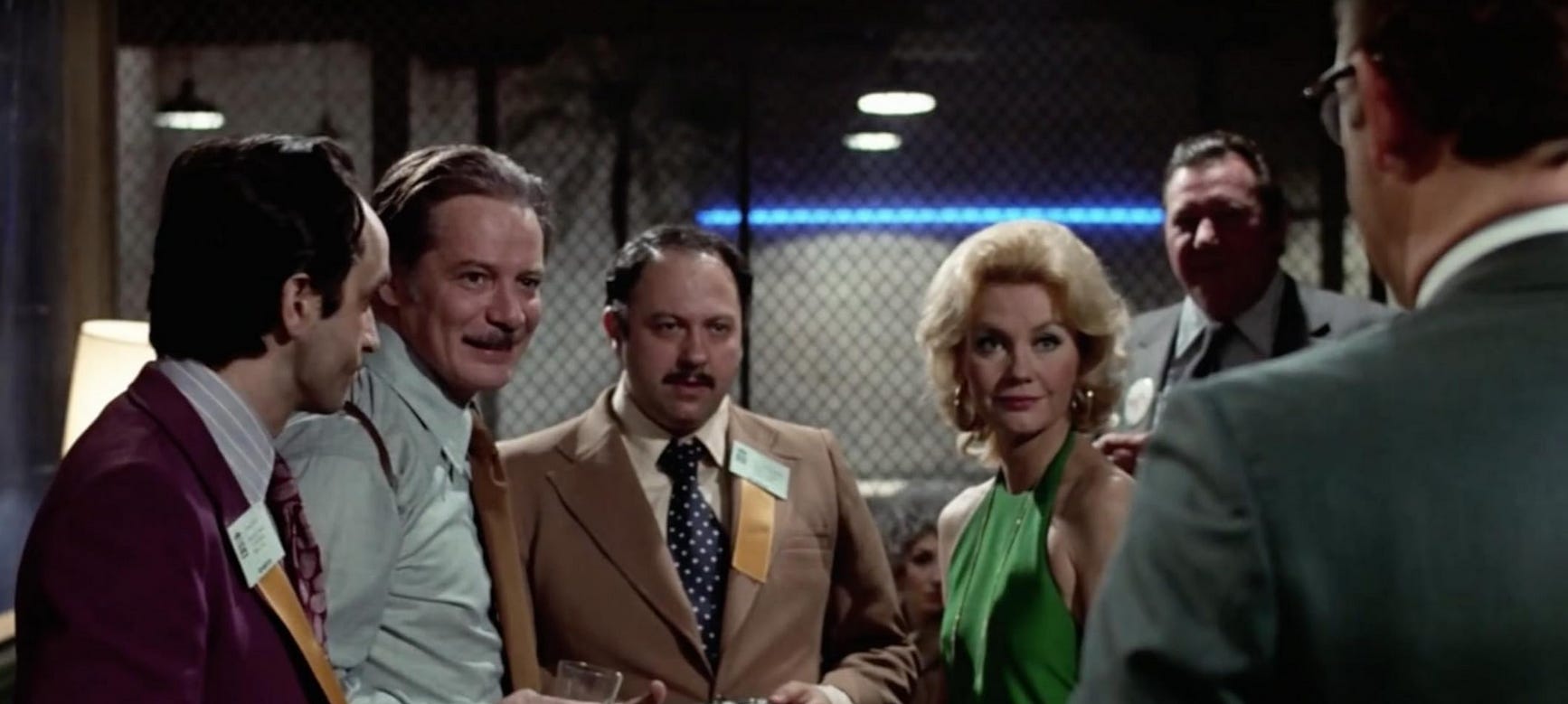
He is in the room when it plays.
Not outside it. Not removed from it.
The room laughs before he does.
He doesn’t answer.
—
He had kept it separate.
Work contained. The rest elsewhere. Locks holding. Enough distance to believe direction mattered.
That was the arrangement.
—
The door opens anyway.
Not broken. Not forced.
Used.
He finds it after.
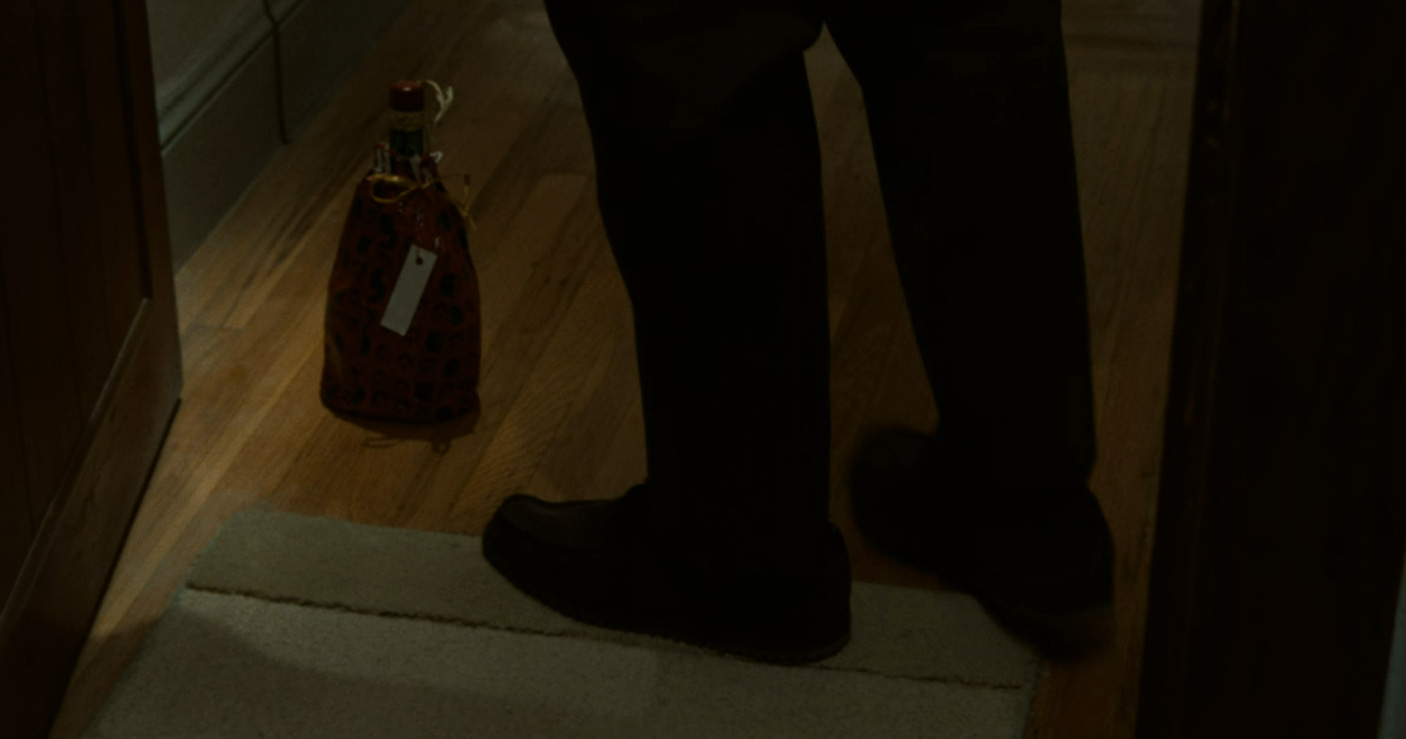
The bottle on the floor.
A card.
Something placed inside a room that should not have been entered.
—
No noise.
No witness.
No sign of how it happened.
—
He checks the locks.
Runs the routine again.
Nothing missing.
Nothing disturbed.
—
It almost holds.
—
Elsewhere, the same work without cover.
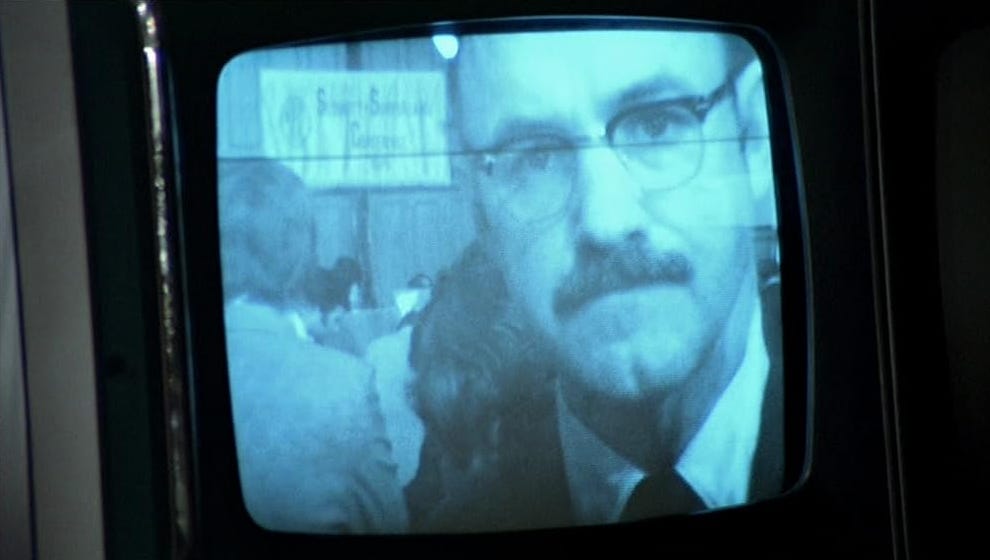
Mirrors.
Booths.
Names worn openly.
Devices passed from hand to hand.
Listening demonstrated.
Repeated.
Passed again.
No distance claimed.
No separation held.
—
He moves through it.
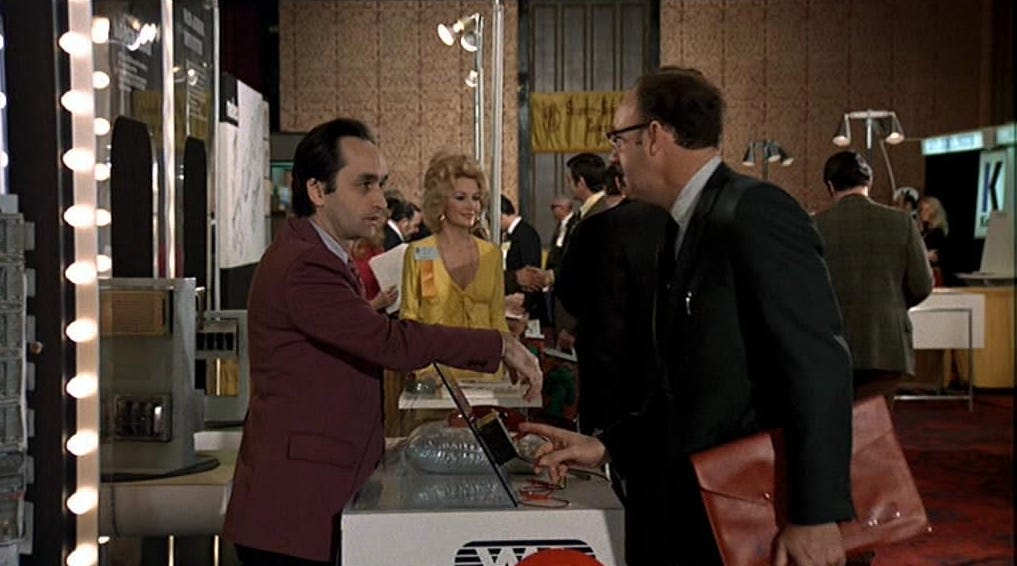
Among it.
The same gestures.
The same narrowing.
The same attention to what carries and what falls away.
—
Only shared method, passed from hand to hand.
—
He keeps to the edges.
As if that still places him outside it.
—
She had seen him.
Down by the stairs.
Waiting.
He says no.
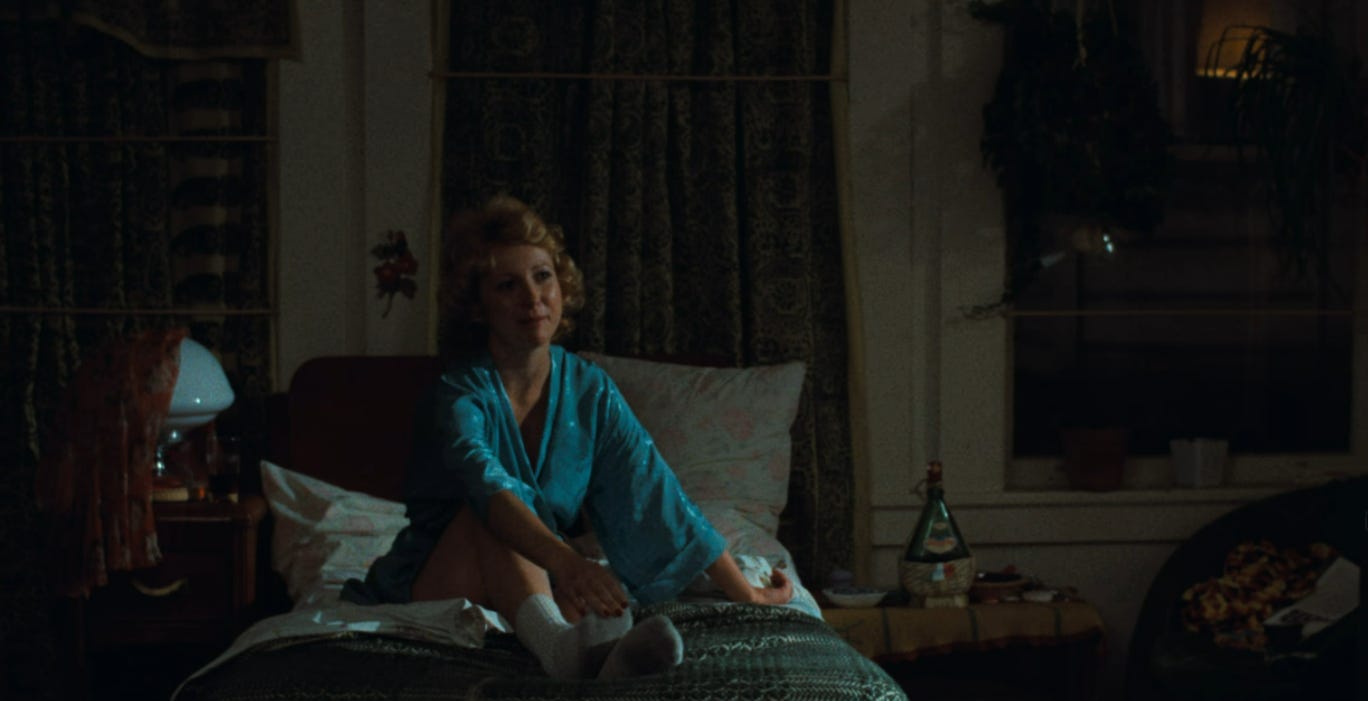
She keeps looking at him.
—
The song crosses over.
Not from memory.
From the tape.
Carried into the room where it does not belong.
He hears it.
Stops.
—
His voice again.
Clear enough to stand without him.
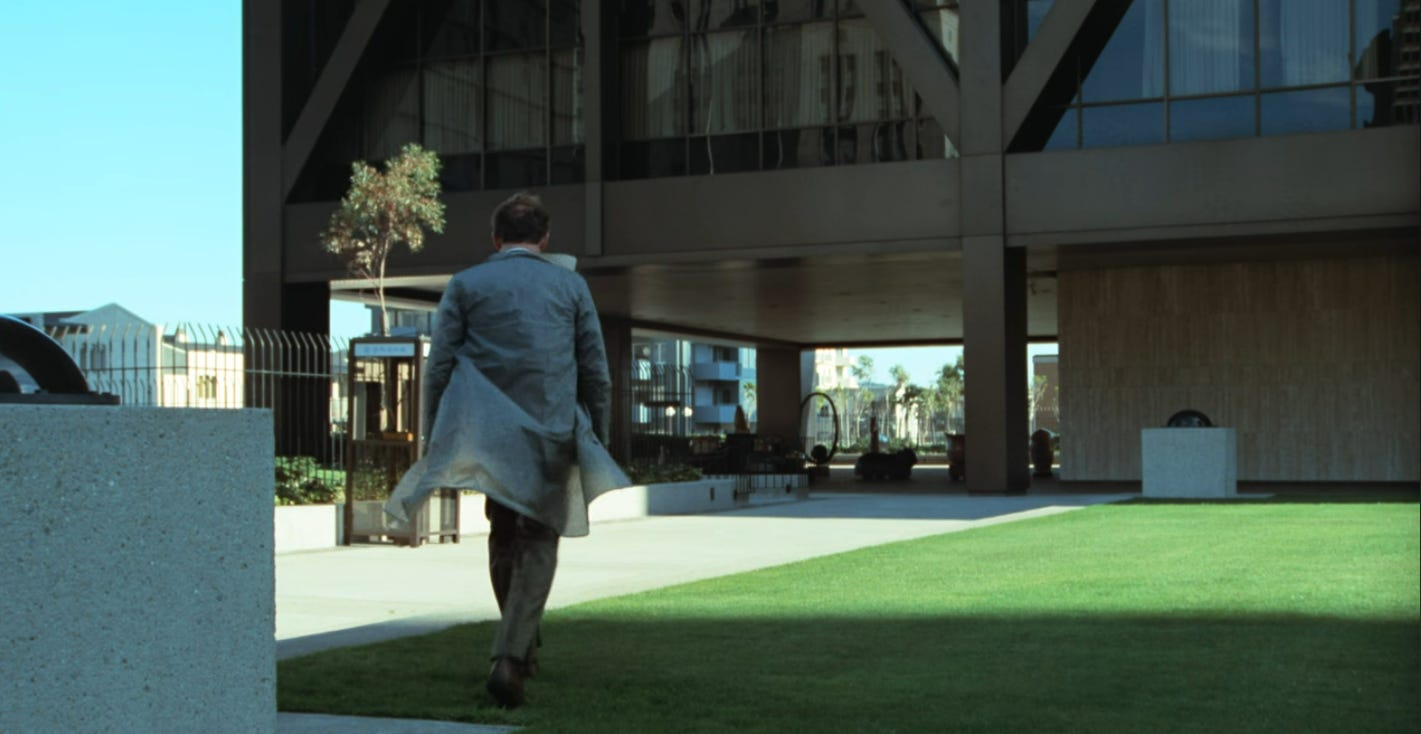
The coat softens the outline.
Lets him pass without arriving fully.
—
He was never outside it.
Only placed far enough away to believe it.
—
Now the distance won’t return.
Everything moving through the same space.
No edge to stand behind.
No direction to trust.
The Film Withholds Confirmation
The line begins.
A word comes through.
Another almost follows—
The drums cut it.
—
He waits for it to return.
The voice rises again.
Clearer this time.
Long enough to think it will hold—
Someone passes between them.
The bodies cross the frame.
The couple still there, but not visible as a pair.
The mouth moves.
Nothing reaches.
—
The camera tightens.
Not to reveal.
To flatten.
The distance compresses until depth stops functioning as orientation. Faces overlap. Movement interferes. The couple is held in place, but never given clean separation from what surrounds them.
A phrase surfaces.
Then slips back under.
—
Another angle.
Closer.
This time it should stay—
The sound drops beneath the movement.
The lips continue.
The sentence breaks before it can attach to them.
—
He leans in.
Runs it again.
The pieces begin to line up—
Not because they match.
Because they repeat.
The track slips.
What held a moment ago doesn’t carry forward.
—
The image offers a position.
A room contained.
The camera fixed just far enough away to promise access.
Something about to happen—
The frame doesn’t move.
Doesn’t follow.
The action continues past where the image stops.
The center of the event remains just outside it.
—
Glass between rooms.
A line of sight that looks like access.
Figures visible through it.
Close enough to read as present.
Far enough that the space cannot be entered.
—
Sound comes first.
A shift.
A reaction.
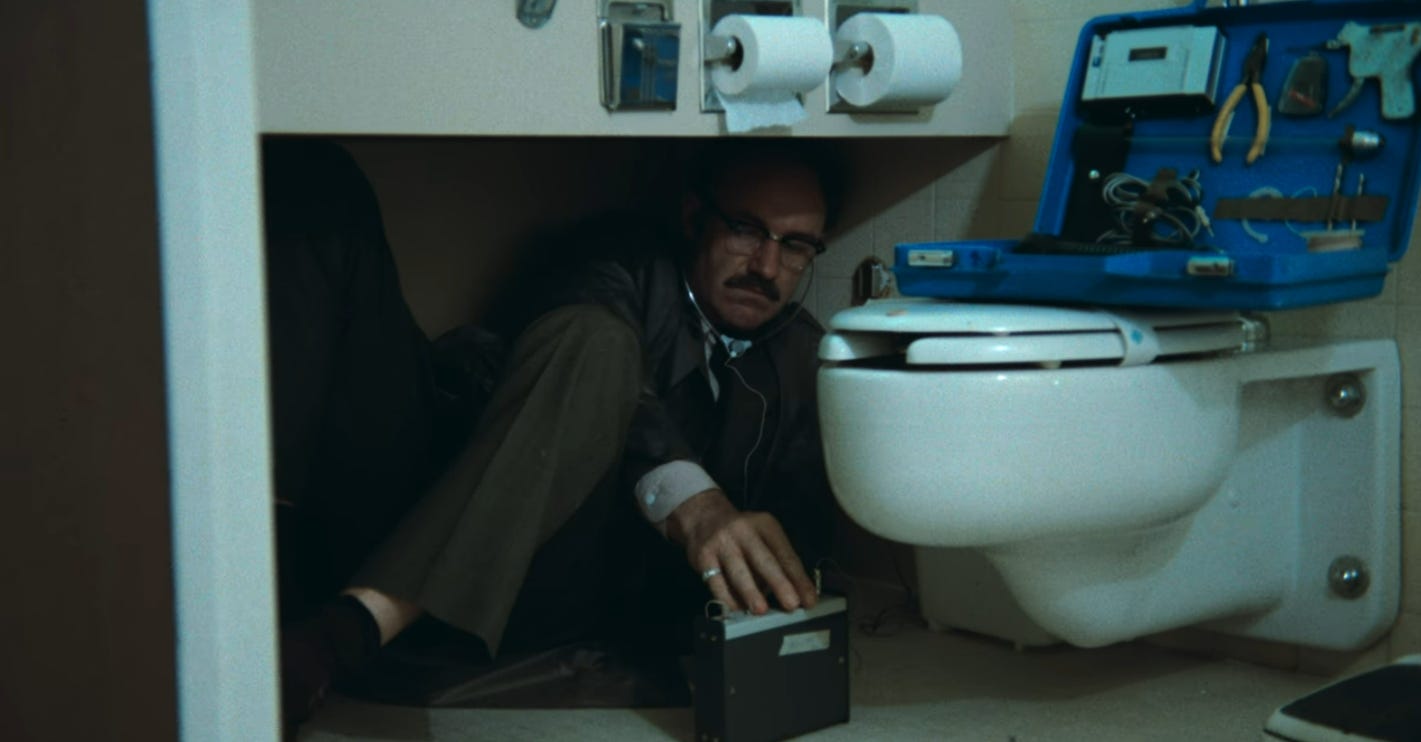
The image arrives after.
Aligned just enough to suggest connection.
Not exact.
The timing slips.
A gesture lands where the sound has already moved past it.
The two remain near each other.
Never the same.
—
The film keeps offering vantage.
Then removing it.
A closer frame that flattens instead of clarifies.
A fixed position that promises the center but holds just off it.
A line of sight that shows without granting entry.
—
After, the room looks settled.
The surfaces clean.
The bed made.
The space returned to order quickly enough to deny the event that passed through it.
—
Then the water stirs.
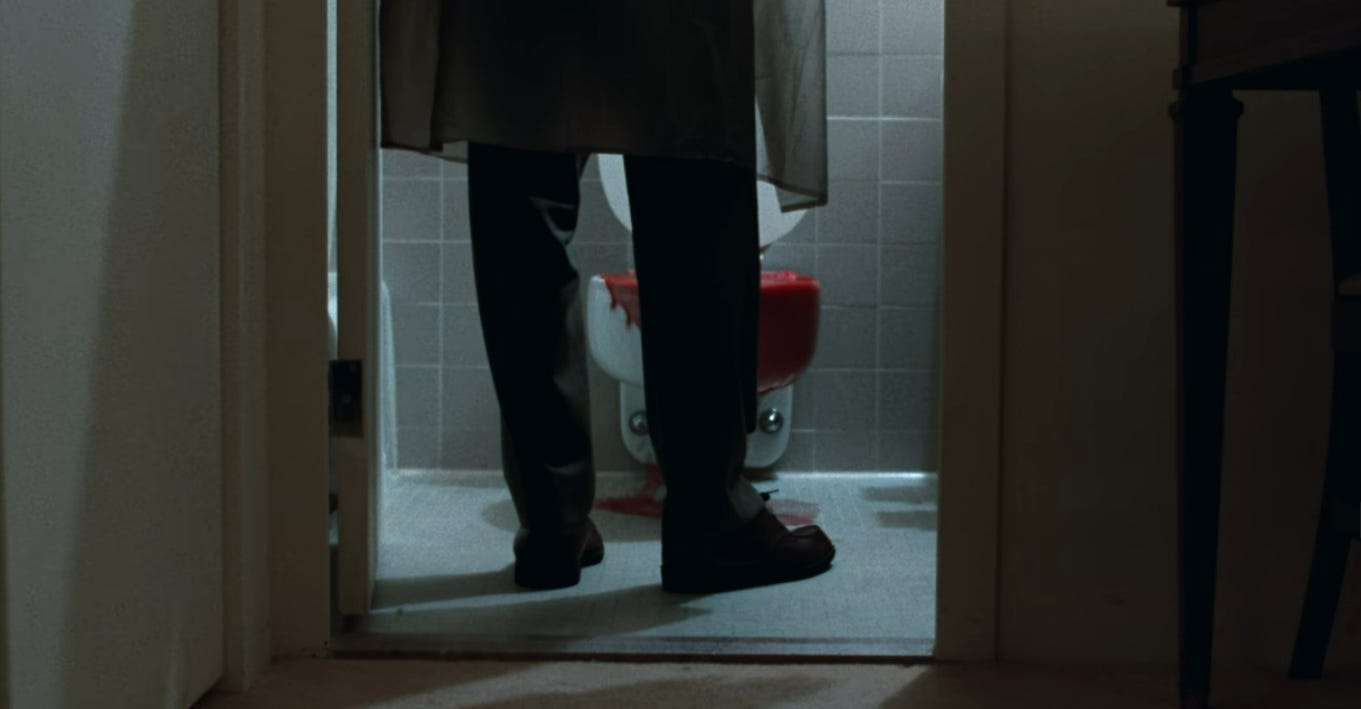
Color appears.
For a moment, it gathers—
It doesn’t hold.
—
What happened is there.
Not in one form long enough to finish.
—
He keeps looking.
The room keeps offering pieces.
None of them lock.
—
Nothing completes.
—
And still—
Harry Arrives Too Late for It to Hold
He gets there.
After.
—
The room is already finished.
Nothing in motion.
—
He looks for the moment.
Where it would have happened.
Where the line would connect to the action.
There is no place for it to land.
—
He moves through what remains.
Closer.
Then closer still.
Trying to bring the pieces into the same space.
The tape had promised that.
That if he stayed with it long enough, the pieces would align.
—
They don’t.
—
Water moving where it shouldn’t.
A surface refusing to hold what passed through it.
Color appearing, then breaking apart.
—
He keeps looking.
Not for something new.
For confirmation.
For the version that will make what he heard and what he sees become the same event.
—
The room offers fragments.
Each one possible.
None of them able to take the others with it.
—
He steps back.
Then forward again.
As if distance might fix it.
As if angle might settle it.
—
Later, a crowd.
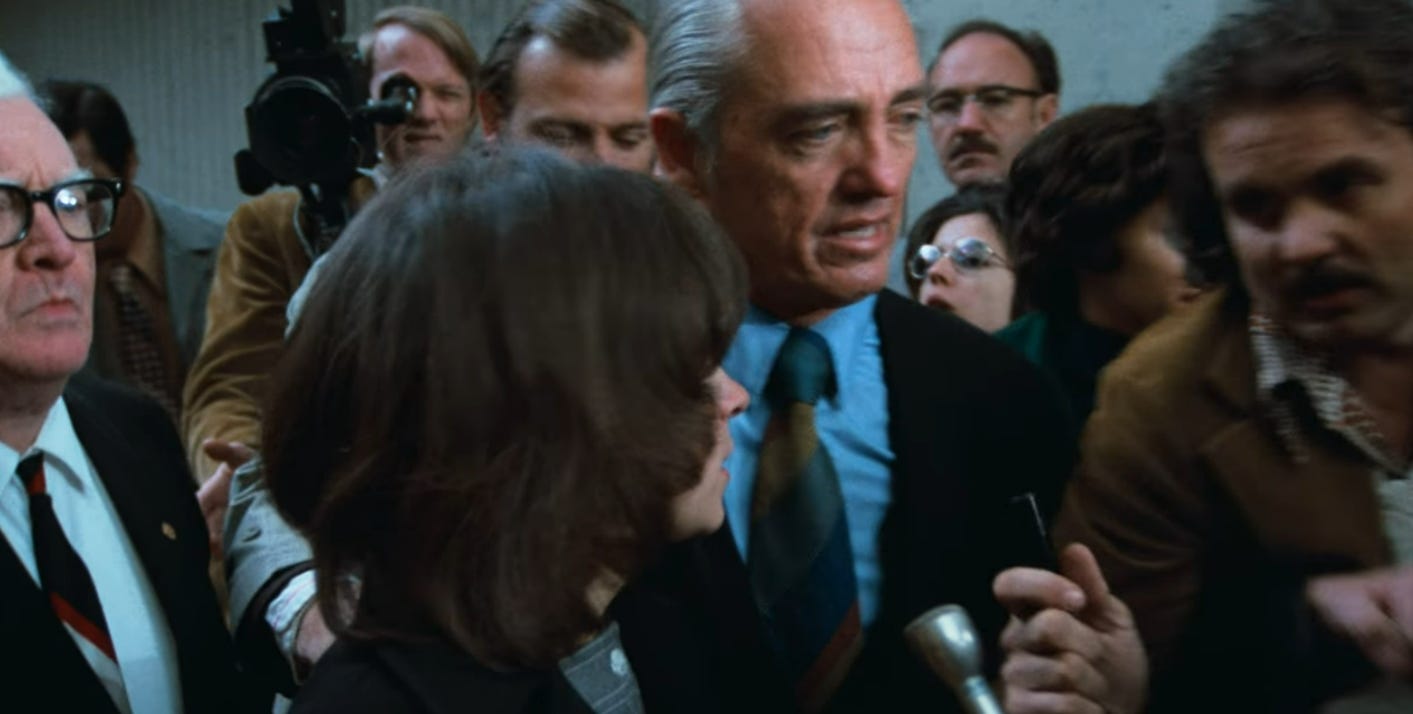
The couple in frame.
Composed.
Untouched.
Speaking cleanly.
The words hold.
The image holds.
—
Not the version he built.
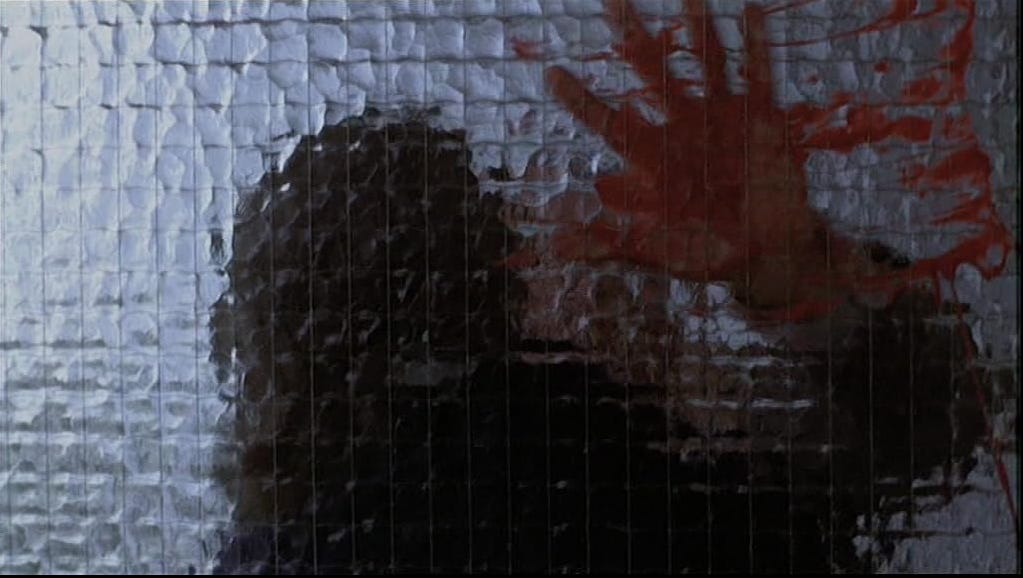
He watches.
Waits for it to break.
—
It doesn’t.
—
The line returns.
From him.
Replayed.
Reweighted.
Holding in a new way.
—
At home, the room is intact.
Unopened.
—
The tape is gone.
—
His voice arrives instead.
Clear.
—
The same system.
Turned back.
—
He starts to look.
Everywhere.
The floor lifted, walls opened, surfaces pulled apart—he keeps moving through it without stopping, without settling on any one place long enough to call it finished, as if the act of continuing might still produce something that will hold.
—
Every space checked.
—
Nothing found.
—
He keeps going.
—
Until there is nothing left to open.
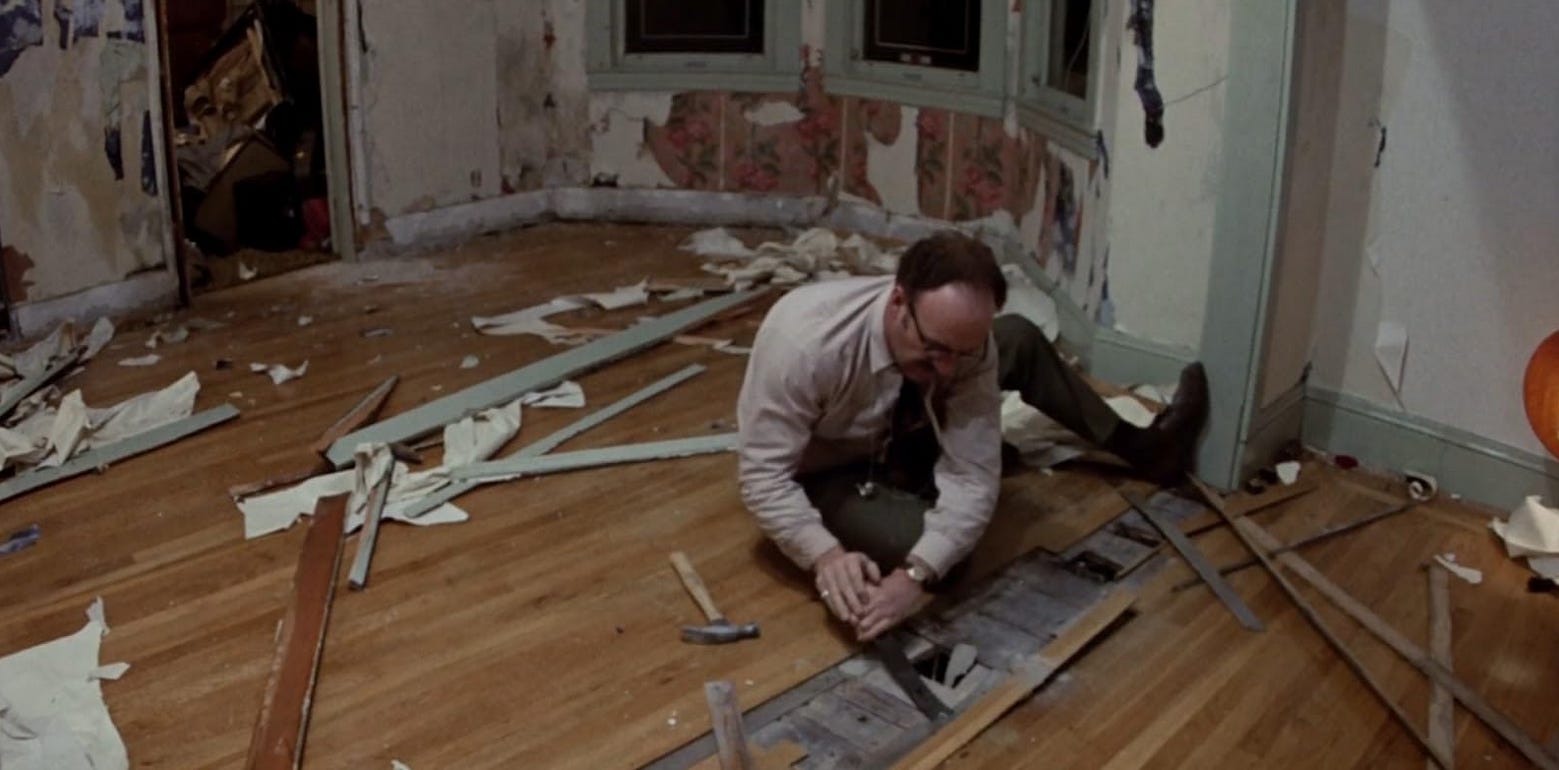
Nothing left to check.
Nothing left to hold.
—
He stops.
—
He lifts the instrument.
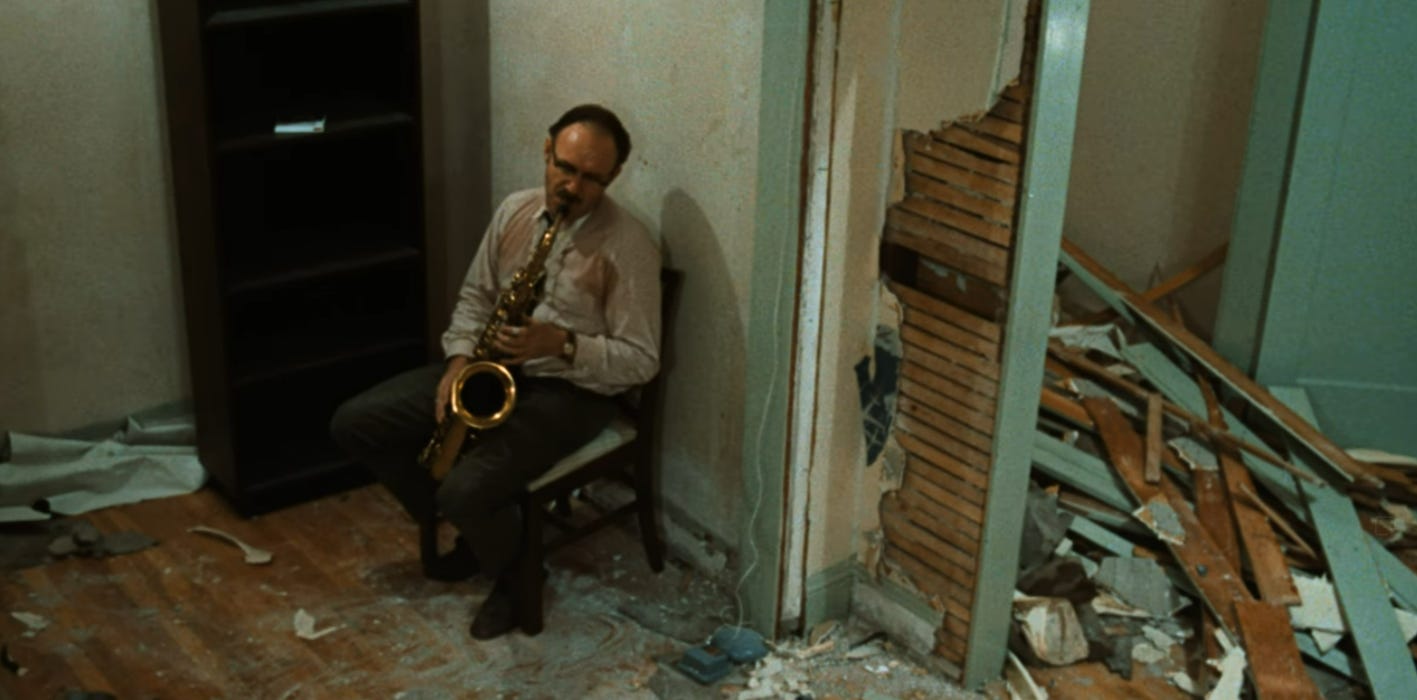
Not to play something new.
To repeat what is already there.
—
The note carries.
Then drifts—
It doesn’t.
—
He keeps playing anyway.
Works Cited
The Conversation. Directed by Francis Ford Coppola, performances by Gene Hackman, John Cazale, Allen Garfield, Cindy Williams, and Frederic Forrest. Paramount Pictures, 1974.
The Conversation — Screenplay by Francis Ford Coppola.
Transcript excerpts sourced from publicly available screenplay archives and dialogue transcripts for The Conversation (1974), used for reference and analysis.
Disclaimer on Film Stills
All film stills and images referenced or displayed are used under fair use for the purposes of criticism, commentary, and analysis.
All rights to The Conversation (1974) remain with their respective copyright holders, including Paramount Pictures.
Acknowledgement
This essay is built in conversation with the work of Francis Ford Coppola and the performances that give the film its shape and pressure—especially Gene Hackman’s Harry Caul, whose restraint and fragmentation make the film’s tensions legible without ever resolving them.
The contributions of Walter Murch, particularly in sound design and editorial structure, remain central to how the film constructs meaning, withholding, and misreading.
This piece responds to the film as an act of construction: image, sound, performance, and absence working together to produce a system that never fully settles, and never fully releases its subject.
Great movie. Well done 👏🌹