

The Big Lebowski
They Stay Adjacent

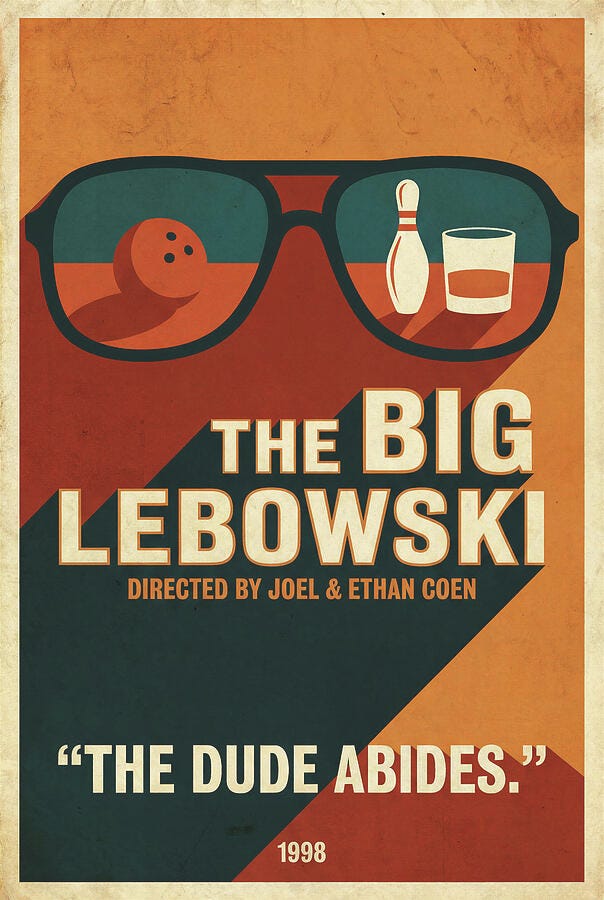
The Case Gets Talked Away
A man asks for a rug.
The question doesn’t stay there.
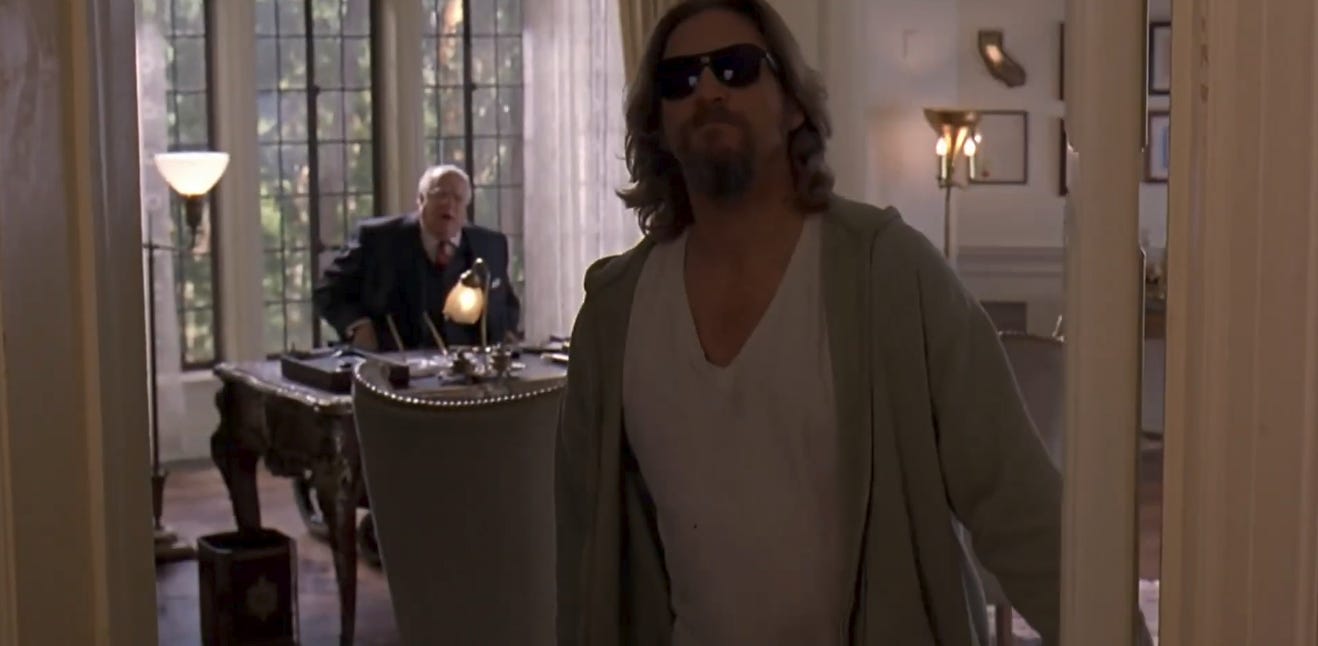
By the time Jeffrey Lebowski finishes answering, the rug has been buried under a speech about achievement, responsibility, and what kind of man asks for anything at all. The office helps him do it. The desk, the awards, Brandt hovering just behind him like part of the furniture. The hierarchy is settled before the answer begins. The request doesn’t fail. It gets absorbed.
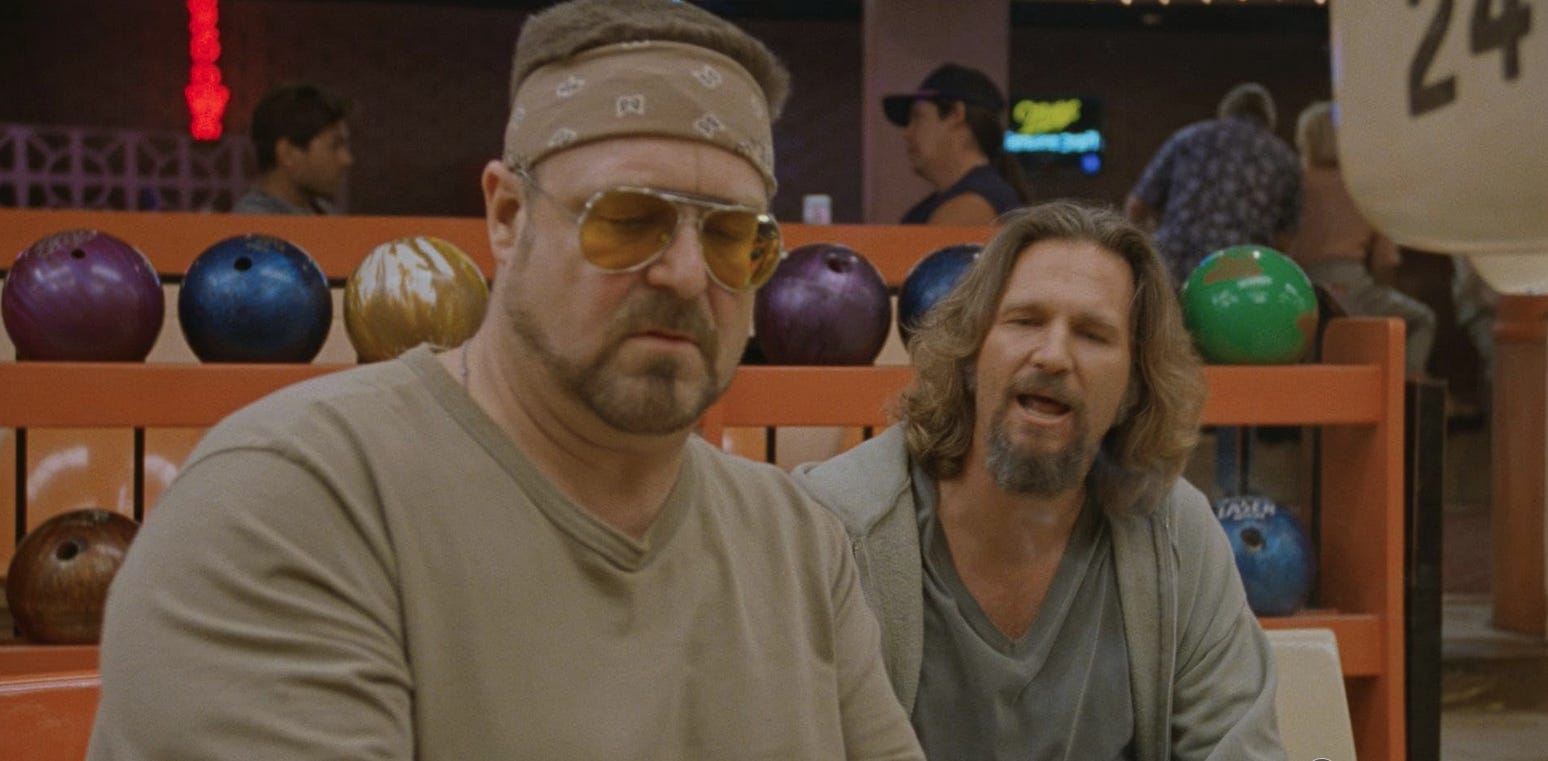
Walter works the same way, only louder. He cannot let a practical question remain practical. A peed-on rug becomes unchecked aggression. A toe over the line becomes Nam. A bowling foul becomes proof that the world has gone crazy and he is the only one left who gives a shit about the rules. Every local inconvenience gets promoted into principle, whether the principle fits or not. He does not answer the problem. He upgrades it into conviction, as if escalation itself were the only scale he can trust.
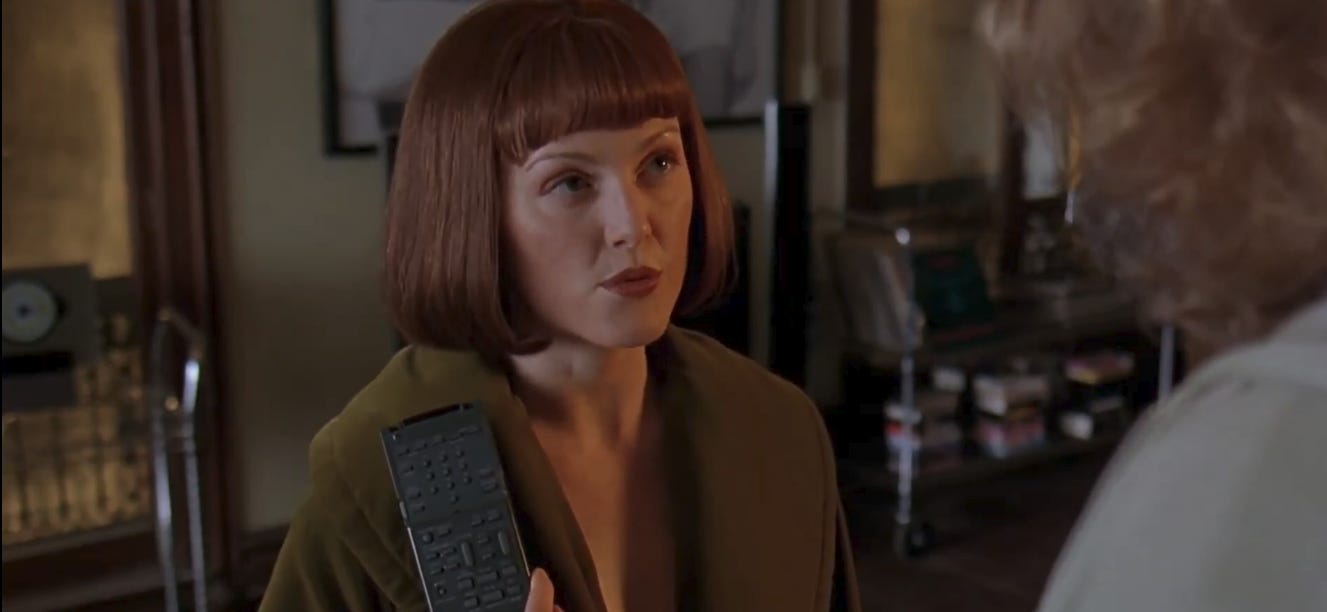
Maude’s version is cleaner. The rug becomes sentiment and ownership. Bunny becomes pathology. Sex becomes procedure. Money becomes foundation language. She translates the immediate into terms she can control, until the thing itself starts to disappear under the vocabulary built around it.
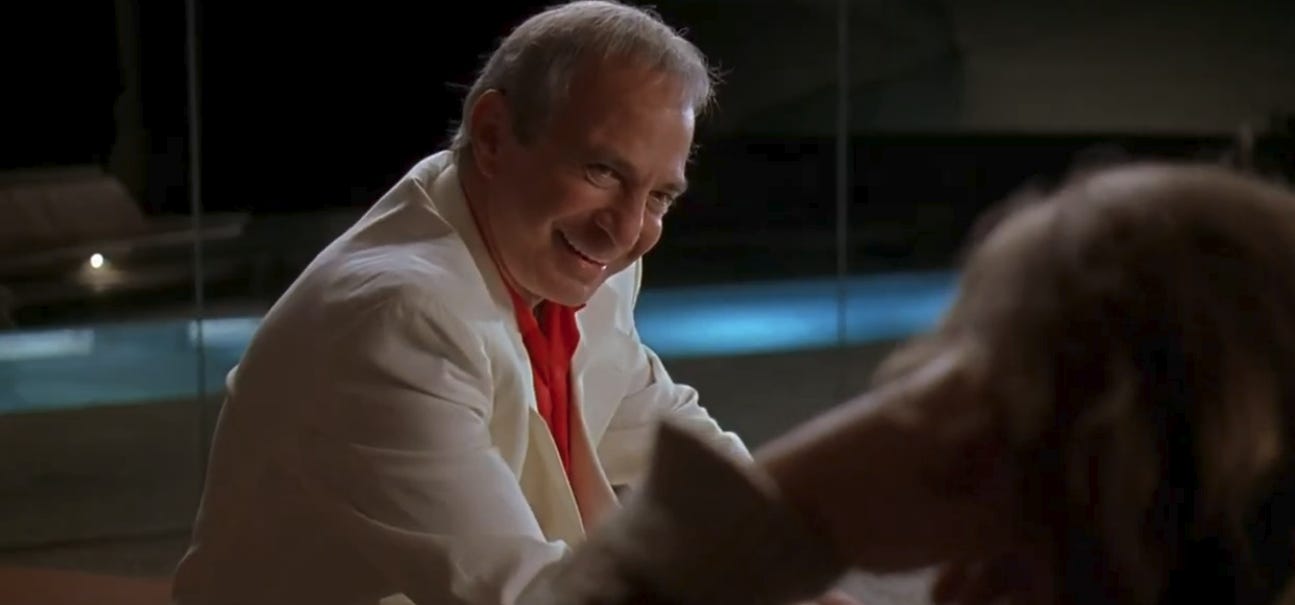
At Jackie Treehorn’s table, the language is already finished before it’s spoken. The room is warm, the drink is poured, the business arrives polished: publishing, entertainment, political advocacy. The words do not clarify what he does. They make it easier to sit with.
The film keeps offering something like a mystery, but what matters is less the missing answer than the way every answer arrives rerouted. The clues are not absent. They are surrounded. They are talked over, moralized, aestheticized, converted into lifestyle, principle, pathology, theater.
The question survives, but not as itself.
So the case does not simply go unsolved. It gets replaced, piece by piece, with the language each person would rather live inside.
Speech gets there first.
The Dude Abides by Staying Small
The talking doesn’t stop.
It doesn’t need to. It already has somewhere to go.
The Dude rarely tries to redirect it. He lets it pass over him, around him, until something brushes against the only scale he seems to recognize. The rug. The drink. The immediate inconvenience of being pulled into someone else’s problem. Everything else he reduces or lets drift.
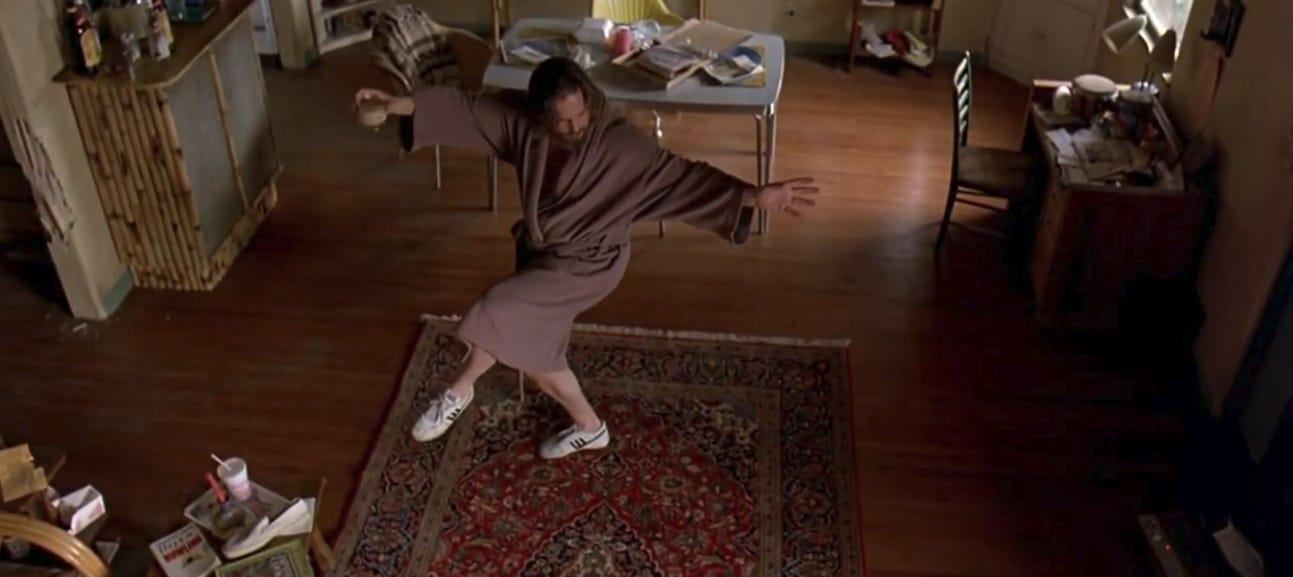
He keeps returning things to a scale he can live with.
A kidnapping becomes a misunderstanding. A demand becomes a favor. A threat becomes something to wait out. A debt plot, a pornographer, nihilists, a missing briefcase, a severed toe, and he keeps trying to bring the situation back down to the size of his living room. Even when he repeats the language handed to him, it comes back smaller, flattened, stripped of the weight it carried when it arrived. He doesn’t argue with the terms. He wears them down by not holding them at their original scale.
It has an edge.
By shrinking everything to what breaches him directly, he avoids the larger structures that keep trying to define the situation for him. But that same narrowing leaves the field open for those structures to keep operating at full volume. Walter escalates. Maude reframes. Treehorn launders. The Dude stays where he is.
At the table, he doesn’t dismantle what he’s given. He tries to hold on to the one thing he brought with him. He keeps returning the situation to something smaller, something manageable, even as everything around him continues to expand.
The case keeps widening. The attention keeps narrowing.
All the Dude ever wanted was his rug back.
He doesn’t correct the conversation.
He survives it.
The difference between enduring the pattern and helping it hold is not always clear.
Ritual Keeps Them Adjacent
They still meet.
Not to resolve anything. Not to finish what the talking started.
They meet because the meeting is what remains.
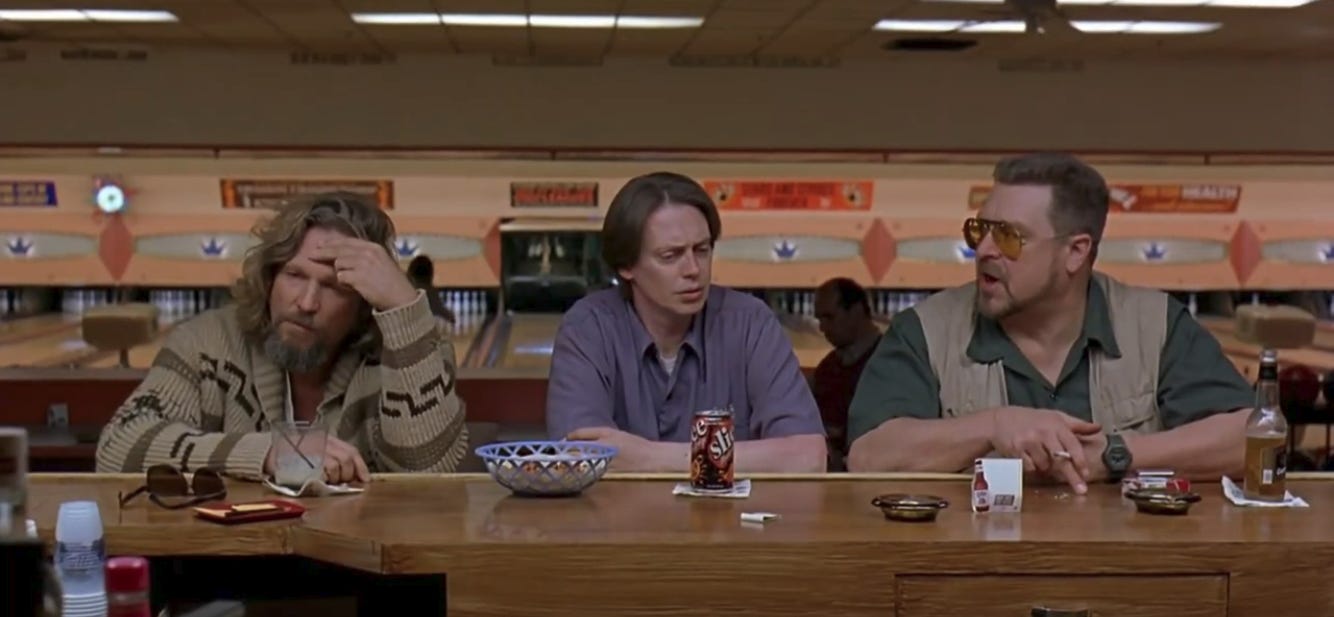
The bowling alley doesn’t correct what happens outside it. It barely acknowledges it. The case drifts in, gets mentioned, misremembered, interrupted, and then the frame returns to the lanes, the bench, the rhythm that was already in place before the problem arrived.
The ritual doesn’t absorb the problem the way speech does.
It keeps going beside it.
The structure is simple. Frames repeat. Seats are taken. Drinks are ordered. Turns come back around whether anything has been settled or not. The game does not require clarity. It requires continuation.
Even the language starts to behave this way. Phrases repeat. Lines echo. “Shut the fuck up, Donny” lands again and again, not as escalation but as refrain. The words stop carrying new meaning and start marking position, like everyone returning to the same verbal spot in the room.
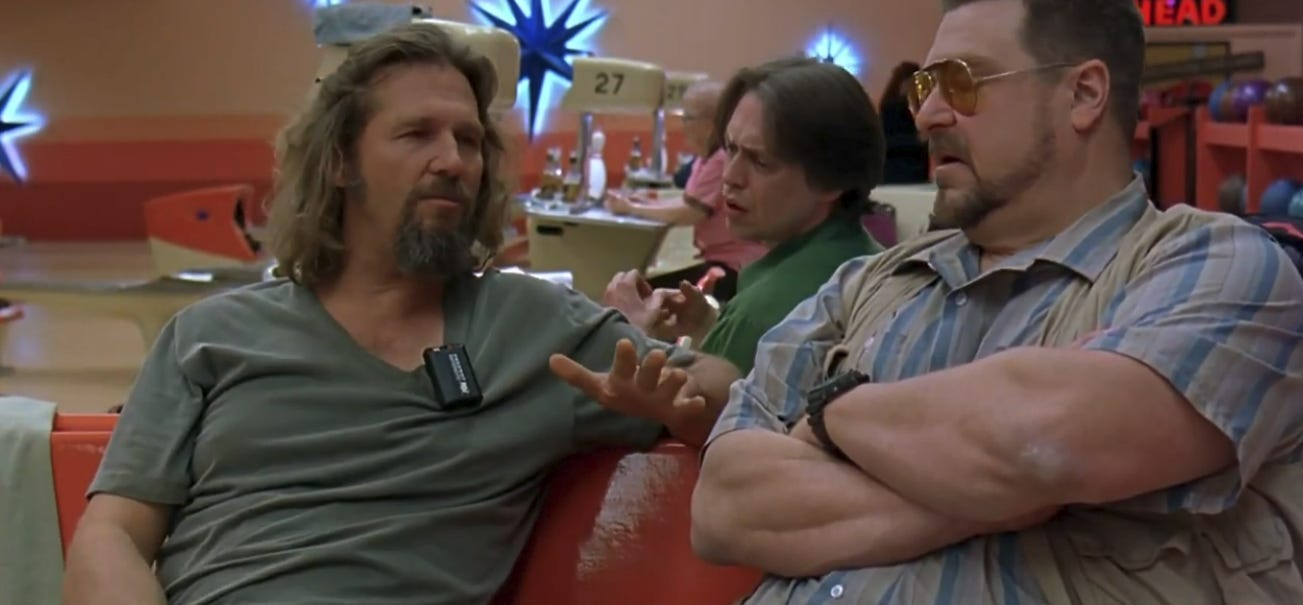
Donny moves differently inside this. While Walter and the Dude talk past each other, he keeps trying to locate the conversation. What tied the room together? Are these the Nazis? What’s the point? The questions don’t redirect anything, but they keep pointing back toward something shared, something the others have already drifted away from.
The ritual holds him there.
And he helps hold it together.
You can see the strain before it breaks. The pauses get longer. The interruptions come faster. The rhythm continues, but it starts to feel like it’s running on memory rather than contact. The game still moves forward. The connection inside it doesn’t.
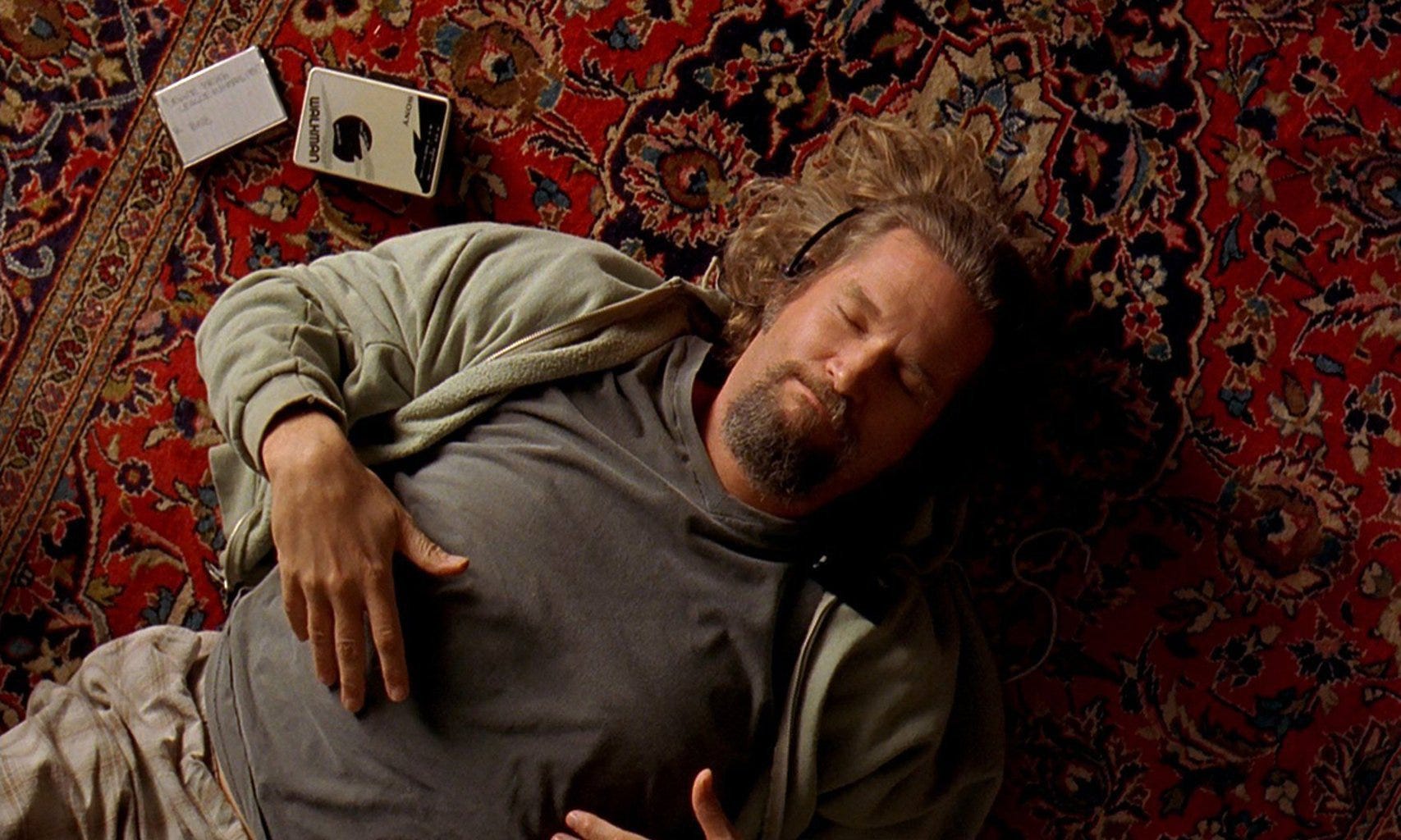
The strike cassette makes that visible. The Dude lies on the rug, listening to recorded impact, replaying the sound of success instead of participating in it. The ritual doesn’t need the event anymore. The echo is enough to keep the feeling in circulation.
That’s what the bowling alley is doing.
Not healing. Not resolving.
Maintaining proximity long enough for the group to keep showing up, even when there is less and less left for them to share.
Before anything is lost, it already feels like something is being repeated rather than lived.
Donny Is the Crossing Point
He’s gone before anything changes.
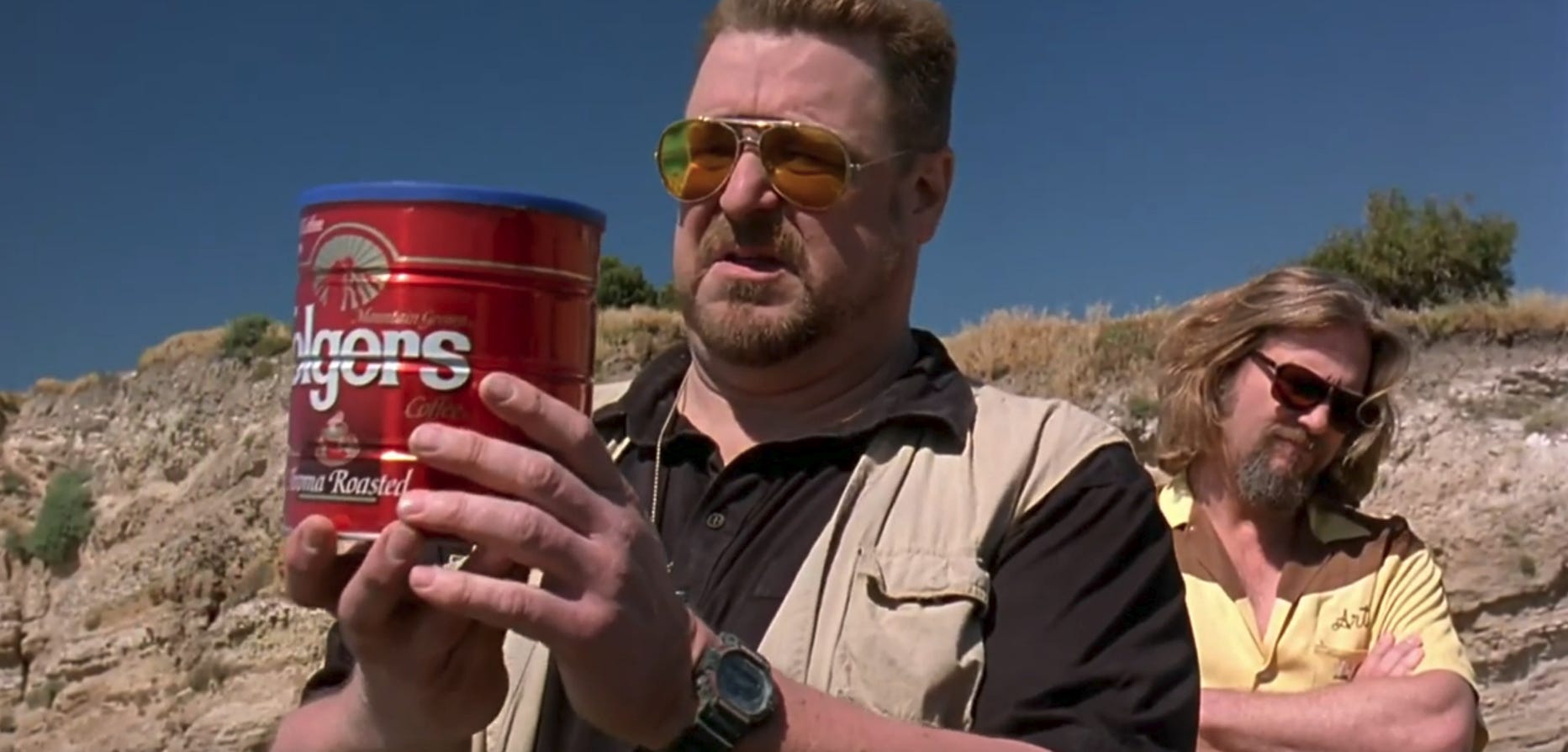
The game continues. The talking continues. The routines hold. The bench is still there. The lanes are still running. Nothing announces itself as broken.
That’s what makes the shift hard to locate.
The conversations don’t stop, but they lose the one person who kept asking where they were. What remains is not silence. It’s continuation without orientation.
At the funeral, the language swells to fill the gap.
Walter speaks as if scale could restore meaning. He reaches for war, for sacrifice, for something large enough to hold what just happened.
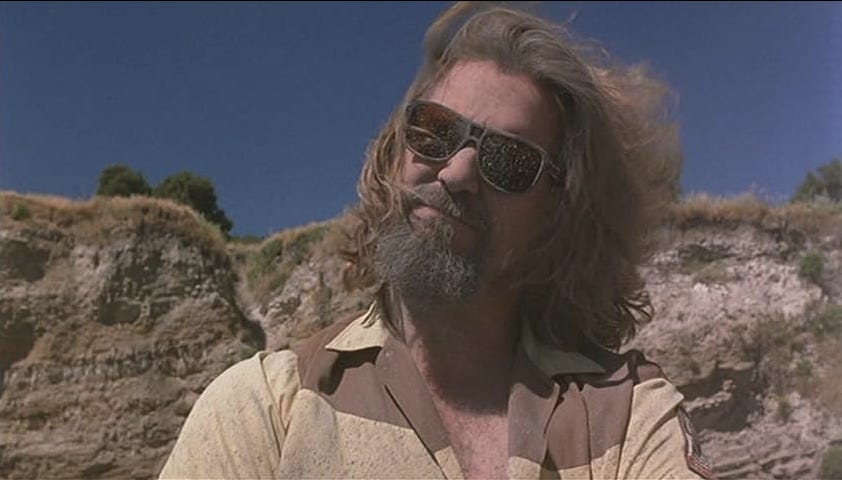
The wind refuses it.
The ashes don’t land where the words say they should. They return to the body that released them. The moment doesn’t elevate. It disperses. The ritual fails to carry what the language promised it could.
After that, nothing adjusts.
They go back to bowling. They go back to talking. The structure remains available, but something inside it has thinned past recovery. The routines no longer even pretend to hold more than themselves.
Before, repetition still carried the possibility of contact, however weak. After, it doesn’t need to carry it. The game can continue without anyone trying to locate what it means.
It would be easy to treat Donny as innocence, or purity, or the only one who understood anything.
He isn’t.
He was a weak bond. A point of orientation that didn’t control the group but kept pointing back toward something shared, even when nothing answered him.
It treats him the same way.
Remove that, and nothing collapses.
It keeps going.
That’s the shift.
Not that the group breaks.
That it no longer needs him to continue.
The Loop
By the time the Stranger returns, the film has already shown what endurance looks like here. Not revelation. Not repair. Just continuation with less inside it.
He speaks in the same loose register the film opened with, amused, half-detached, still willing to find the Dude fitting somehow into his time and place. The warmth matters. So does its distance. He can bless the story because he is not trapped in its routines. He does not have to bowl beside the absence.
The game continues. The phrases continue. The Dude abides. But the word lands differently now, because abiding no longer sounds like ease or style or slack wisdom. It sounds like what is left when nothing has been solved and the group still has to keep moving through the shape it already knows.
The film does not break that rhythm. It returns to it.
At the beginning, the drift felt loose enough to pass for freedom. By the end, it feels closer to habit. Speech still fills the air before contact can settle. Ritual still gives the men somewhere to go stand beside each other. The lane is still there. The bench is still there. Donny is not.
And the film does not ask the game to stop for him.
The structures that once felt harmlessly repetitive now look durable in a colder way. They can keep company without restoring what was lost. They can carry people forward and leave them where they were.
The Stranger says the Dude abides, and the line keeps its gentleness. What has changed is everything around it. Abiding, now, is no longer just a style of drifting through Los Angeles. It is the ability to remain inside a pattern after the one person who kept trying to locate its meaning has been scattered into it.
So the film ends where it began: with a man who fits his time and place.
Only now that fit feels less like belonging than endurance.
Works Cited
The Big Lebowski. Directed by Joel Coen and Ethan Coen, performances by Jeff Bridges, John Goodman, Steve Buscemi, Julianne Moore, and Philip Seymour Hoffman, PolyGram Filmed Entertainment, 1998.
Yeah, well, that’s just, like, your opinion, man.