
Predator Badlands
Creed, Mutation, and the Collapse of Apex Logic

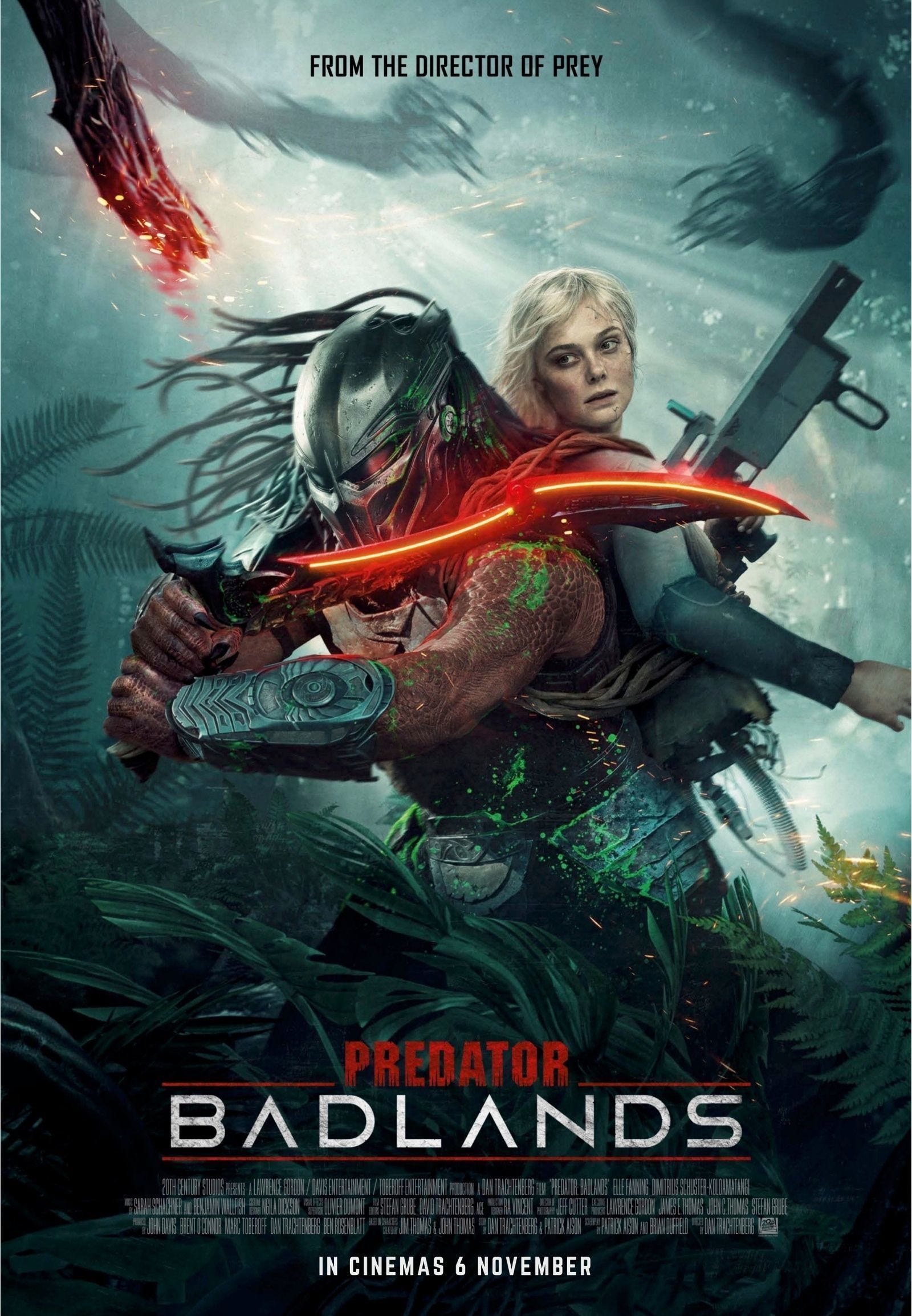
*spoiler warning*
Predator was one of the first films that taught me the world is a language.
Not a battlefield.
Not a hierarchy.
A grammar you survive by learning fast enough.
Dutch learned the jungle.
Harrigan learned the city.
Naru learned the river.
Every human who lives in this franchise does so by speaking a tongue the Yautja creed refuses to hear.
Until now, the lesson only went one direction.
Badlands is the first film where a Predator listens.
Darmok and Picard at El-Adrel.
Two captains who could not understand each other until the planet forced them to translate or die. 1
Badlands is built on the same truth.
Dek arrives speaking the father’s creed, a language with no verbs for mercy, no tenses for change.
Thia speaks in terrain, in observation, in the slow accumulation of contextual truth.
They share no tongue.
Genna demands they build one.
The father gave Dek a single vocabulary.
Thia does not erase it.
She introduces new verbs.
Everything after that is velocity.
A hunt rewritten by the need to adapt.
Yautja are prey to none.
Friend to none.
Predator to all.
-Yuatja Codex
0422/25
The Creed That Makes Elk
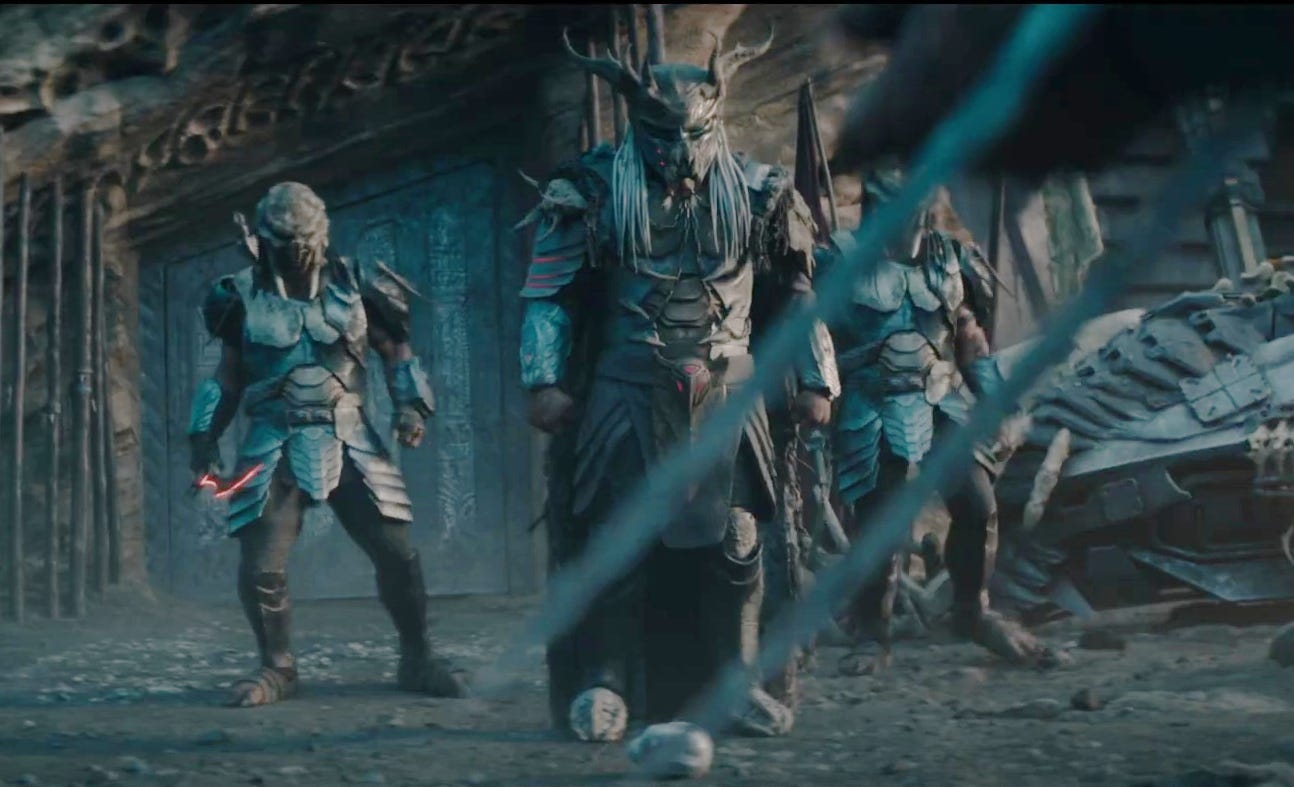
A father calls brutality nature and raises sons to match the shape of his lie.
Strength is purity.
Solitude is law.
Mercy is defect.
These are not rules.
They are vocabulary,
words sharpened into a language where change is treason.
Njohrr speaks as if the universe agrees with him.
As if the hunt is written into cosmic order.
As if vulnerability is an error in the code.
But this creed does not create hunters.
It creates elk.
Creatures perfected for one environment, beautiful in their rigidity, doomed the moment the forest shifts.
A law without flexibility is a law waiting to be broken by the planet it refuses to understand.
The father mistakes this rigidity for nature.
He teaches his sons a language with no grammar for change.
His law is already dying.
Genna simply provides the conditions for its extinction to become visible.
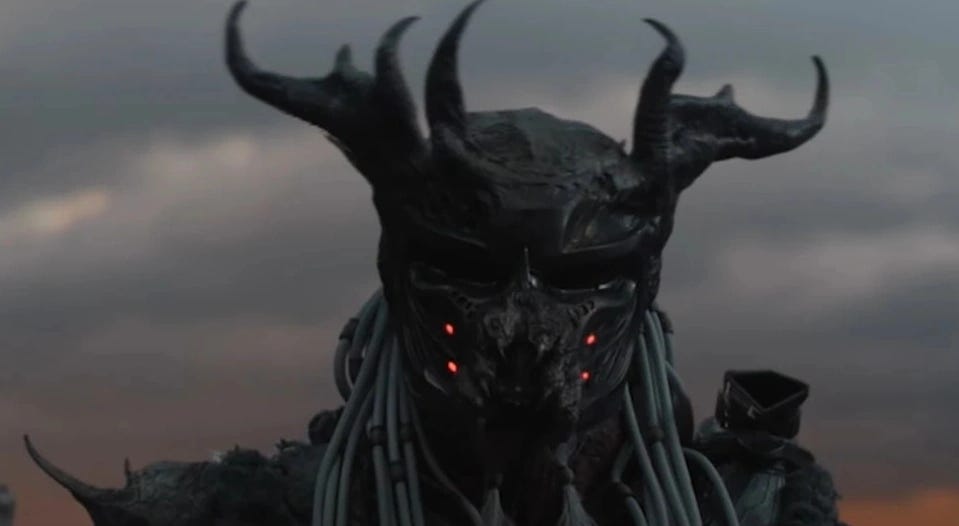
Fraternal Heresy: Kwei’s Mercy as First Mutation
The father teaches the creed as if it were nature itself.
Hunt alone.
Show no weakness.
Kill what falters.
This is the language Kwei is raised inside,
a syntax without compassion,
a grammar that makes deviation fatal.
And Kwei breaks it.
Not loudly.
Not rebelliously.
Quietly, in the only place the father cannot hear him.
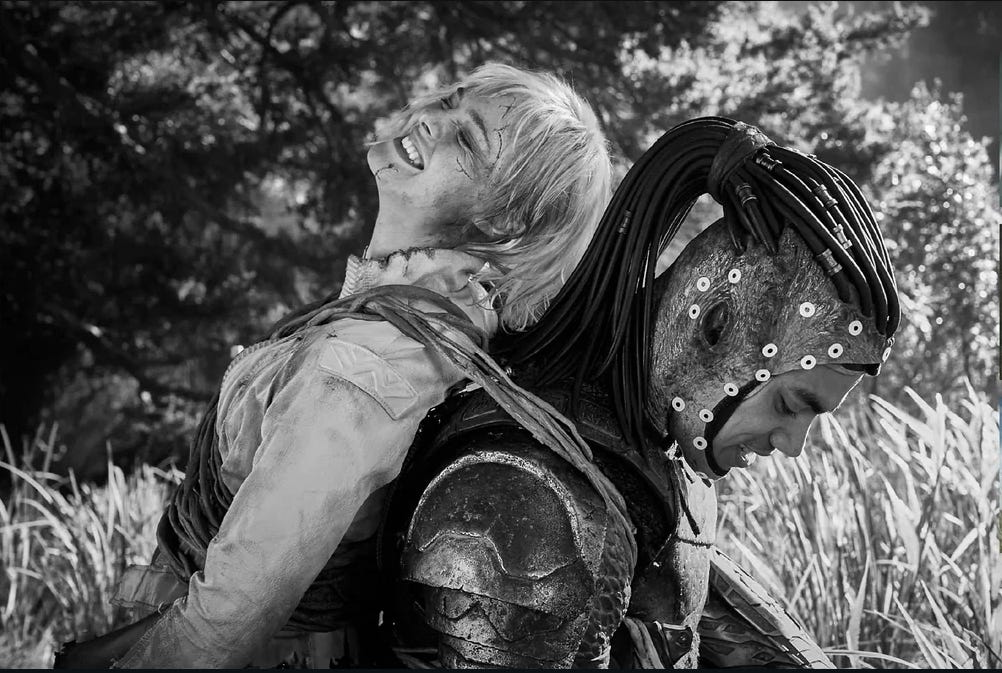
He spares his brother.
He protects a runt the creed declared non-viable.
He risks himself for a life the law said should have ended in infancy.
Kwei does not die for disobedience.
He dies for misallocated mercy.
He dies because he placed value where the creed sees none.
He dies because, when ordered to erase Dek, he chose to shield him instead.
In elk logic, this is the unforgivable sin.
Not defiance.
Improper investment.
Kwei’s death is not tragedy.
It is the first mutation,
the irregular verb the creed could not parse.
Dek does not invent empathy on Genna.
He inherits it.
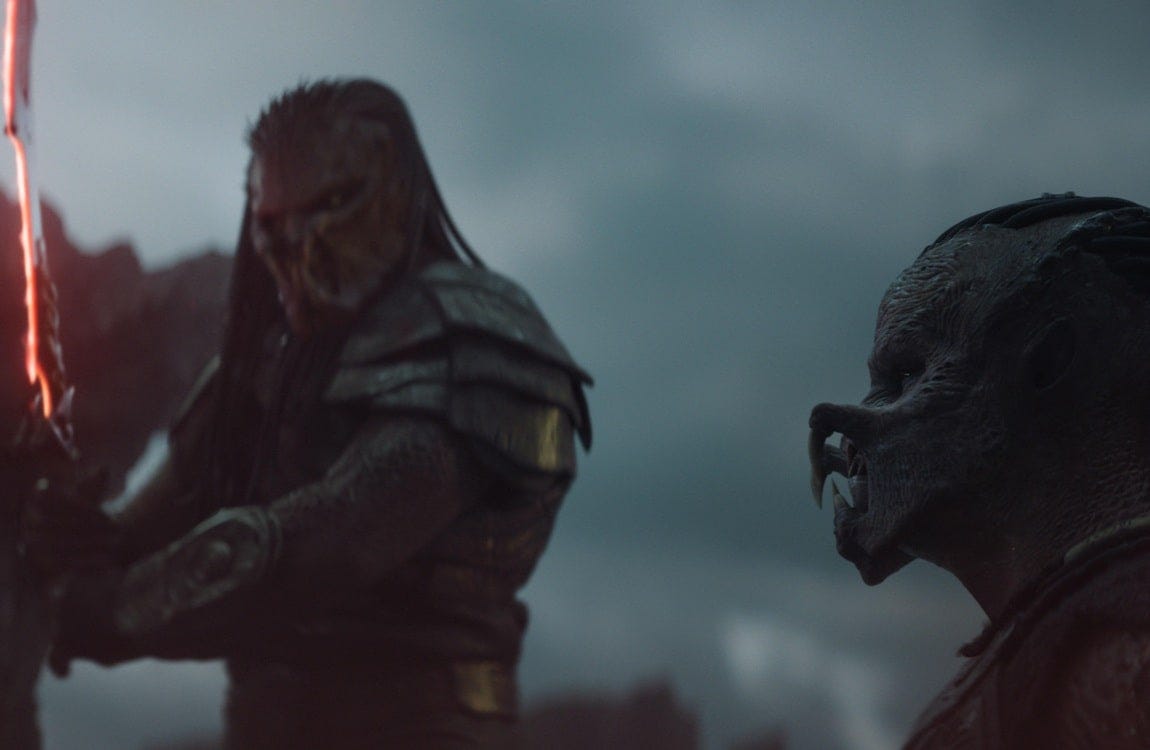
Genna as Teacher: The World That Refuses His Language
Dek arrives speaking the father’s creed.
Genna answers with something older and far less forgiving.
Nothing on this planet obeys the law he carries in his bones.
The grass cuts.
The trees erupt.
The ground moves.
Every creature is armored against something else, shaped by pressures his training never considered.
Genna does not respect strength.
It respects adaptation.
The razorback that tears through Dek’s first hunt is not a lesson in dominance.
It is a grammar correction.
He kills, roars, asserts victory.
The jungle interrupts him with its first mouth, the Luna Bug dropping like punctuation, not challenge.
Hierarchy collapses.
Syntax shifts.
The creed loses meaning in real time.
On Yautja Prime, the arenas are curated for ritual.
On Genna, the ecosystem is the only scripture.
Everything survives by changing.
Everything dies by staying the same.
The Kalisk and the Limits of Apex Logic
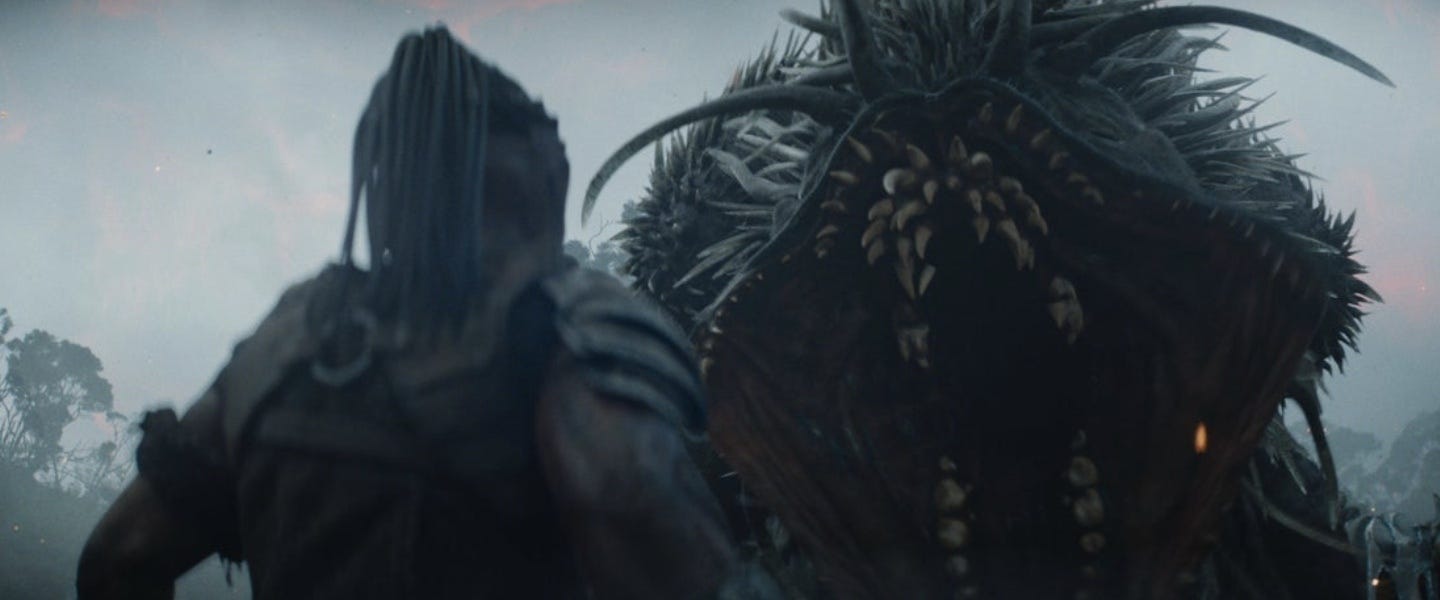
Dek’s first clean kill should have crowned him, boneback down, throat open, the father’s creed satisfied. Then the world answers with a larger mouth. The Kalisk drops into the frame like a system correction, not a rival.
It pins him, breath hot enough to cauterize the ground. And then it stops, just long enough to smell Bud on him. Not mercy, not hesitation. Recognition. Even the apex obeys context, and context is the one law the father never taught.
The pause lasts one heartbeat. Then the recursion begins.
Every strike Dek lands is erased. Every wound seals into the previous shape. The creature doesn’t adapt, it repeats, perfectly, endlessly. The camera lingers on the sameness: the body knitting itself into yesterday, the world refusing to let its shape change.
Strength sharpened so far it loops back into blindness.
What the father calls purity, the planet calls dead code.
This is where Dek first sees the truth: apex is a tomb when the forest changes.
Three Lineages, One Living Grammar
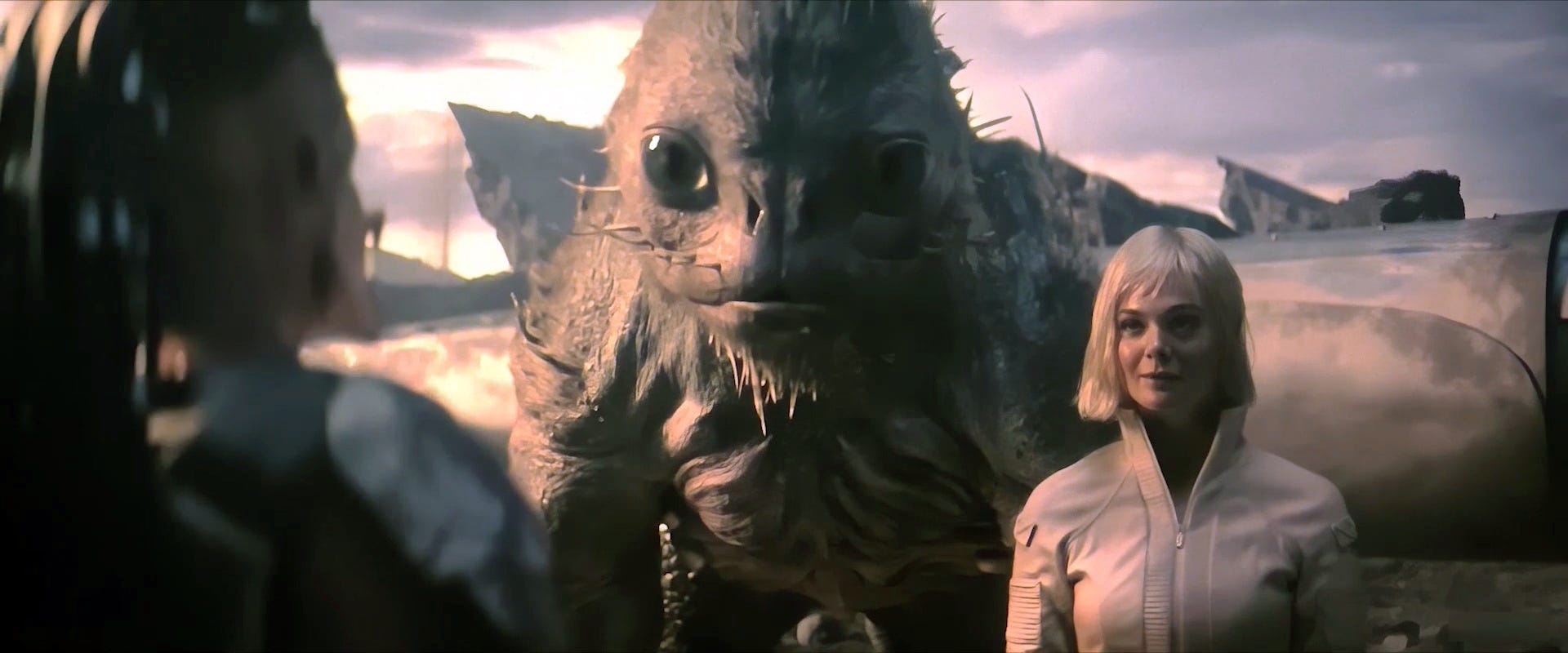
Thia doesn’t soften Dek; she translates him.
She teaches him what Genna actually rewards: attention, adjustment, context.
Not hierarchy. Not ritual. Not the father’s commandments carved into bone.
She shows him how to move with the world instead of through it.
She names the river snakes.
She teaches him the berry trick.
She teaches him that terrain is vocabulary, that survival is syntax.
Bud completes the lesson.
She hardens into shield, shatters the Luna Bug’s tooth,
and saves them both in a way the creed has no grammar for.
Then Dek discards her the moment she stops being useful —
the father’s grammar speaking through him one last time.
Thia protests.
He threatens to associate her with “useless” too.
A warning, not a roar.
A fracture line in the creed.
Thia doesn’t erase the predator in him; she introduces new verbs.
Move. Listen. Adjust.
Survival as conjugation, not declaration.
And here is where the planet corrects him one more time.
Tessa never had that chance.
MU/TH/UR wrote her in imperatives and extraction protocol,
a grammar with no room for improvisation.
She doesn’t die because she’s weak.
She dies because her system deletes anything it can’t parse.
Her death is a corporate line break, not a tragedy.
Dek sees it.
For the first time, he recognizes a creature shaped by a creed
more rigid than his father’s.
Thia, Bud, Dek, three organisms learning the world’s grammar together.
Not a pack.
Not a family.
A syntax.
And the planet replies.
The Creed That Fears Women
The backlash arrived on schedule, loud and empty, men mourning a film they never watched, defending a creed that stopped serving them years ago.
They fear any grammar the father didn’t teach. Every creed collapses at the point where it refuses to learn, and the backlash proves it in real time.
Evolution does not pause for their comfort.

The Son Who Outlives
Dek doesn’t win by breaking the creed.
He wins by surviving long enough to make it irrelevant.
Every duel in Badlands speaks the same sentence:
the father’s language cannot parse a world that keeps changing.
Dek adapts mid-strike, mid-injury, mid-breath;
the verbs shift under him, and he shifts with them.
He fights with terrain, with timing, with bodies beside him
tools the father’s syntax never allowed.
When the Kalisk regenerates through every wound,
the creed finally hits its limit.
A predator built from static perfection cannot answer a world that moves.
Dek can.
Because he listens.
Because he learns.
Because he refuses the stillness his father mistook for strength.
When Dek triggers the dust-flare, visibility obliterates the cloak that once guaranteed dominance.
The camera lingers on the particles hanging in the air, a battlefield rewritten by light.
The father hunted by vanishing.
The son survives by refusing to disappear.
No prophecy.
No redemption arc.
Just evidence.
Dek’s body speaks the sentence that ends the creed.
The father ends where his grammar ends.
Dek continues speaking.
CALL TO ACTION
Tracing the creed, the fractures, and the parts of this franchise that finally grew teeth.
If it resonated, I’d love to hear your take. I’m around and will respond.
WORK CITED
Films
Predator (1987)
Predator 2 (1990)
Predators (2010)
Prey (2022)
Predator: Badlands (2025)
Episode
Star Trek: The Next Generation, “Darmok” (S05E02)
Articles Referenced
Backlash documents and culture-war commentary, including publicly available criticism from Cosmic Book News and related outlets.
ACKNOWLEDGEMENTS
Thanks to everyone who talked this one through with me, the film writers, friends, and readers who helped me stress-test the argument instead of protecting it. You make the work worth the oxygen.
DISCLAIMER
This essay is an independent critical analysis and is not affiliated with 20th Century Studios, Hulu, Disney, or the creative team behind Predator: Badlands.
All stills and references are used under fair use for commentary, criticism, and scholarship.
Shaman drops Bangers I need to learn from. Although I haven't seen this yet, but I lub this piece!
Cool! I dig the depth at which you approach these things. I’d love to read one from a kids movie sometime… pretty please 😂