

Friendship
The Line That Still Holds

Belonging Without Participation
The mug is filled past the line.
Coffee trembles at the rim as Craig carries it into a room already louder than he is. He warns people as he passes.
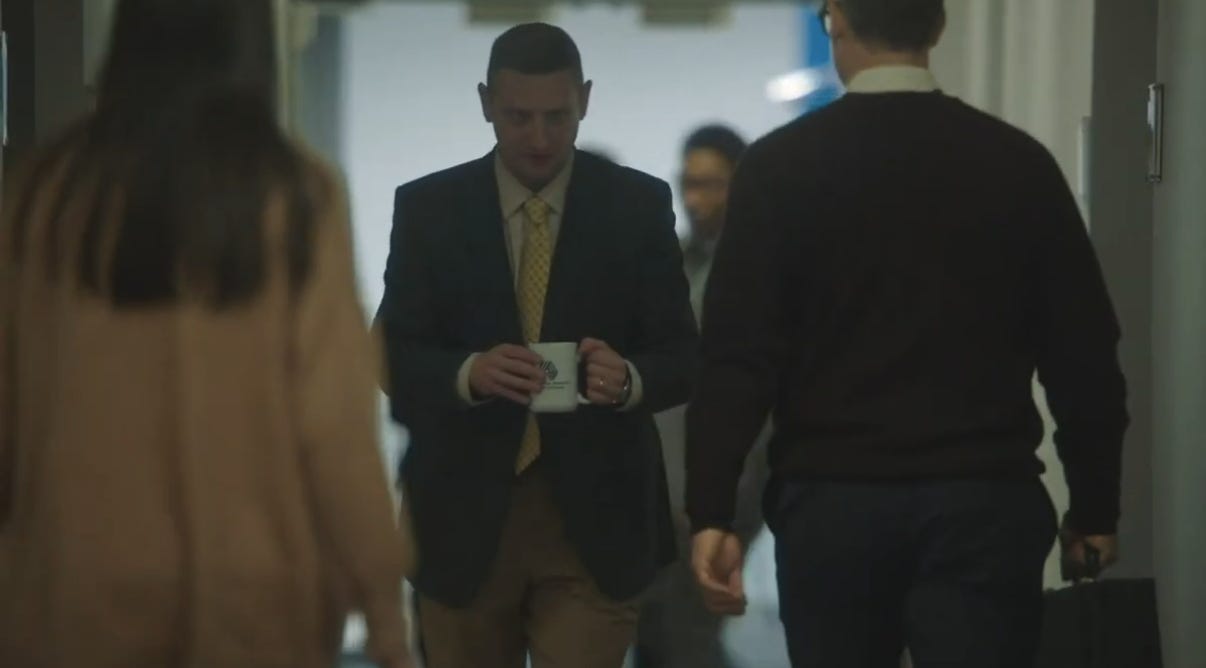
“Full mug here, guys. Careful.” Someone laughs. Someone calls him a stupid motherfucker under their breath. The joke lands before he does. The room keeps moving.
At home, the table is already taken. Flowers spill over themselves. Tami is trying to make space that will not hold. Steven steps in without being asked. Craig sits back in the recliner, phone in hand, watching the problem instead of entering it. Later, when he insists his nights are unpredictable, she answers without looking up. You sit there every night.
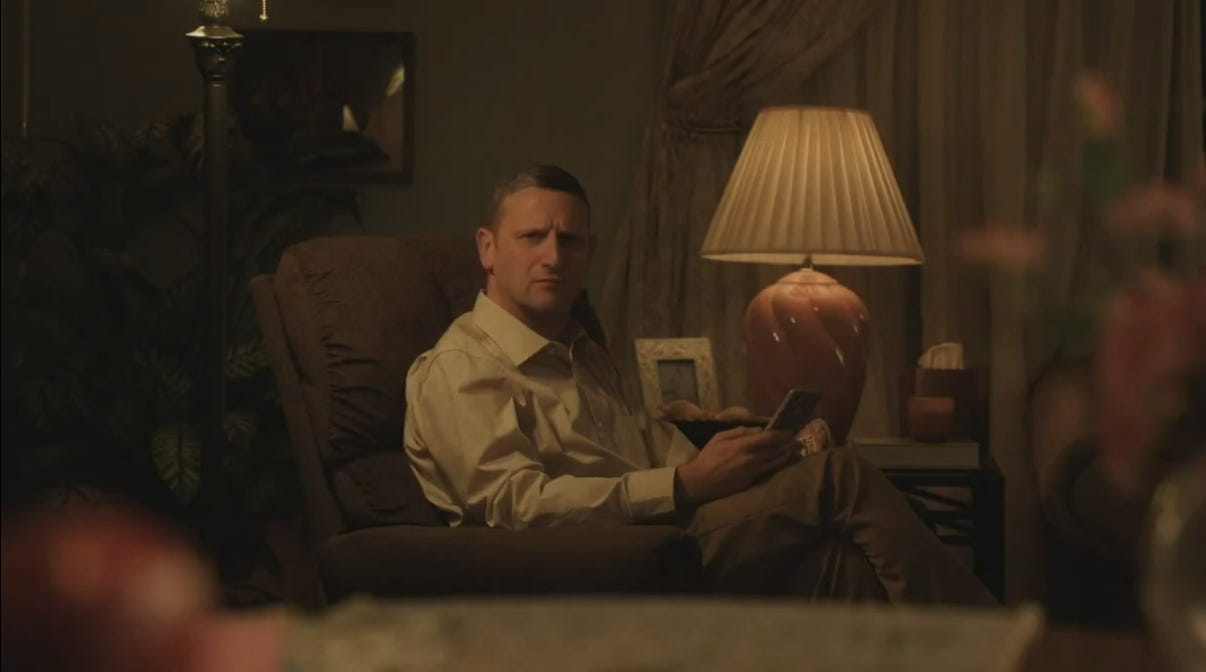
Craig does not live in an empty world. He lives beside a full one he refuses to enter.
The film builds that condition before Austin ever appears. In the office, Craig is already inside a room that includes him without needing him. At home, the same pattern hardens. Tami is working, panicking, asking. Steven responds. Craig watches. The issue is not absence. He will not enter.
That is why Austin matters in the form he does. He does not introduce belonging into Craig’s life. He introduces charge. His house feels vivid, alive. The beer reaches the brim without spilling. The handaxe comes with a story big enough to hold awe. Even grief arrives already shaped into something Craig can witness. Austin offers not simply company, but a room arranged to feel meaningful the moment Craig steps inside it.
Craig misreads that charge as proof that nothing meaningful existed before. But the film has already shown otherwise. The life he claims to be missing is already touching him in forms that ask less of his imagination and more of his presence. Tami does not need him to become interesting. Steven does not need him to become mythic. The house does not ask for performance, ordeal, or revelation. It asks that he enter it as it is.
So the fullness keeps returning, and each time it lands a little harder. The mug. The table. The house. The room that does not need him to be extraordinary, only present.
He keeps mistaking that requirement for emptiness.
Intensity Mistaken for Intimacy
The first guys’ night lets that logic pass for belonging until pain enters the room. Craig enters Austin’s circle already over-readied, eager to convert access into equivalence. He smokes when others smoke. He tries on their ease. He walks into the sliding glass door, smiles through the humiliation, and survives because the room still has enough momentum to absorb him.
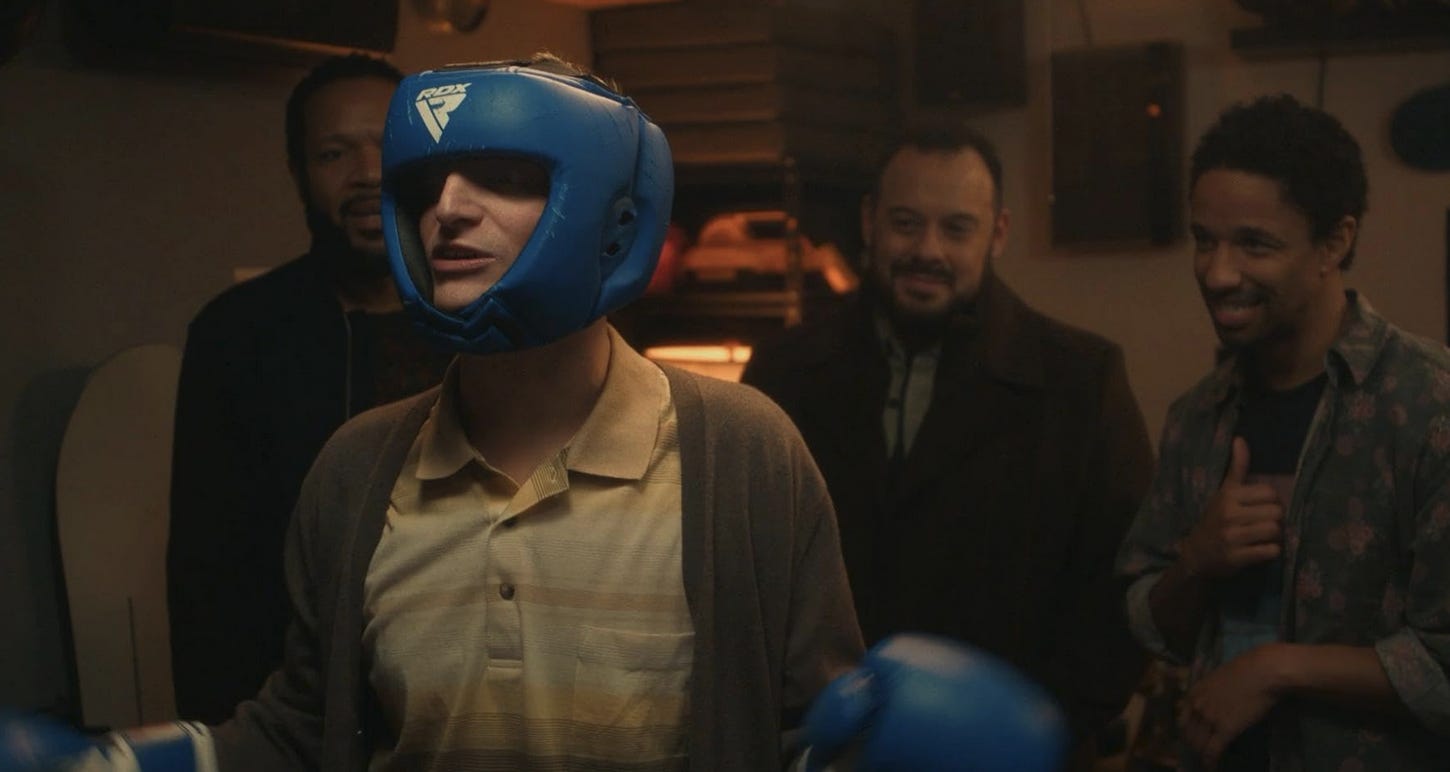
Even the boxing match begins as one more ritual he can join by imitation. But the moment pain enters the room, he stops reading the event as play and starts reading it as permission. Austin hits him twice in the nose. Craig answers with the sucker punch. Then the soap in his mouth, as if escalation and self-abasement could restore the mood he just destroyed. He does not know how to repair the room, so he makes the damage louder. He keeps mistaking aftermath for intimacy.
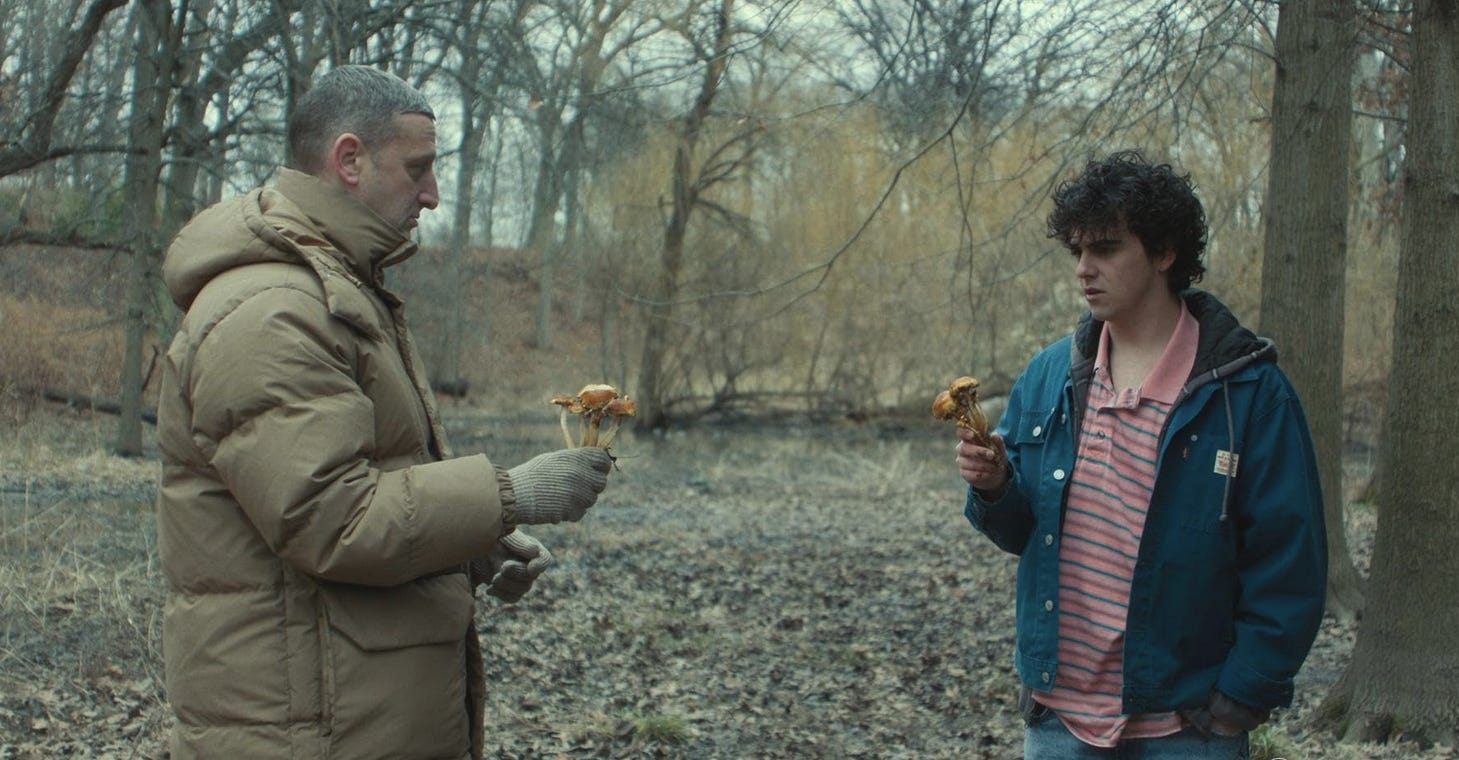
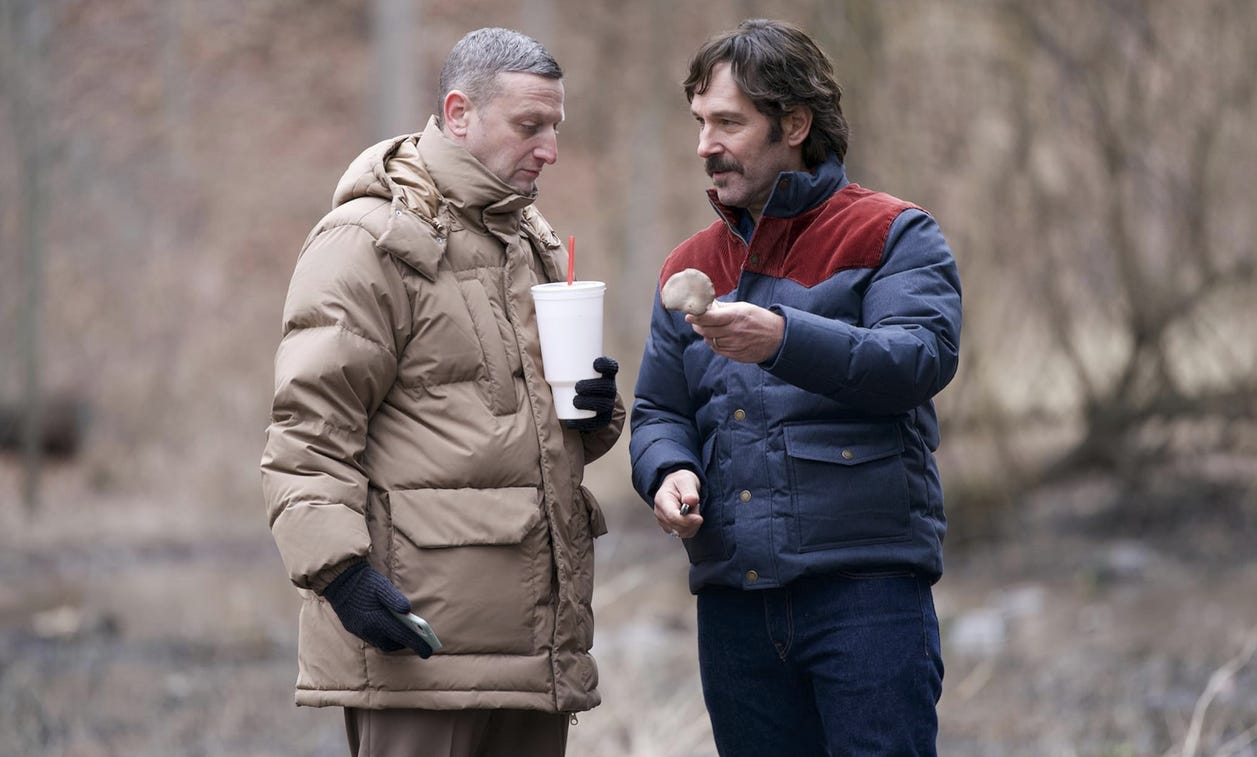
That pattern hardens when he turns toward Steven, his son. The mushroom outing is not fatherly attention. It is borrowed grammar. Craig does not meet him where he is. He exports Austin’s language of foraging, mystery, and adventure onto a boy who has already told him he wants to be somewhere else. Even the field matters. With Austin, the mushrooms arrive through confidence, detail, and shared motion. With Steven, they arrive in a trash-strewn field under power lines, with coercion replacing wonder almost immediately. “Take a bite.” “Eat or you won’t get that Scientific Calculator you want.” What looked like initiation in one setting curdles into pressure in another. Craig still believes an ordeal will produce closeness if he can force the scene to carry enough charge.
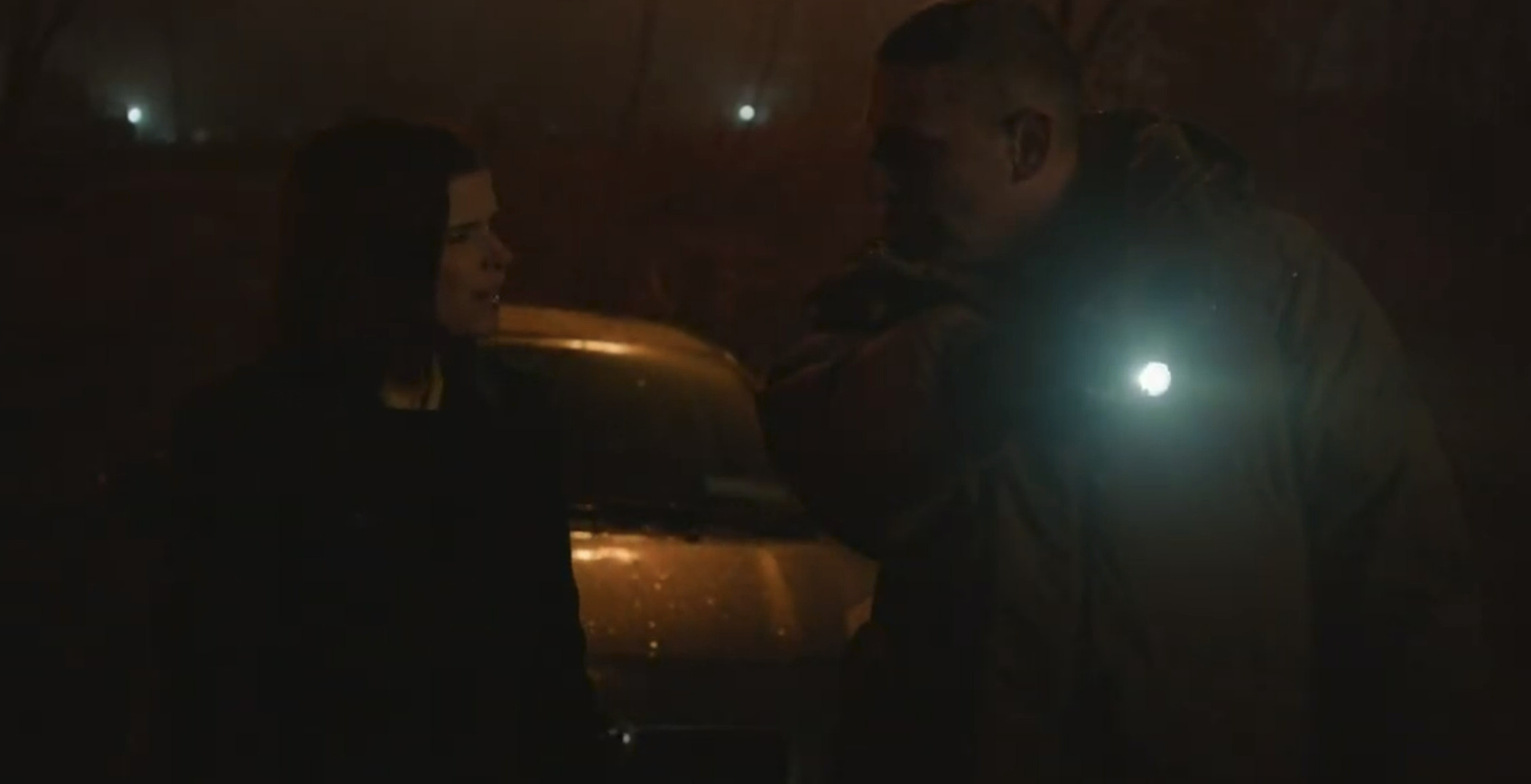
The sewer is where that belief becomes unmistakably dangerous. By then, “adventure” has already detached from care. He drags Tami into Austin’s borrowed underworld because ordinary disappointment is no longer legible to him as a place where relation could happen. He cannot answer her canceled party, her visible exhaustion, or the food she has already made by staying in the room with her. He has to convert the night into a test, a passage, a story. The smashed flashlight. The wrong turn. The three-way fork. The dropped phone in the water. The sequence stops feeling illicit and starts feeling like abandonment. He keeps the rhetoric of discovery and loses the person beside him inside it.
Play becomes injury. Wonder becomes coercion. Adventure becomes abandonment. Craig does not escalate because he lacks other ways to feel connection. Only rupture seems vivid enough to count. Not closeness. Not reciprocity. Just the room after. The men staring. Steven leaving. Tami gone in the dark. He keeps arriving at aftermath and calling it contact.
Access Without Reciprocity
Austin arrives as if he belongs to a different film. Not a better one, exactly, but one with a cleaner temperature. His door opens onto darkness and then onto him. He offers yerba mate before Craig has learned how to stand in the doorway. He fills the beer to the brim without spilling. He turns weather, music, fossils, rooftop grief, and municipal trespass into parts of a life that seems already edited for significance. Nothing around him feels accidental. Even his ease has structure.
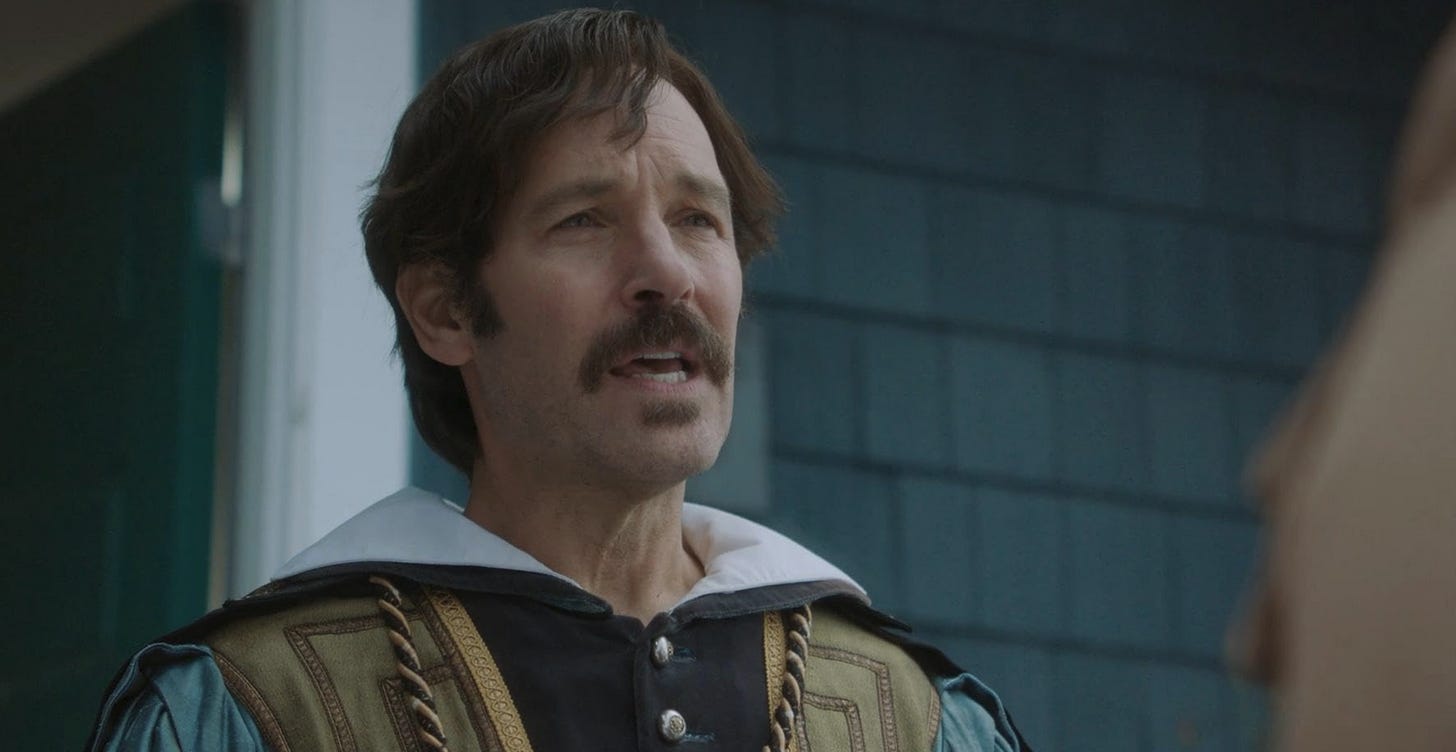
That is why Craig mistakes him for an answer. Austin does not merely seem popular or confident. He makes ordinary things arrive charged. The handaxe is not just an object. It comes wrapped in a scene large enough to hold awe. The rooftop confession is not just disclosure. It arrives with the city below them, a cigarette in hand, tears already crossing the right distance. Even the guys’ night runs on ritual. Singing becomes chorus. Boxing becomes initiation. The room looks loose, but it is not unmade. It already knows how to absorb certain men, certain jokes, certain forms of vulnerability, and return them as belonging.
Craig reads welcome as equivalence. Austin does not. His warmth is real, but it is structured. He invites. He narrates. He reveals. He does not surrender authorship of the scene. The moment reciprocity arrives in a form he did not stage, the room hardens. Craig treats the boxing match as permission. Craig tries to carry the energy outward instead of receiving it in place. What looked expansive turns out to have edges.
The film is fair to Austin here, and it should be. Craig receives unusual warmth for a stranger and burns through it. The cutoff is earned. But the film does not leave Austin untouched either. His social world depends on mystique and selective exposure. He can show Craig the city from above. He can tell the story of the dead friend. He can let him into the band’s orbit. He offers intimacy in forms that can be admired, echoed, even briefly inhabited. He does not offer a room another person can meaningfully alter.
That limit keeps surfacing. The morning show turns him into polished daylight. The toupee slips into view, and for a moment the performance collapses into maintenance. None of this makes him false. It makes him managed. Austin is not Craig’s cure, and he is not the film’s hidden villain. He is a man whose charisma feels generous because it is so well arranged, and whose arrangement begins to show the moment someone mistakes access for mutuality.
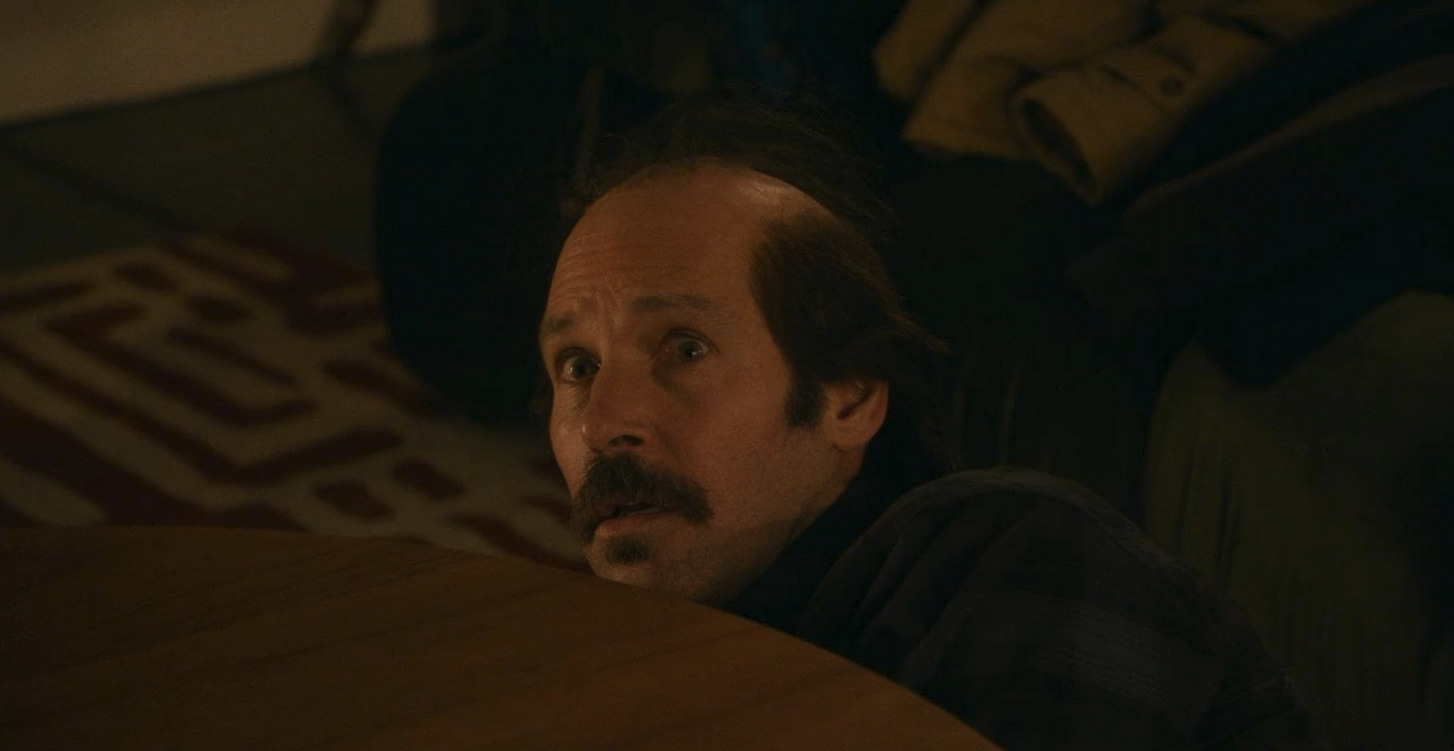
The tragedy of the pairing is not that one man is fake and the other sincere. It is that each exposes the other’s failure. Craig reveals how little Austin’s warmth can withstand without structure. Austin reveals how quickly Craig turns warmth into possession. One man can host the room but not share authorship of it. The other cannot enter a room without trying to force proof that he belongs there.
Eat Fresh
The toad should deliver revelation. That is the promise of the scene, and Craig takes it seriously because revelation is the only scale that still seems worthy of his hunger. He has spent the film chasing charged forms of belonging: awe, danger, ritual, access, ordeal. So when the hallucination finally arrives, the cruelty is in how little it gives him. Fluorescent light. The counter.
The bread-and-menu routine. A man behind the register receiving Craig as if this order has been placed a hundred times before. Not transcendence. Not transformation. Just a sandwich, a counter, a person being recognized.
That humiliation is the point. Stripped of swagger, performance, and borrowed adventure, Craig’s desire turns out to be painfully ordinary. He wants someone to know his order. He wants familiarity without negotiation. He wants the small, untheatrical comfort of being expected. And the scene refuses to let even that arrive cleanly. The old man behind the counter still carries Austin’s outline. Even here, at the smallest imaginable scale of belonging, Craig cannot picture being known except through the face of the man he turned into an answer.

The scene does not excuse him. It does something harder. It reduces the size of the want underneath all the damage. After everything he has mistaken for intimacy, his deepest fantasy can fit inside routine attentiveness and a sandwich order. The tragedy is not only that this desire is so modest. It is that he has already been living beside forms of recognition he could not enter, and by the time he glimpses what he actually wanted, he can only imagine it through the same idol that helped deform it.
What Still Holds
In the police car, Craig smiles. Austin has not forgiven him. The damage has not converted into understanding. What passes between them is thinner than friendship and more poisonous than closure: a wink, a signal, a line of recognition preserved on managed terms.
That is what makes the ending difficult. The gesture does not erase the arrest, the fear, or the wreckage that got them there. It does something colder. It leaves the channel open. Austin’s warmth survives, but only in its most characteristic form: selective, controlled, impossible to mistake for mutual repair unless you are Craig.
And Craig does mistake it. That smile is the final poisoned charge. Even now, belonging arrives to him not as reciprocity, not as repair, but as a flicker of access that feels vivid enough to count.
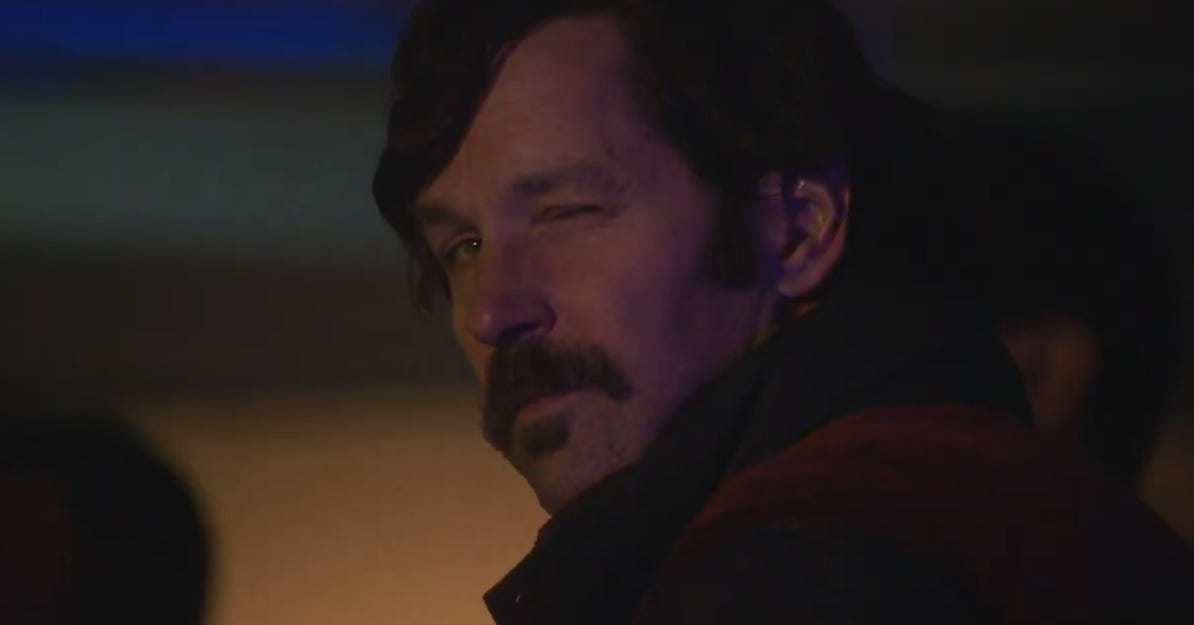
The ending does not resolve that trap. It narrows it. What remains between these men is not redemption, and it is not simple punishment either. It is managed recognition: enough to seduce, enough to contain, never enough to survive a second author.
Austin’s staged, partial closeness may not be an exception at all. It may be the only form of belonging this social world knows how to host. That is the film’s coldest thought. Craig has wanted the wrong things in the wrong forms. He has damaged the people nearest to him while chasing charge he kept calling intimacy. But the world around him has not exactly offered a richer language in return. Ordinary participation already felt invisible to him. Managed charisma felt like revelation. At the end, the nearest thing to connection is still a signal mistaken for something fuller.
Not emptiness. Not redemption. Just one more line that still holds.
Works Cited
Friendship. Directed by Andrew DeYoung, A24, 2024.
Friendship. Screenplay, A24, 2024.
Friendship. Transcript.
Disclaimer
All rights remain with their respective copyright holders. Views expressed are the author’s interpretation of the work.
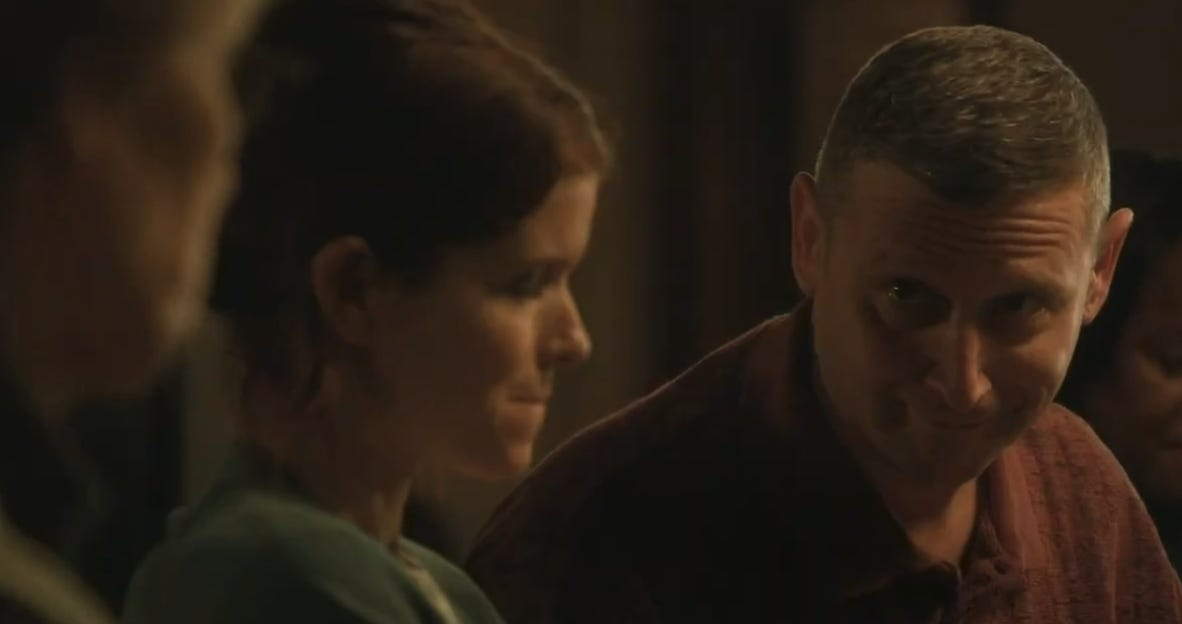
This film was actually my introduction to Tim Robinson (late to the party). I thought it was interesting and hilarious. The humour was absurd but it somehow felt like an arthouse drama. Maybe Napoleon Dynamite is the closest in style I can think of.
Bangers only from shaman