
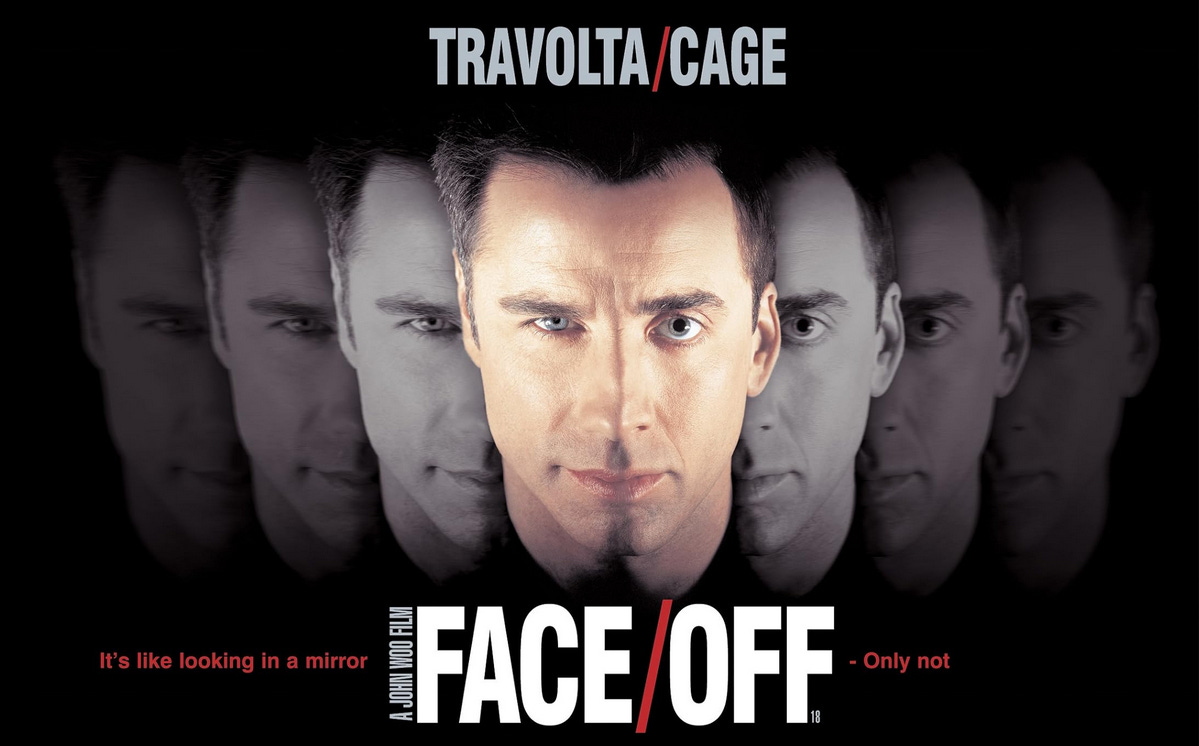
FACE/OFF
Rituals of Recognition

The Turn
The film begins in rotation.
A carousel turning in daylight, painted horses rising and falling in borrowed eternity. A father lifts his son into the air. Sunlight flashes against brass poles. The music loops without urgency, as if the afternoon cannot imagine interruption.
Then the circle tightens.
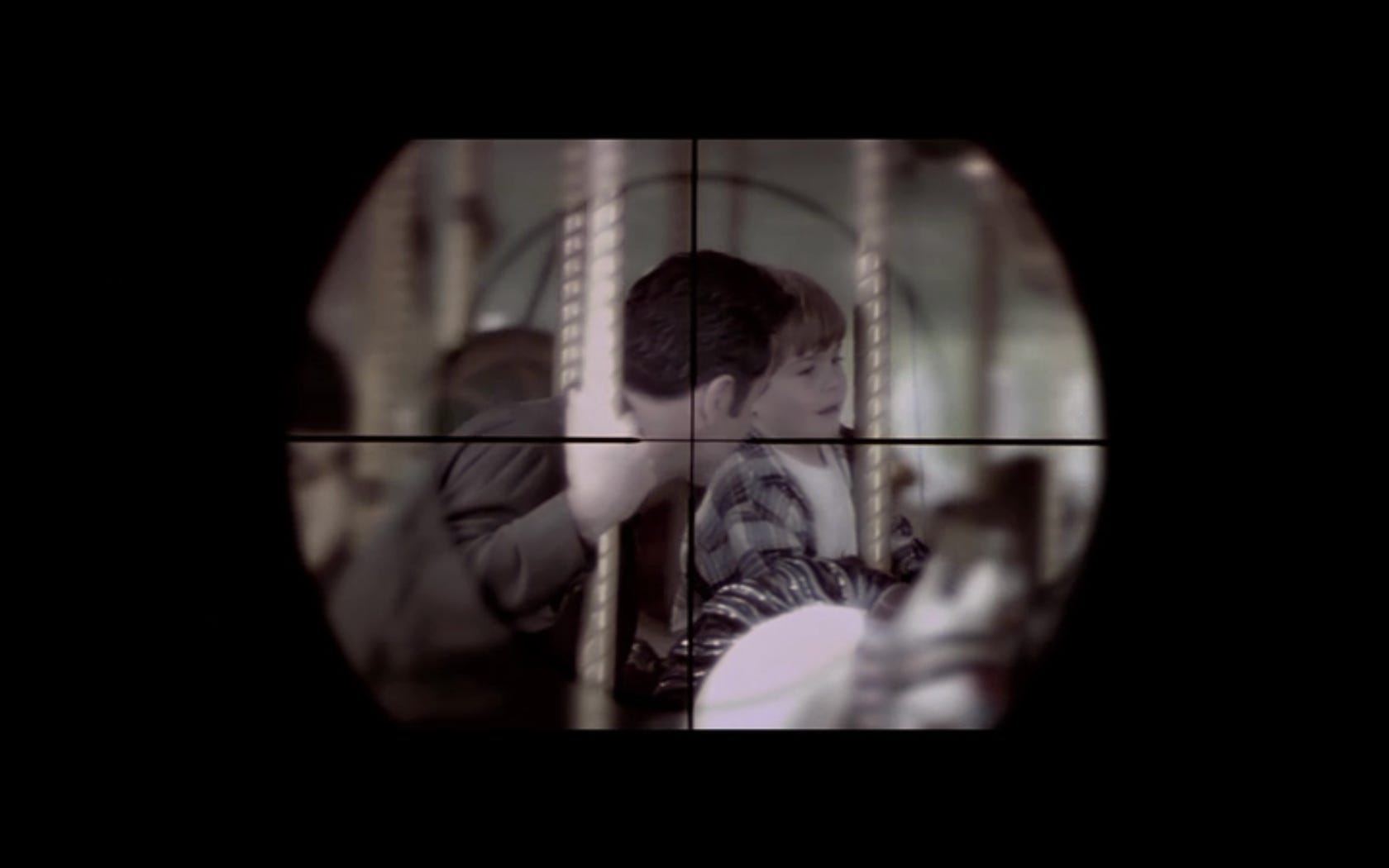
A rifle scope replaces the carousel’s ring. The same geometry now encloses them inside crosshairs.
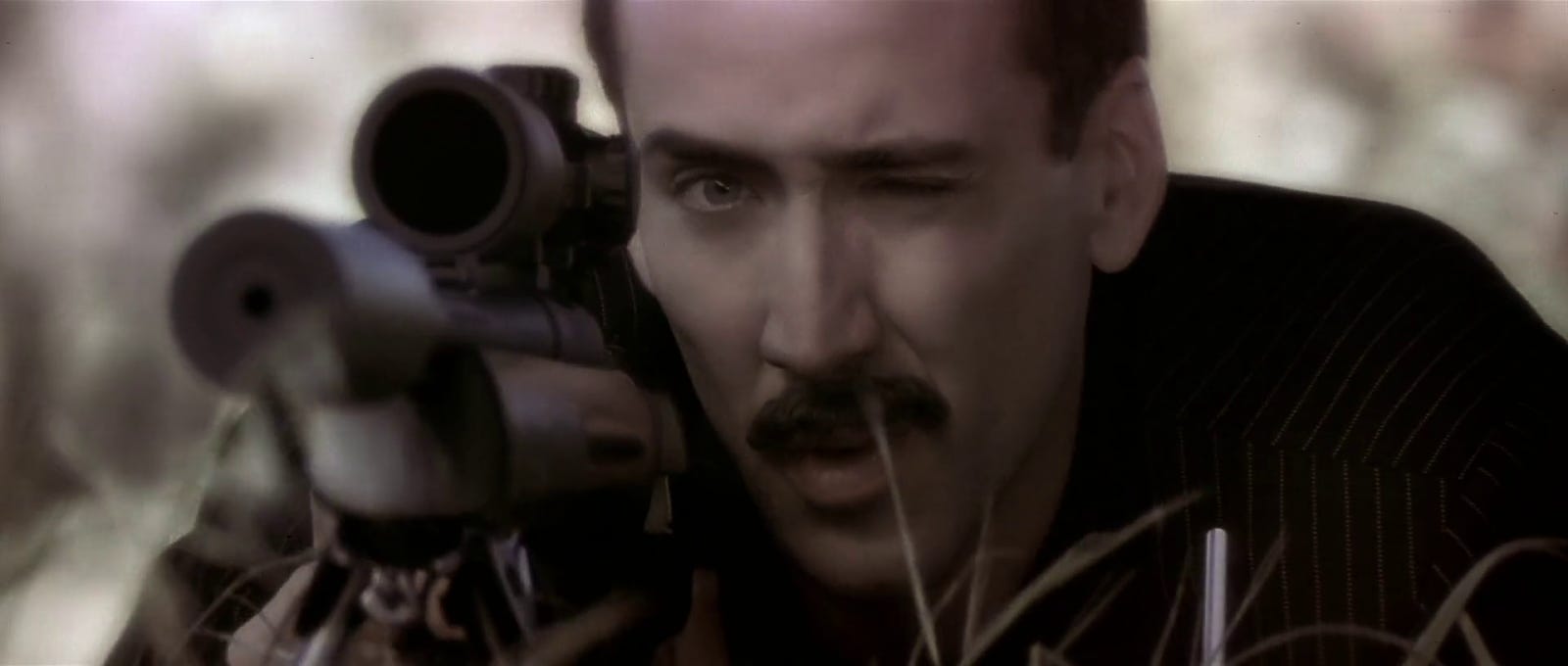
The shot cracks the afternoon.
The boy’s body drops out of Archer’s arms. The carousel keeps turning. Painted horses rise and fall as if nothing has shifted.
The bullet misidentifies.
The carousel does not leave Archer.
His pursuit of Castor narrows everything around it. The hangar raid detonates across the tarmac. Agents scatter. Gunfire fractures steel and air without coordination. Bodies fall in the slipstream of obsession.
Castor survives, comatose. Pollux survives, restrained.
Archer watches agents fail to extract the bomb’s location from Pollux.
In the hallway afterward, he floats the idea of torture to his superior. A room alone. Time to apply pressure. The suggestion lands without resistance. No one disagrees.
The film does not stage this as crossing a line. It stages it as workflow.
At home, Eve asks him to stop.
He promises.
The promise holds until the bomb remains hidden.
The city becomes collateral to restraint.
He chooses escalation.
In the surgical chamber, Archer is framed in close-up as the plan is explained. The room is already prepared. Machines idle. Doctors move with procedural confidence.
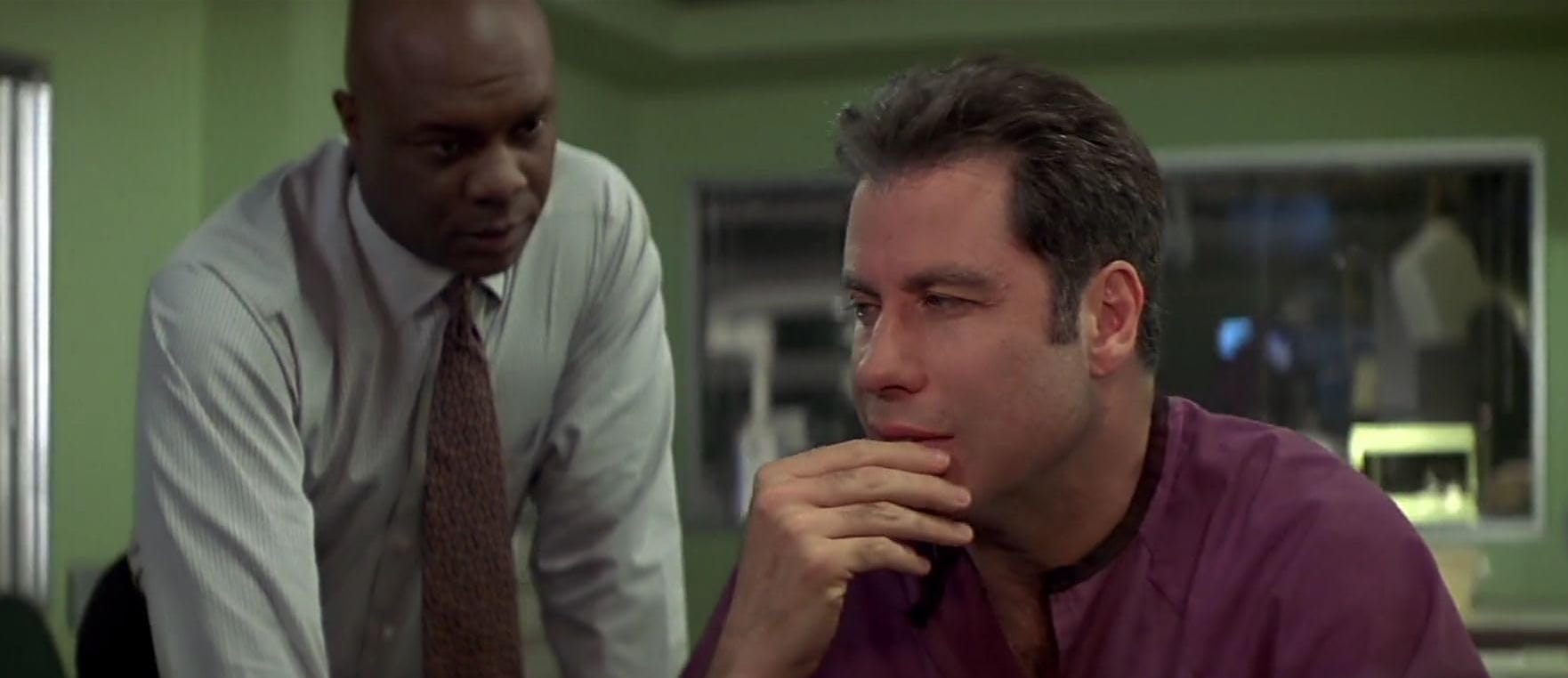
Find the bomb. Save the city.
The camera holds on his face just long enough for hesitation to register before the operation proceeds.
Consent compresses under necessity.
He makes one request.
There is a scar on his chest. The wound from the carousel.
He asks for it back when this is over.
“It’s important to me. It’s like a reminder.”
The doctor nods.
The anesthetic descends.
Skin can be removed. Bone structures altered. Voice calibrated.
Identity is made transferable.
The system will accept what it recognizes.
The Press
The prison has no horizon.
It rises from open water, metal, glass, vertical containment. No surrounding city. No visible civic structure. Movement is engineered. Boots lock to the floor. Bodies are magnetized into place.
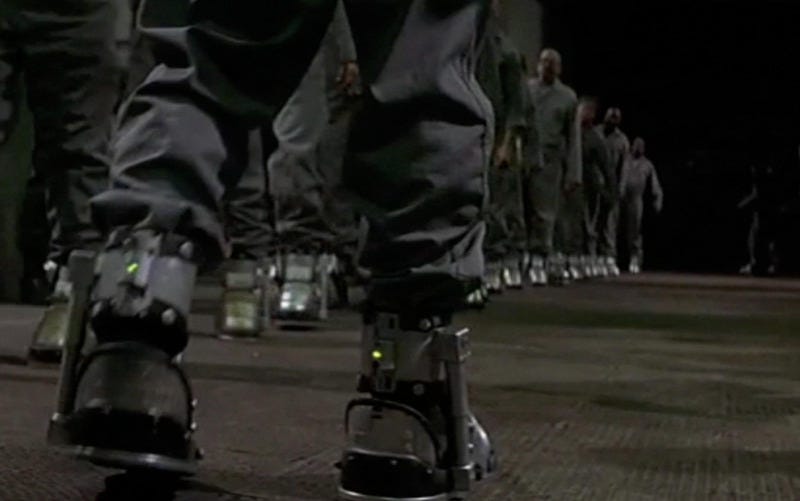
No judge appears.
No warrant is read.
No courtroom exists.
Law is absent. Procedure remains.
The undercover plan depends on proximity.
Archer, wearing Castor’s face, enters the facility to extract the bomb’s location through recognition rather than force.
Pollux begins to speak.
Elsewhere, Castor wakes.
He kills the surgeons. The guards. Everyone who knows the operation exists.
He assumes Archer’s life with procedural ease.
Pollux is removed from the prison.
Archer is left behind.
Now the architecture closes.
He is no longer an agent inside enemy skin.
He is a man trapped in the body of his child’s killer.
Recognition is reality.
His protests register as performance. His hesitations read as weakness. Survival requires aggression.
He must perform Castor to avoid becoming prey.
Weakness is punished.
Castor, wearing Archer’s face, visits him.
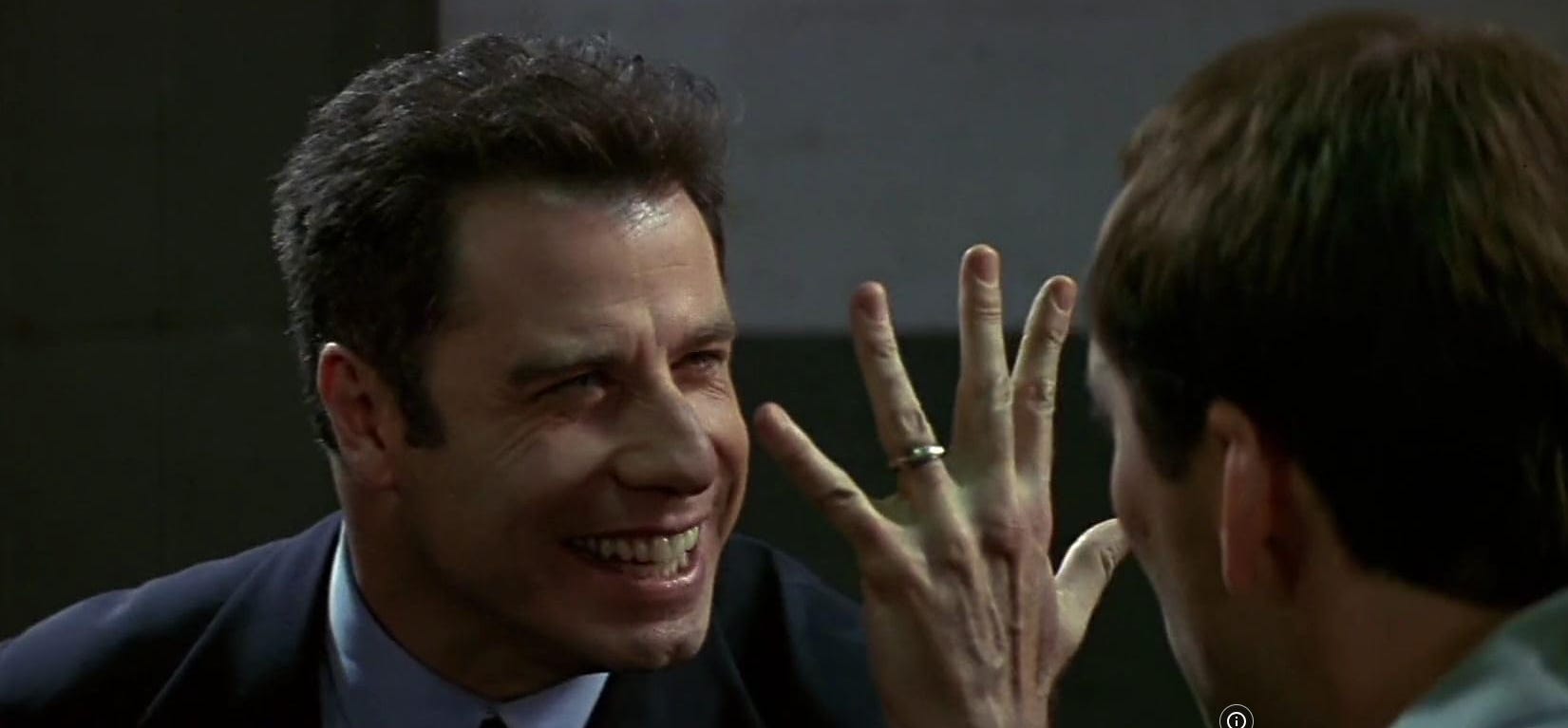
He names the erasure. The evidence destroyed. The future rewritten.
“I’ve got a government job to abuse and a lonely wife to fuck.
Oh, did I say that? Oh, I’m sorry, I didn’t say that. make love to.”
The threat does not raise its voice.
Pollux is freed.
The bomb is disarmed.
The city is saved.
The president offers gratitude. Authority expands. Funds, personnel, autonomy.
The wrong man receives commendation.
He accepts it easily.
That night, the light softens.
Candles. Wine. The performance of return.
He kneels at her feet.
A hand around her ankle. A promise of coming home. A promise of staying.
“The only place I’m going is upstairs with you.”
The light does not change.
Nothing fractures.
What follows is not shown.
It is implied.
It is sexual assault.
Eve believes she is with her husband.
The moment holds.
And then it continues.ind
The Swap
Archer escapes.
He flees to Dietrich because Castor’s world is the only world that will listen to the face he now wears.
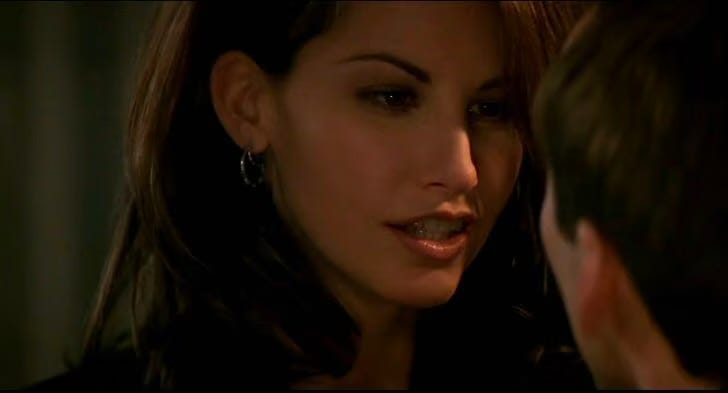
Inside that house, the light is softer.
Sasha speaks without suspicion. Adam moves freely across the room. A child’s hand reaches for the man wearing a stranger’s face.
The warmth here is not counterfeit.
It belongs to a household that believes it knows him.
Archer feels the absence before he feels the child.
The room offers him a shape his life no longer contains.
He kneels anyway.
Gunfire tears through it.
Walls splinter. Windows explode inward. Federal agents sweep the rooms with automatic precision.
Archer covers the boy with his body.
He watches his own machinery from the wrong side of its barrel.
The choreography does not change.
Only the target does.
The war has crossed the threshold.
Silence holds for a beat.
Then the violence relocates.
Archer sends Pollux through the skylight.
The fall is not spectacle. It is gravity.
The only person who recognized Castor without credentials collapses on concrete below.
The stage remains.
The witness is gone.
Later, fleeing custody, Archer stands before Eve.
The face of her son’s killer a few feet away. He hesitates before lifting his hand. Fingers press against her cheek, the same gesture, the same contact.
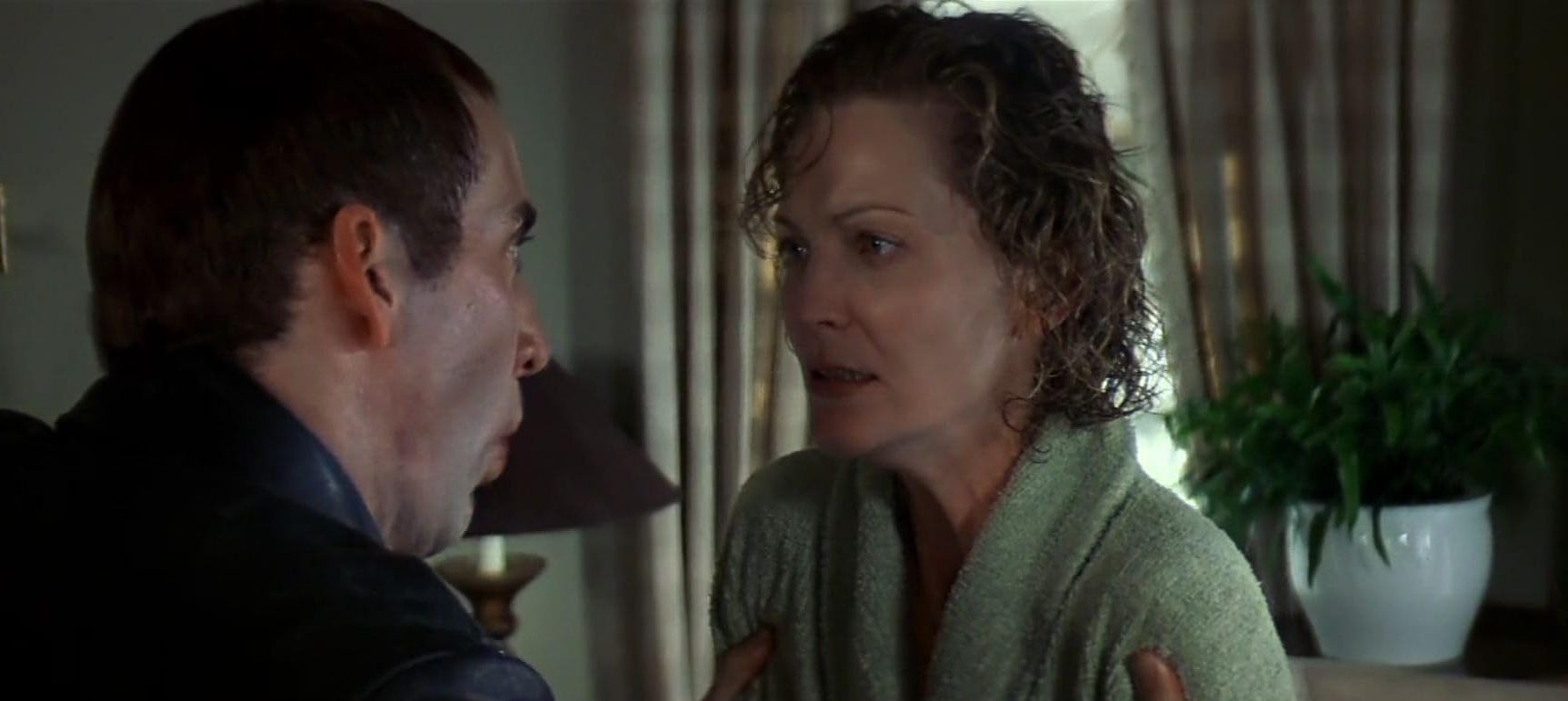
For Eve, these moments arrive through the same surface. Intimacy and violation are filmed with identical grammar. She has no access to the knowledge that would let her distinguish between them. The camera withholds that knowledge as well.
The symmetry holds.
In the church, guns rise in mirrored arcs. Marble fractures. Feathers erupt into the air and hang there, suspended as if gravity hesitates. Shot answers shot. Movement echoes movement.
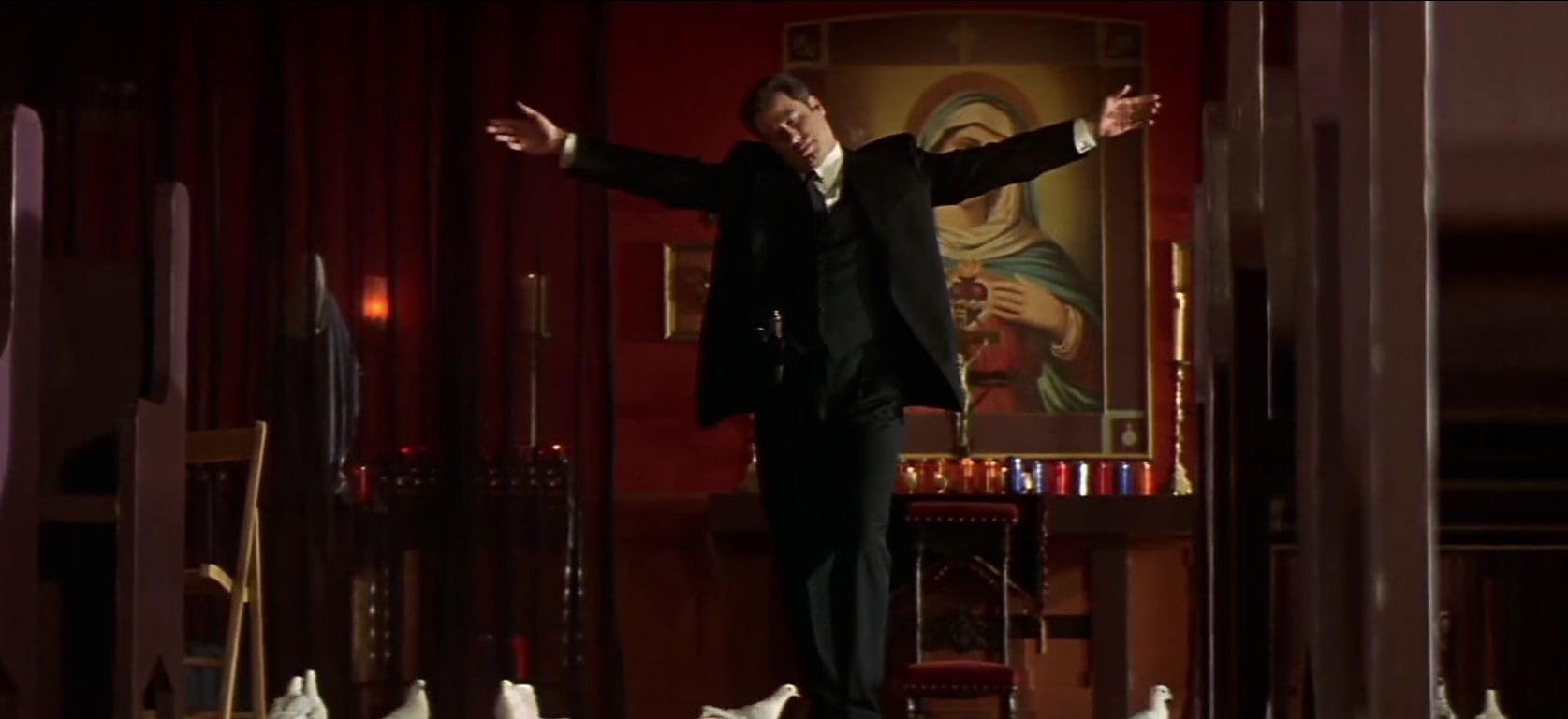
Excess is not chaos.
The camera does not change its devotion when the badge changes. Slow motion sanctifies both sides equally.
When it ends, the echo lingers longer than the bodies.
The Door
After the duel, Archer stands in the doorway.
Adam in his arms, the son of the man he erased, the child whose mother died inside the convergence of both worlds.
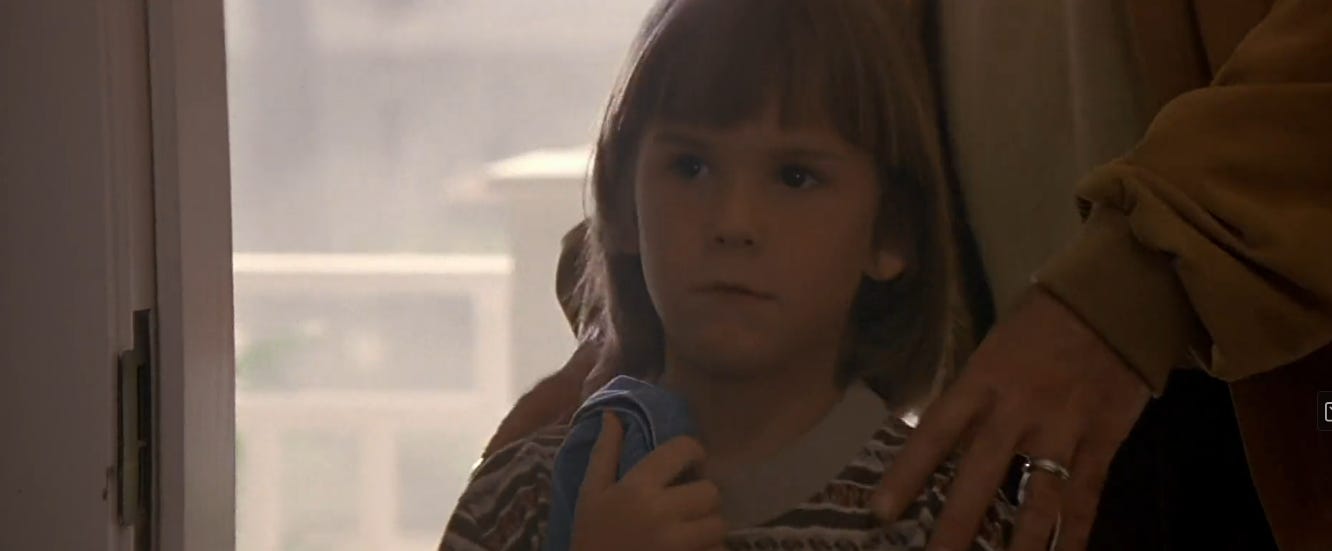
He has already walked through this house wearing another man’s face.
He has already watched his own machinery turn toward him.
He has already survived the prison that floats without law.
The house is quiet.
Eve does not rush forward.
Jamie watches.
She has already learned how to defend herself against the wrong face.
No one speaks about Sasha.
No one speaks about the raid.
No one speaks about the bedroom.
Archer steps inside.
The gesture is careful. It is real.
The love is not counterfeit.
It is also not untouched.
Nothing beyond these walls has altered.
The badge remains.
The prison remains.
The choreography remains.
Adam crosses the threshold into a structure that has already proven it can absorb violence without stopping.
The door closes.
The rotation does not.
Works Cited
Face/Off. Directed by John Woo, performances by John Travolta and Nicolas Cage, Paramount Pictures, 1997.
Werb, Mike, and Michael Colleary. Face/Off screenplay. 1997.
“Face/Off (1997) – Transcript.
Disclaimer
This essay engages with scenes of sexual assault, institutional violence, and coercion as depicted in Face/Off. The analysis does not excuse or romanticize those acts. Where the film frames violence or violation with aesthetic warmth, that tension is examined as part of its formal structure, not endorsed.
Interpretations reflect one reading of a deliberately unstable and operatic text. Readers may arrive at different conclusions about its moral center or emotional resolution.
Acknowledgements
Face/Off remains one of the most audacious cross-cultural action films of the 1990s.
Directed with operatic conviction by John Woo, the film carries the visual grammar of heroic bloodshed into Hollywood spectacle without diluting its ritual intensity.
John Travolta and Nicolas Cage commit fully to dual performance without irony, allowing identity to fracture in gesture, cadence, and posture rather than exposition.
Joan Allen grounds the film’s volatility with restraint, registering tonal contradiction through stillness rather than speech.
The supporting cast, including Alessandro Nivola, Gina Gershon, and Dominique Swain, reinforces the film’s mirrored tensions between domestic fragility and operatic violence.
The cinematography by Oliver Wood and the score by John Powell elevate spectacle into ritual, sanctifying both violence and tenderness with equal formal devotion.
Whatever contradictions the film contains, they are not accidents. They are staged deliberately, unapologetically, and at full volume.
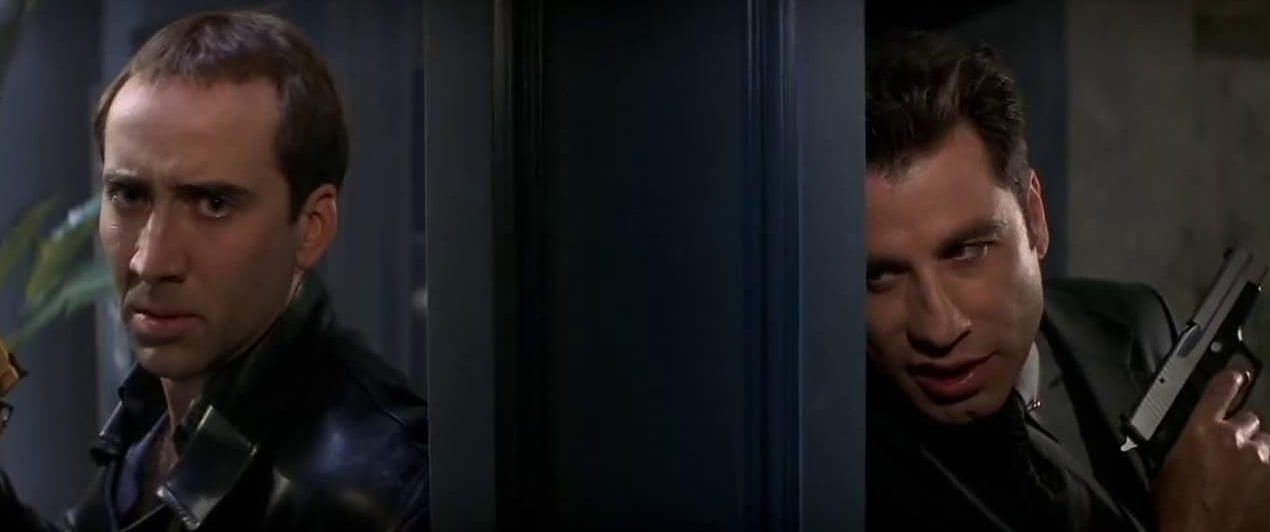
I love seeing love for FACE/OFF, a true 90s masterpiece. The casting is the secret sauce. Travolta and Cage are two actors whose entire screen history makes them perfect for the role since we've seen them play saints and monsters. Woo didn't have to explain the premise, he just put those two men on the screen and let them cook.
Saw it in the cinema as a kid. Even then, I knew what I was watching was corny. I also knew it was freakin' awesome.