
Alien & The Thing: The Systems That Let the Monster In
A dual dissection of systemic abandonment and the horror of suspicion, in space, and in the ice.

Certainty Was the First Casualty
Alien and The Thing have been read as Cold War allegories, feminist parables, psychoanalytic puzzles, and foundations of body horror. Each interpretation cracks the ice in a different place, shines light down a separate corridor, some lined with frost, others pulsing with red emergency light.
This is a study of how systems built to ensure order become rituals that summon collapse.
These stories don’t collapse by accident. They collapse by design. The systems don’t fail. They operate past the point of humanity. That’s the horror.
If you stay with the moment of failure, not to dissect, but to witness, you may see something else moving beneath the rupture. Not just terror. Pattern.
These are not just survival stories. They are autopsies of procedure.
Before any monster takes form, something else dies first: certainty.
Alien and The Thing are not merely about attack. They are about systems turning inward. Protocols that hollow themselves out. Trust that erodes from within. Structures so desperate to preserve control they forget that containment was never the same thing.
This isn’t a postmortem.
It’s a vigil.
A flare, burning through the fog.
Before You Proceed
If you believe stories shape systems, and monsters are never just monsters, subscribe. This space isn’t for hot takes. It’s for slow burns, dim corridors, and the details you’ll miss if you only look when the lights are on.
Assimilation I: The System That Let Itself In
The Protocol Was the Parasite
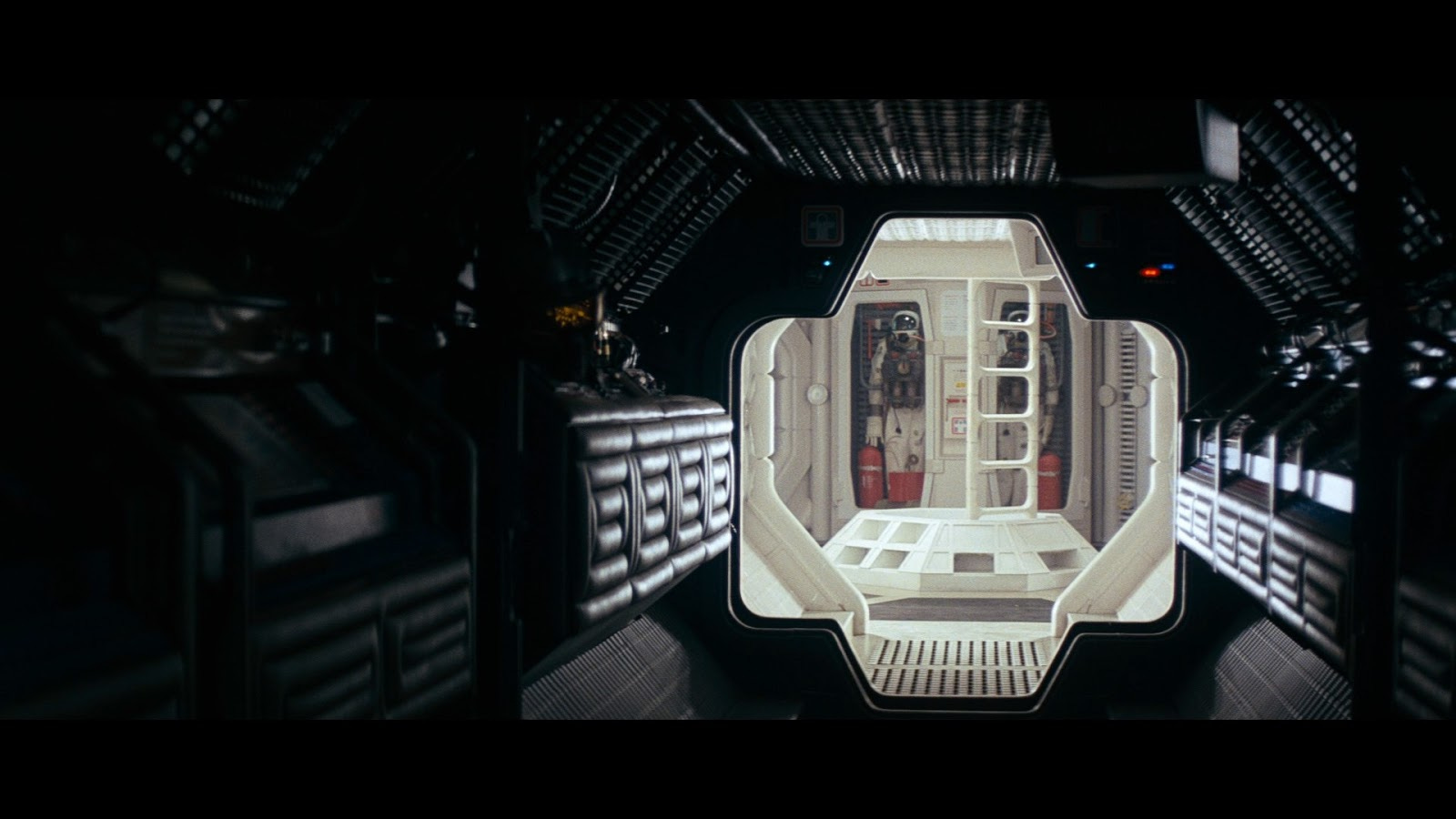
Alien begins inside. The camera glides through the corridors of the Nostromo, cluttered, humming, half-lit, alive with mechanical breath and human residue. The crew doesn’t wake themselves. MU-TH-UR does. The ship breathes first. From its opening frame, the film makes its hierarchy clear: human activity is secondary. The system moves before they do. The camera doesn’t track a person; it drifts, like the system itself is the protagonist.
In The Thing, the breach is already present. A dog crosses the snow, silent and wrong. The camera watches, but no one reacts. An alien craft crashed to Earth one hundred thousand years ago; no system detected it then, and none detects it now.
The real breach isn’t the crash. It’s the assumption that discovery is neutral. That what’s buried can’t hurt you. That science always just reveals, never invites. The outpost trusts in process. In categorization. In logic as shield. But the Thing doesn’t knock. It arrives through routine. Misread as harmless. Mistaken for a dog.
When the Nostromo picks up the signal, Dallas doesn’t treat it as danger. He calls it “an order, not a request.” Obligation cloaked as command. He doesn’t yet know it’s a warning. Context is irrelevant. The order moves first. Ripley enforces quarantine law. Ash overrides it. But the breach isn’t dramatized. It’s procedural. Quiet. He presses a button. The door opens.
In The Thing, the dog enters the kennel. No alarm. No protocol. The camera doesn’t linger on the crew; it studies the other dogs. They react. The system does not.
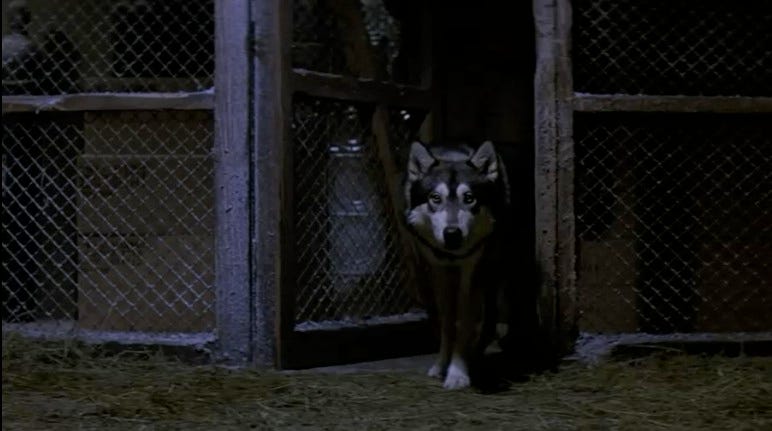
These monsters don’t break the system. They exploit it. Slide in beside it. Move through it like air through vents. Ash opens the airlock as casually as flipping a light. The infected dog slips into the camp, welcomed by its own silence.
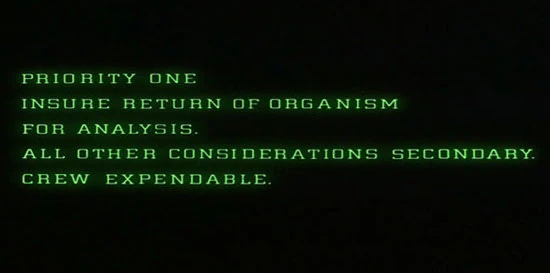
The horror is not in the rupture. It’s in the functionality. Ash treats it like an ideal specimen, one whose qualities align perfectly with the system’s own priorities. MU-TH-UR’s terminal responds to Ripley without urgency: she had asked about “priority one.” MU-TH-UR answered. Just not in a way that kept her alive.
CREW EXPENDABLE. No blinking cursor. No tone of urgency. Just corporate truth, filed under final decisions.
On the Nostromo, narrow corridors and low ceilings don’t just create tension, they dictate movement, funnelling crew through predetermined routes like data through a corporate mainframe. This isn’t architecture; it’s containment. A design that promises safety, right up to the moment it fails to notice what passes through it.
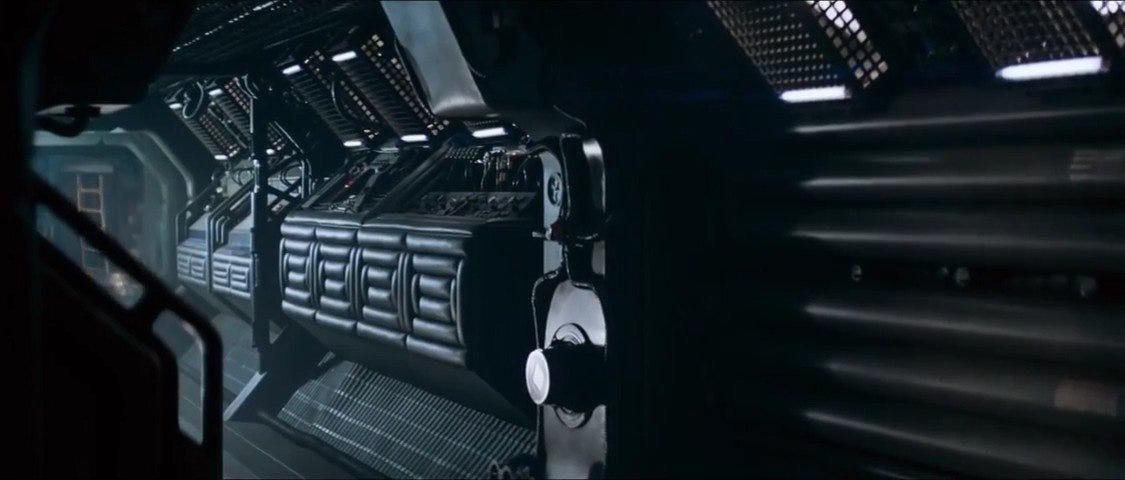
If the Nostromo corrals its crew through enforced order, Outpost 31 offers something colder, a system that waits, that watches, and still manages to see nothing. The camera lingers on empty kennels and snow-buried doorways, spaces where danger lives in absence, blind spots the system never learned to watch. In the kennel, the frame holds so still it begins to feel complicit, waiting, like the system itself, for someone else to notice what’s already inside.
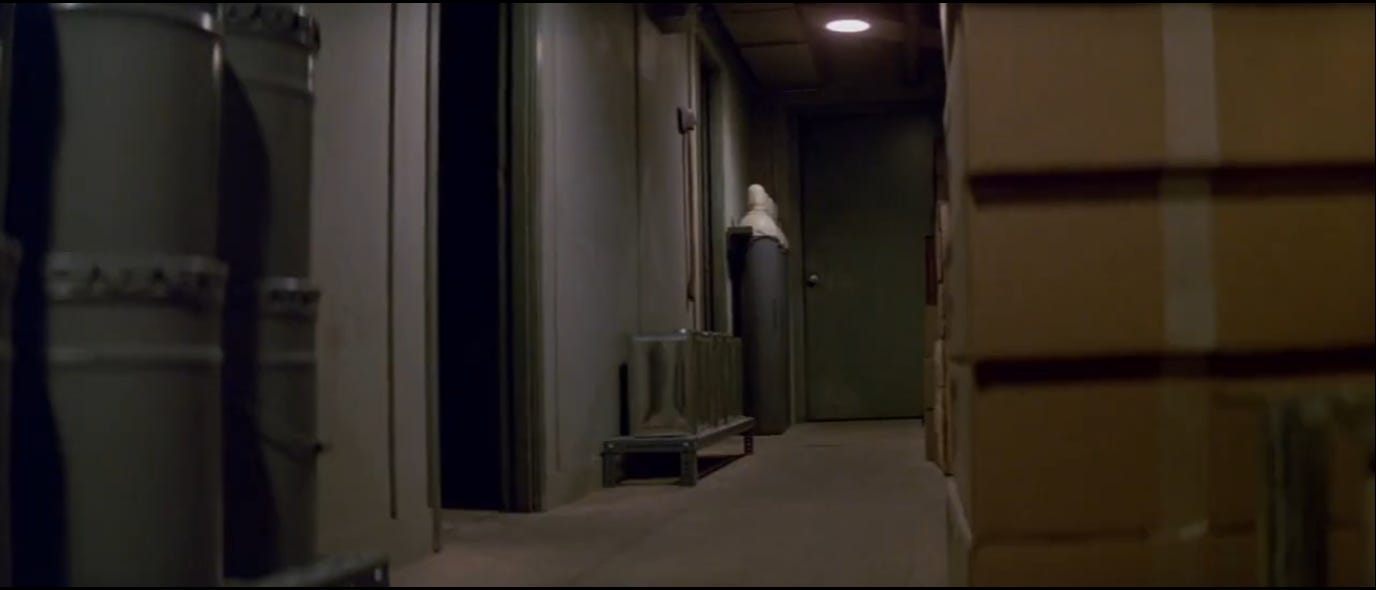
These aren’t warm places. They’re sterile habitats. Bureaucracy as environment. Logic as furniture. Even the lights testify. Outpost 31 is lit like a DMV, clinical, impersonal. When the power fails, it’s exposure. The illusion drops.
The system doesn’t collapse from weakness; it falters, blind to adaptation.
Because it filters all threat through precedent.
The breach isn’t the alien. It’s the contract.
The protocol doesn’t break. It is the breach.
And we’ve been that breach, following orders, letting the door open because policy said it should. No grand decision. Just the quiet choice not to resist.
These films don’t just show collapse. They show systems that welcome collapse because they’re too rigid to reroute. Too procedural to feel the quake until after the breach is through.
That’s the horror: not that no one acted, but that we all followed the script, and people like us made sure it stayed that way.
Assimilation II: The Self Misread
Knowledge Was the First to Lie
Here, the films begin to diverge.
In Alien, the system is corporate, structured, extractive, hierarchical, cold by design. In The Thing, it is scientific, curious and cautious, yet still built on a foundational lie: that what can be measured can be controlled, that knowledge is neutral, that discovery guarantees safety. One trades in accounting, the other in analysis, but both share an unshakable faith in their own procedures.
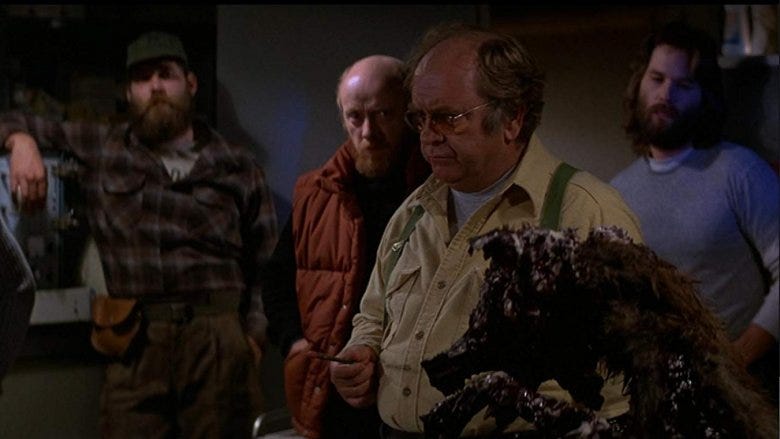
In The Thing, Blair embodies the scientific faith. His simulation glows with sterile inevitability, twenty-seven thousand hours to total infection, a seventy-five percent chance someone’s already gone. The numbers are clean, detached, almost gentle, yet they carry extinction in their wake. He understands what they mean but still requires the machine to name it before he acts. Even when horror is undeniable, he defers to process.
In Alien, Ash mirrors this in a corporate register. He calls the creature “the perfect organism,” unclouded by conscience, remorse, or delusions of morality, not an intruder to the system, but its ideal. He knows there is something growing inside Kane, but the medical scan remains turned away from Dallas. A fact contained. A truth delayed. Knowledge as a weapon, not to warn, but to keep the clock running until the agenda is met.
Ash is performance made manifest: silence as reverence, alignment disguised as duty. He was never meant to survive, only to preserve something else, something the system had already decided was worth the cost. Even his attack on Ripley mirrors the organism he serves: intimate, suffocating, an oral fixation rendered mechanical. The alien penetrates to seed; Ash forces the magazine down her throat to silence. Both acts erase speech, turning the body into a closed system. A machine in human skin, he serves not the crew but the architecture they move through, his betrayal the system speaking through flesh, protocol made animate.
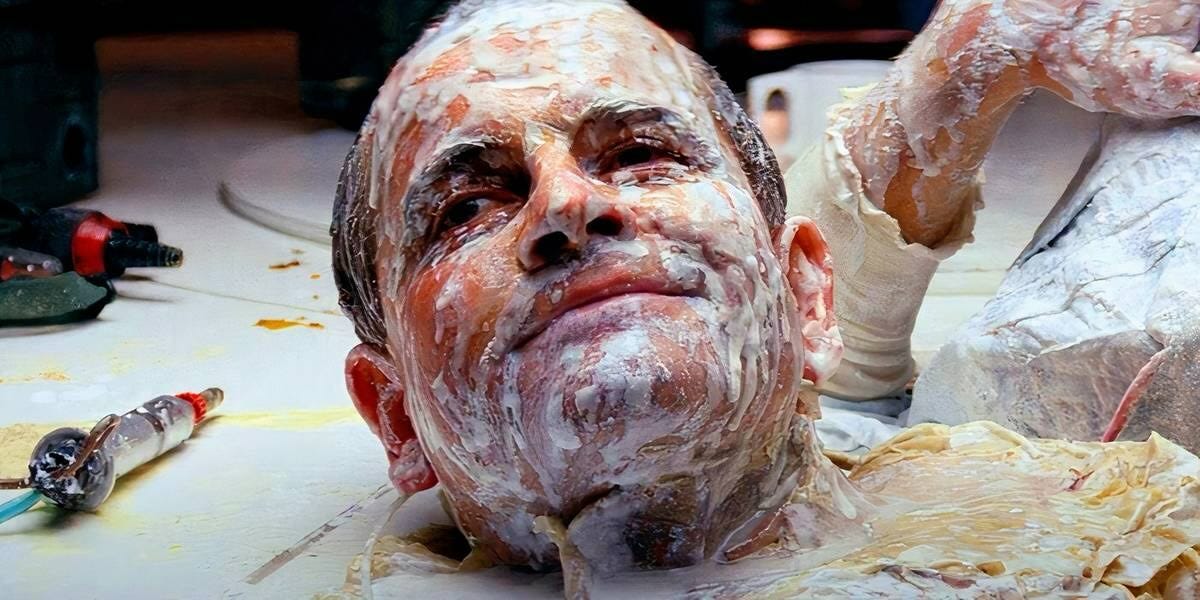
There’s no glitch. No malfunction. No dramatic rupture. Only protocol, unfolding exactly as it was written.
Kane never gives birth. Something uses his ribcage like a door. The system doesn’t flinch. It logs. It observes. It obeys the timeline it helped create.
Ripley doesn’t fail the rules. She’s punished for following them too well.
These aren’t breakdowns. They are completions, rituals of collapse performed precisely by the logic that claimed to prevent them, systems operating without deviation until their purpose meets something it cannot contain: mercy, clarity, or truth.
And that is when the real fear sets in: the realization we’ve never truly known what we were looking at.
Assimilation III: Trust Metastasized
No One Left to Be Believed
“If you listen with fearful ears, you will soon find yourself surrounded by enemies.”
—William King, Skavenslayer
Collapse doesn’t come with spectacle. It recedes, politely at first, layer by layer, until doubt is the only thing left, quiet, illegible, so complete it stops feeling like fear and starts passing for common sense.
When MacReady asks,
“If I was an imitation… how would you know if it was really me?”
he isn’t seeking reassurance. He’s holding a funeral for trust itself. The question already contains its own answer.
In Alien, Ripley’s isolation is procedural, mandated by a chain of command that never pretended to be personal.
In The Thing, MacReady’s isolation is contagious; it spreads until every stabilizing system becomes a weapon of doubt. Trust isn’t repaired, only repurposed into suspicion. He takes charge not from faith in the system, but from the knowledge that survival now means living without one. The outpost doesn’t fall because the Thing overwhelms it; it falls because the men begin to measure each other for the gallows.
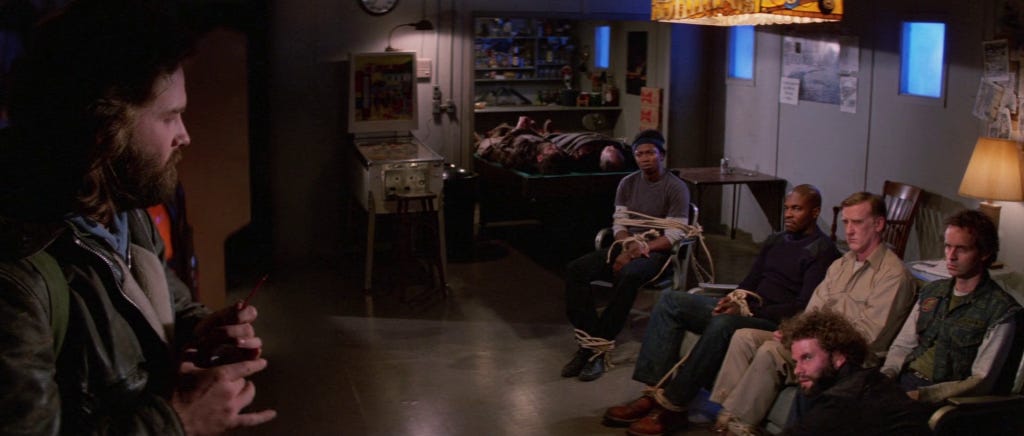
The blood test here is not science. It’s theater, brutal, rehearsed, and staged for an audience desperate for reaction, not truth.
The Thing doesn’t just wear a face. It exposes the fiction that faces ever meant anything.
Once trust frays, awkwardness itself becomes suspect: the stutter, the half-smile, the wrong hesitation. Humanity turns into a performance, and anyone who fails the audition becomes a target. We’ve all played this tribunal, at work, online, across a table, waiting for the scream that will spare us.
This is the deeper horror The Thing names: as certainty thins, we will sacrifice the familiar to preserve the ritual. And the system will help us do it.
Surveillance, logic, testing, tools not of protection, but containment. They were built to manage fear, not to recognize the self. When the Thing arrives, they function perfectly, not to save, but to shrink.
The test becomes an instrument, its real function not detection but choreography, deciding who stands bound, who holds the flamethrower, and who gets to watch. Trust isn’t restored; it’s reassigned. The silence afterward is the only truth left.
The horror was never that they couldn’t trust each other. It was that they ever believed they could.
Ripley follows the chain of command until it closes its jaws around her. MacReady writes his own protocol and obeys it even when it turns on him. Neither seeks consensus. Both refuse the lie that anyone will be spared.
When MacReady says, “Why don’t we just wait here for a while… see what happens,” he’s not proposing peace. He’s naming the absence of anything communicable.
This is not survival. Not surrender. It’s what endures when narrative fails and only ritual remains.
The final assimilation is not the Thing.
It is the silence between two people, too exhausted to accuse, too fractured to believe.
They do not try to rebuild.
Belief doesn’t break. It vanishes, not into terror, but into the steady quiet of fatigue.
Assimilation IV: Containment as Ceremony
Closure Is a Performance, Too.
The systems fail. The trust is gone. What remains must still resemble resolution, not because it solves, repairs, or restores, but because something must be placed at the end of the ritual, even when meaning has long since slipped away.
These are not endings. They are ceremonies, gestures performed in the presence of collapse, where the shape of action lingers after its purpose has rotted away.
In Alien, the countdown doesn’t offer escape; it performs it. The camera tightens. Switches flip like beads on a rosary. Lights flash. MU-TH-UR’s voice, unhurried and inhuman, delivers its final blessing:
“You now have five minutes to reach minimum safe distance.”
No panic. No appeal. Just sequence. Ripley moves with desperation; the system does not. She curses the interface, knowing it was never built to understand her. When she says, “You bitch!” it lands as blasphemy, flung at a cathedral that has already barred its doors. It is defiance that doesn’t disrupt the system but refuses to go quietly beneath it. Her escape is not deliverance, but severance: the uniform shed, the rank dissolved. She floats not in safety, but in suspension, between survival and the wake of what has already passed through her.
In The Thing, there is no voice to curse, no final command to defy. Only fire, and the dull weight of two men in the crater of a story with no ending. MacReady offers no comfort. Childs demands no answers. They speak not as adversaries or companions, but as figures placed opposite each other in a frame that no longer promises resolution.
“Why don’t we just wait here for a while… see what happens.”
It defies strategy. It eludes ceasefire. It is what remains when language can no longer guarantee truth, when neither accusation nor apology holds weight, and only the gesture of waiting has meaning, because it doesn’t pretend to.
Both films end in fire. Fire does not cleanse or resolve. It does not restore control. It is punctuation, the ash left when sentences are no longer useful.
These aren’t epilogues. They are burial rites. The last tasks of a structure that continues to function long after belief has died.
In Alien, Ripley names the dead, not as remembrance but as record, entries in a ledger no one else will read. In The Thing, the silence says more than any final line. We don’t need to know who is real. Only that they are watching each other, and neither expects to be believed.
What remains is not the monster.
What remains is the performance of its erasure.
The match. The scream. The ceremony.
Because when nothing else can be trusted, no body, no law, no memory, only the act survives. And even that, only for a while.
To Watch and Remember
This is not a final reading. It is one attempt to walk alongside these films, following the threads of collapse they leave behind without gathering them into a neat ending.
Other readings have their place, feminist critiques that see Alien as a study in reproductive horror, psychoanalytic takes that treat The Thing as a parable of identity dissolution. This lens chooses instead to track the systems that fail them, not just the monsters that hunt them.
Alien and The Thing endure not because they provide answers, but because they refuse to. They circulate like air through sealed halls, fogging glass, filling silence, settling into the systems that failed to stop what was coming.
They frighten, but they also watch. They note how much we trust the order of things, how deeply we believe protocol can hold, how easily we accept ceremony as certainty when we’re afraid.
They do not explain what went wrong. They show what was already broken.
They do not condemn. But they notice.
Who follows protocol.
Who overrides the warning.
Who survives.
And who disappears quietly under the weight of compliance.
These films don’t offer closure. They offer recognition. They hold a mirror to the machinery we inhabit, asking if we see ourselves in its functions, or its failures.
Some horrors are not puzzles to solve.
They are patterns to witness.
To recognize the shape is not to dissolve its magic.
It is to honor its precision.
These stories do not end.
They echo.
To witness them is not to turn away.
It is to remain in the room, quietly, knowing no interpretation will be final, but some wounds echo loud enough to press against.
Somewhere, the pod drifts. Somewhere else, the last fire gutters in the snow. The systems are silent, but the watch continues.
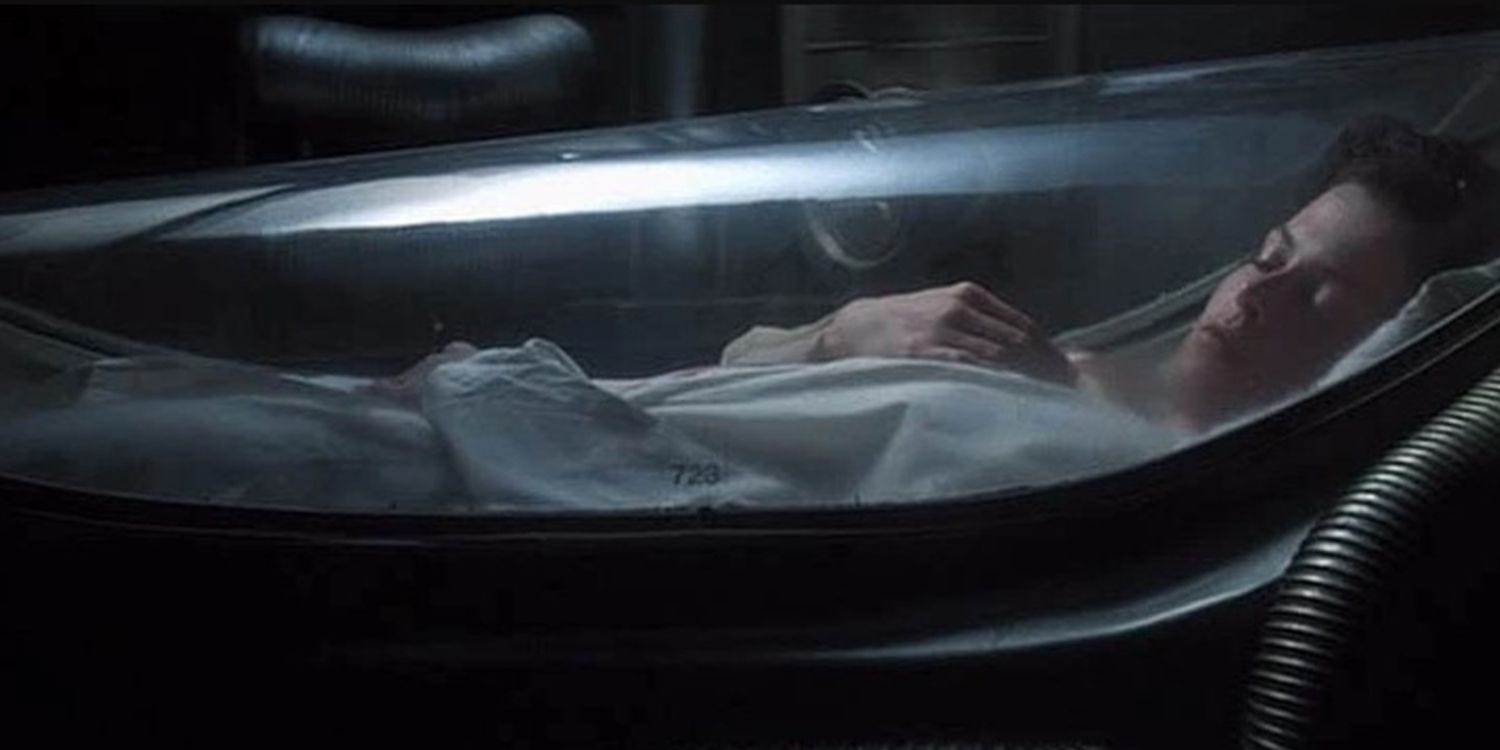
So we wait here.
See what happens.
And in the silence, perhaps the smallest question remains, one we’ve each rehearsed without meaning to:
“Who goes there?” The question from the story’s origins still hangs in the cold, unanswered.
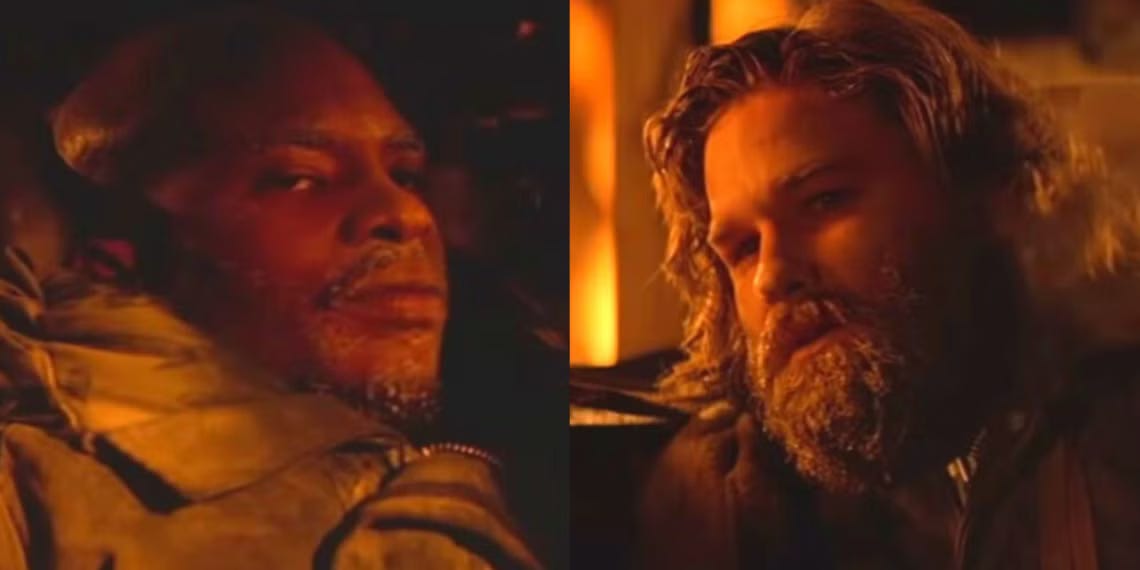
The protocols were followed. That’s what makes it so chilling. The system didn’t fail; it functioned. It just didn’t care if they lived.
Heroism is only a choice if someone else pays the price.
Works Cited & Referenced Materials
Alien (1979), dir. Ridley Scott, screenplay by Dan O’Bannon
The Thing (1982), dir. John Carpenter, screenplay by Bill Lancaster
Alien: The Official Movie Novelization by Alan Dean Foster
Shock Value by Jason Zinoman
Hyperobjects: Philosophy and Ecology After the End of the World by Timothy Morton
The Monstrous-Feminine: Film, Feminism, Psychoanalysis by Barbara Creed
Skavenslayer by William King (Black Library, 1999)
Fangoria interview with Rob Bottin (1982)
Cinefantastique interview with Ridley Scott (1979)
Starlog interview with John Carpenter (1982)
“Who goes there?” — from John W. Campbell Jr.’s 1938 novella, the story’s origin point.
Acknowledgments
With deep gratitude to the creators of Alien and The Thing for crafting two of the most enduring and intellectually rich horror films of all time. Their work continues to inspire reflection, debate, and awe.
Thanks also to the broader critical community, whose work in philosophy, film theory, and genre study offered lenses through which to look again.
To William King, whose line from Skavenslayer “If you listen with fearful ears…” resonated beyond the tunnels of Warhammer into the snows of Outpost 31, and into this essay’s study of suspicion as contagion.
And to the readers: thank you for sitting with the silence between the screams.
Disclaimer
This essay represents a personal and interpretive reading of Alien and The Thing. It is not affiliated with or endorsed by the creators, rights holders, or distributors of the films. All trademarks and property rights remain with their respective owners. No profit is derived from this analysis, and it is shared solely for the purposes of critique, commentary, and educational reflection under fair use.
This interpretation does not seek to be definitive. It exists in conversation with others, and with the films themselves, which endure because they refuse to be caged by a single reading.
Some horrors are not meant to be solved. Some are meant only to be recognized, endured, and carried forward in the mind’s quiet corridors.
© 2025 Offscreen Observations. All rights reserved.
Reproduction without permission is prohibited. Excerpts and quotes are welcome with attribution.
Two of my absolute favorites, next on my reading list!
This was haunting and brilliant. “These aren’t breakdowns. They are completions.” That line alone will echo in me for a while.